
Free ebook on clinical anatomy for physiotherapists, covering landmarks, movement, palpation, joint mechanics, nerves, and common patterns.
Free ebook content
-

Clinical Anatomy for Physiotherapists: Mapping Surface Landmarks to Movement
+ Exercise: During assessment, you notice a patient has limited active range of motion, but passive range of motion is near normal. Which interpretation best fits this pattern?
-
Palpation Skills: Identifying Bony Landmarks and Soft Tissue Guides
+ Exercise: When palpating the greater trochanter, which movement cue best confirms you are on the trochanter rather than nearby soft tissue?
-
Joint Anatomy and Arthrokinematics for Physiotherapy Assessment
+ Exercise: A patient has limited open-chain ankle dorsiflexion, and you suspect an arthrokinematic restriction at the talocrural joint. Which accessory motion should you screen first to test the most likely limitation?
-
Muscle Function in Movement: Lines of Pull, Synergies, and Compensation
+ Exercise: During arm elevation, serratus anterior underperformance most commonly leads to which visible compensation pattern?
-
Peripheral Nerves and Clinical Patterns: Dermatomes, Myotomes, and Entrapments
+ Exercise: A patient reports nocturnal tingling in the palmar thumb, index, and middle fingers that improves when shaking the hand. Neck movements have minimal effect, and reflexes are normal. Which localization is most consistent with this pattern?


-
Cervical Spine and Shoulder Complex: Landmarks, Scapulohumeral Rhythm, and Typical Dysfunctions
+ Exercise: During a quick check for possible cervical contribution to shoulder pain, which finding most strongly suggests the neck should be included in the management plan?
-
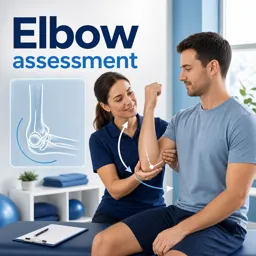
Elbow, Wrist, and Hand: Functional Anatomy for Gripping, Loading, and Nerve-Related Symptoms
+ Exercise: During a power grip test, the patient’s wrist collapses into flexion and lateral elbow symptoms increase. Which modification best aligns with improving grip efficiency and reducing excessive forearm muscle demand?
-
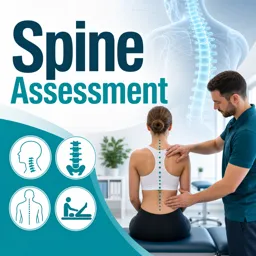
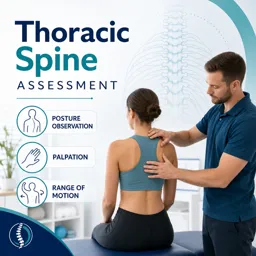
Thoracic Spine and Rib Cage: Breathing Mechanics, Posture, and Referred Pain Patterns
+ Exercise: During quiet breathing, which observation most strongly suggests a compensatory accessory-breathing pattern rather than efficient diaphragm-driven lateral rib expansion?
-
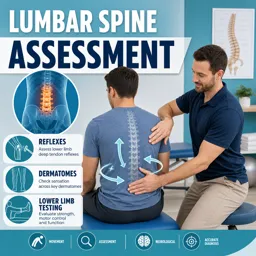
Lumbar Spine and Pelvis: Lumbopelvic Control, Hip Hinge, and Pain Patterns
+ Exercise: During a repeated-movements directional preference screen, which finding is considered a short-term “red light” that should prompt reducing range, changing position, or switching direction?
-
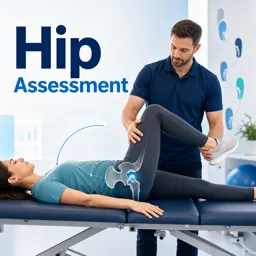
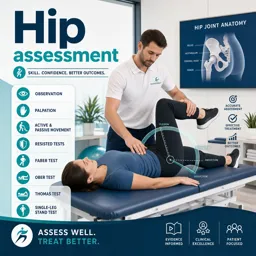
Hip and Groin: Deep vs. Superficial Anatomy and Common Clinical Presentations
+ Exercise: When assessing medial groin pain suspected to be adductor-related, which finding most strongly supports an adductor load-sensitivity pattern rather than a primarily positional deep-flexion presentation?
-
Knee: Menisci, Ligaments, Patellofemoral Mechanics, and Movement Patterns
+ Exercise: During a controlled mini-squat, which finding most strongly suggests patellofemoral compressive load sensitivity rather than a speed/impact-related issue?
-
Ankle and Foot: Arches, Tendons, Balance, and Common Overuse Patterns
+ Exercise: During mid-stance, a patient shows limited ankle dorsiflexion. Which compensation pattern best matches this limitation and its likely load shift?
About the free ebook
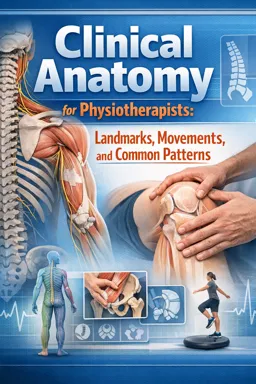
Clinical Anatomy for Physiotherapists: Landmarks, Movements, and Common Patterns
This free online ebook connects practical anatomy with the movement analysis and clinical reasoning used in physiotherapy. Learn to recognize surface landmarks, relate joint structure to motion, and interpret common patterns of pain, weakness, compensation, and reduced control.
Turn anatomy into meaningful assessment findings
Clear anatomical knowledge supports safer, more focused assessment. The ebook examines palpation of bony and soft-tissue guides, arthrokinematics, muscle lines of pull, synergistic activity, and compensatory strategies. It also explains how peripheral nerve pathways, dermatomes, myotomes, and entrapment patterns can inform clinical observations.
Apply regional anatomy to movement
Explore the cervical spine, shoulder, upper limb, thoracic region, lumbar spine, pelvis, hip, knee, ankle, and foot. Each region is considered through functional tasks such as reaching, gripping, breathing, lifting, hinging, walking, loading, and balance.
Key learning outcomes
- Identify clinically useful landmarks for observation and palpation.
- Relate joint mechanics and muscle function to movement quality.
- Recognize common regional patterns involving pain, mobility, and motor control.
- Use anatomical findings to support safe, appropriate treatment choices.
Important: This educational ebook supports anatomy and physiotherapy learning. It does not replace individual assessment, diagnosis, or professional clinical judgment.
How do surface landmarks improve physiotherapy assessment?
They help clinicians locate structures, compare sides, guide palpation, and relate visible movement to underlying anatomy.
What is scapulohumeral rhythm in shoulder movement?
It is the coordinated motion of the scapula and humerus during arm elevation, supporting efficient shoulder function.
How are dermatomes and myotomes used in physiotherapy?
They help screen sensory and motor patterns that may suggest nerve-root involvement or peripheral nerve irritation.
This ebook includes:

13 content chapters

Digital certificate of course completion (Free)

Exercises to train your knowledge

100% free, from content to certificate
Ready to get started?

 recommended
In the app you will also find...

Over 5,000 free courses
Programming, English, Digital Marketing and much more! Learn whatever you want, for free.

Study plan with AI
Our app's Artificial Intelligence can create a study schedule for the course you choose.

From zero to professional success
Improve your resume with our free Certificate and then use our Artificial Intelligence to find your dream job.
You can also use the QR Code or the links below.