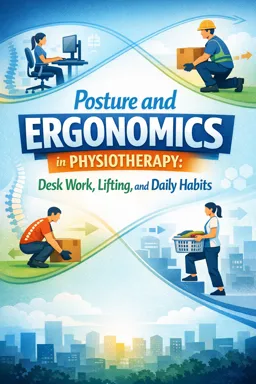
“Real-life” lifting rarely looks like a clean gym deadlift: the space is tight, the object is awkward, the handle is missing, and you may be distracted or fatigued. The goal is not perfection; it is risk management: reduce peak strain, avoid repeated irritation, and keep effort within a tolerable range by changing the task (load, distance, height, frequency) rather than forcing your body to “hold posture.”
Use this simple decision filter before you lift: Can I make it lighter? (split load) Can I make it closer? (stage it) Can I make it higher? (raise start/end height) Can I make it roll? (cart) Can I make it shorter? (fewer reps, more breaks). The scenarios below show how to apply those levers.
1) Floor-to-waist picks (e.g., laundry basket)
Common risks in this scenario
- Long reach to the floor increases back and hip demand, especially if the basket is wide and you must lean over it.
- Twisting while rising (turning toward the door/hamper) adds shear and can provoke back or rib/shoulder symptoms.
- Unstable load (shifting laundry) forces grip and trunk “catching” movements.
2–3 modifications that usually help
- Split the load before you lift: remove a few items first, or use two smaller baskets. Aim for a load you can lift without holding your breath.
- Stage the basket to a mid-height surface: slide the basket onto a chair/bench first, then lift from chair height to waist height. This reduces the deepest part of the pick.
- Change the start position: if the basket is on the floor, pull it closer with your foot or by dragging it along the floor (short distance) before lifting, so the handles are near your shins rather than out in front.
Step-by-step: staged laundry pick (floor → chair → carry)
- Clear the path (doorway, rugs, toys) so you can move without sudden pivots.
- Bring the basket close to your legs; turn your whole body to face it rather than reaching sideways.
- Slide to chair height: tip/slide the basket onto a sturdy chair or bench (avoid twisting; move your feet).
- Re-grip at handles with wrists neutral; tighten your hold before you lift.
- Lift from chair height to waist height, keeping the basket close to your body.
Quick self-check (during and after)
- Effort: should feel like “moderate” work; you can still speak a full sentence without gasping.
- During: no sharp pain, no sudden “catch,” no tingling/numbness.
- After (next 2–24 hours): symptoms should settle back to baseline. If soreness escalates or lingers, reduce load, reduce reps, or add staging next time.
2) Carrying groceries and backpacks
Common risks in this scenario
- Asymmetrical loading (all bags in one hand) increases side-bending demand and can irritate back/hip/shoulder.
- Long carry distance turns a lift into an endurance task; grip fatigue can change posture and increase tension.
- Straps and handles can compress the shoulder/neck region (backpack straps, heavy tote on one shoulder).
2–3 modifications that usually help
- Balance the load: two lighter bags (one each side) instead of one heavy bag. If one side must be heavier, switch sides halfway.
- Use a cart or rolling bag: convert carrying to pushing/pulling when distance is long or symptoms flare with grip.
- Stage in “checkpoints”: car → porch → counter, rather than one continuous carry. Shorten the time under load.
Step-by-step: grocery carry with load management
- Sort at the car: put heavy items (milk, cans) into two bags rather than one.
- Plan the route: open the door first; remove trip hazards.
- Pick up one bag at a time to get organized, then carry two balanced bags close to your sides.
- Set down with intention: place bags on a counter/table if available rather than the floor to avoid extra floor picks.
Backpack-specific tweaks
- Two straps, snug to the back: the pack should sit high enough that it doesn’t pull you into a forward lean.
- Heaviest items closest to your back to reduce the “lever arm.”
- Use waist/chest straps if available to distribute load away from shoulders.
Quick self-check (during and after)
- Effort: grip should not be the limiting factor. If your forearms burn or fingers tingle, lighten or use a cart.
- During: shoulders should not hike toward ears; if they do, reduce load or shorten distance.
- After: watch for next-day neck/shoulder heaviness or back stiffness that is clearly worse than usual—this suggests the carry duration or asymmetry was too high.
3) Lifting from a car trunk
Common risks in this scenario
- Forward reach over the bumper increases trunk demand and can strain the back, especially with a deep trunk.
- Twist-and-lift when turning from trunk to ground/cart.
- Unknown load (toolbox, cooler) surprises your system and increases bracing/holding breath.
2–3 modifications that usually help
- Bring the item to the edge first: slide it toward you, then lift. Reduce reach before you add weight.
- Use the trunk lip as a staging surface: lift in two steps (deep trunk → trunk edge → carry/cart).
- Change the destination height: place the item onto a cart, tailgate table, or seat rather than straight to the floor.
Step-by-step: trunk “slide then lift”
- Stand close to the bumper with feet stable; avoid leaning from far away.
- Test the weight by nudging/lifting one corner a few centimeters.
- Slide the object toward the trunk edge using both hands (or by pulling straps/handles if present).
- Reposition your grip at the edge so the load is close to your body.
- Lift and pivot with your feet to face the destination; avoid twisting through your trunk.
Quick self-check (during and after)
- Effort: you should not need to “yank” the item. If it doesn’t slide, remove items from it, reduce friction (mat), or ask for help.
- During: no sharp back pain on the reach phase; if reaching is the trigger, staging at the edge is non-negotiable.
- After: if symptoms spike later that day, reduce the number of trunk lifts or add a cart so the carry portion doesn’t compound the load.
4) Overhead placement (e.g., putting items on a high shelf)
Common risks in this scenario
- Shoulder impingement load increases when the object is heavy, far from the body, or you shrug to reach.
- Back extension compensation (arching) to gain height, which can irritate lumbar symptoms.
- Unstable end position if you are on tiptoes or a wobbly stool.
2–3 modifications that usually help
- Lower the target height: store frequently used or heavy items between waist and chest height; reserve overhead for light items.
- Use a stable step stool to reduce end-range reaching; bring your whole body up rather than cranking the shoulder.
- Stage to a mid-level surface: counter → shelf, instead of floor → overhead in one move.
Step-by-step: safer overhead placement
- Choose the right tool: a wide-base step stool, not a chair.
- Bring the item close to your torso before stepping up.
- Step up first so the shelf is at about chest/eye level rather than above your head.
- Place, don’t press: slide the item onto the shelf with controlled movement; avoid a final “push” at end range.
- Step down carefully with hands free if possible.
Quick self-check (during and after)
- Effort: if you must hold your breath to get it overhead, it’s too heavy/high—change storage or stage it.
- During: shoulder pinch, clicking with pain, or numbness/tingling is a stop signal.
- After: delayed shoulder ache that persists into the next day suggests too much overhead volume or too high a shelf—reduce repetitions and lower storage height.
5) Awkward objects (bulky, shifting, no handles: boxes, plant pots, tools)
Common risks in this scenario
- Load far from the body because there is nowhere to grip close, increasing trunk and shoulder demand.
- Shifting center of mass (liquid, loose contents) creates sudden torque and reactive movements.
- Pinch grips fatigue quickly and can provoke forearm/elbow symptoms.
2–3 modifications that usually help
- Create handles or improve grip: use a strap, towel wrap, or lifting belt/rope around the object; for boxes, cut hand holes or use a tote with handles.
- Stabilize the contents: close lids, tape boxes, use smaller containers, or partially empty a pot/bucket before moving.
- Use intermediate supports: slide onto a dolly, furniture sliders, or a cart; if lifting is required, lift to a table first, then reposition.
Step-by-step: moving a bulky box through a doorway
- Prepare the box: tape the bottom, close the top, and ensure contents won’t shift.
- Plan the path: open the door fully; remove obstacles so you don’t need to twist mid-carry.
- Get a close hold: hug the box to your torso or use straps so elbows stay closer to your sides.
- Walk and pivot with your feet: take small steps; turn your whole body rather than rotating while holding the box.
- Set down to a raised surface when possible to avoid repeated floor picks.
Quick self-check (during and after)
- Effort: if your grip is failing before your legs/trunk feel challenged, change the grip (straps/handles) or use a cart.
- During: if you feel you must “catch” the object as it shifts, stop and stabilize contents or reduce fill level.
- After: monitor for symptom spread (e.g., back pain now into leg, shoulder pain now into arm). If present, reduce load and avoid awkward carries until baseline returns.
Fast reference: scenario-to-modification map
| Scenario | Main risk driver | Best first modification | Next best |
|---|---|---|---|
| Floor-to-waist (laundry) | Deep reach + twisting | Stage to chair height | Split load |
| Groceries/backpack | Asymmetry + distance | Balance both sides | Use cart / checkpoints |
| Car trunk | Long reach over bumper | Slide to edge first | Stage to cart/seat |
| Overhead placement | End-range shoulder load | Use step stool (reduce reach) | Lower storage height |
| Awkward objects | Poor grip + shifting load | Create handles/straps | Stabilize contents / use dolly |
Personal “green/yellow/red” symptom rule for real-life lifts
- Green: effort moderate; symptoms unchanged or settle within minutes; next-day baseline is normal.
- Yellow: mild symptom increase (e.g., 1–2/10) during task that settles within a few hours; respond by reducing load, staging, or shortening duration next time.
- Red: sharp pain, radiating symptoms, numbness/tingling, loss of strength, or symptom flare lasting into the next day; stop the task, modify heavily (cart, split loads, help), and consider clinical review if it repeats.