
Free ebook on psychological first aid: support people in distress with safety, calming, listening, boundaries, and referral skills.
Free ebook content
-

Psychological First Aid Foundations: Safety, Calm, Connection, Self‑Efficacy
+ Exercise: When you feel unsure what to do while supporting someone in acute distress, which approach best follows Psychological First Aid priorities?
-
Assessing Safety and Urgent Risks in Psychological First Aid
+ Exercise: During Psychological First Aid, which situation most clearly requires immediate escalation to emergency or onsite crisis services rather than continuing with basic supportive conversation?
-
Stabilizing Distress: Calming Skills for Panic, Shock, and Overwhelm
+ Exercise: When someone appears dissociated (blank stare, slow responses, confusion about time/place), which initial approach best matches their state?


-
Listening Skills for Psychological First Aid: Presence, Validation, and Clarity
+ Exercise: In Psychological First Aid, which response best demonstrates supportive listening without interrogation while helping the person move toward a practical next step?
-
What to Say and What Not to Say in Psychological First Aid
+ Exercise: Which response best follows psychological first aid principles by using permission-based language and offering specific choices?
-
Practical Support and Problem-Solving Without Taking Over
+ Exercise: In Psychological First Aid, which approach best provides practical support without taking over?
-
Strengthening Connection: Support Networks, Community, and Belonging
+ Exercise: When helping a distressed person reconnect with others, which approach best matches Psychological First Aid guidance on strengthening connection?
-
Encouraging Professional Help: When and How to Refer
+ Exercise: Which approach best describes a “warm referral” when encouraging someone to seek professional help?
-
Boundaries and Ethics in Psychological First Aid: Helping Without Becoming the Therapist
+ Exercise: In Psychological First Aid, what is the most appropriate way to handle a situation where someone starts relying on you as their only support and asks for constant access?
-
Supporting Grief and Loss with Psychological First Aid
+ Exercise: In Psychological First Aid, what is the most appropriate way to support someone experiencing intense early grief?
-
Your Wellbeing as a Helper: Stress Management, Debriefing, and Follow-Up
+ Exercise: When you do a quick self-check and realize your capacity to continue helping is low, what is the recommended next step?
About the free ebook
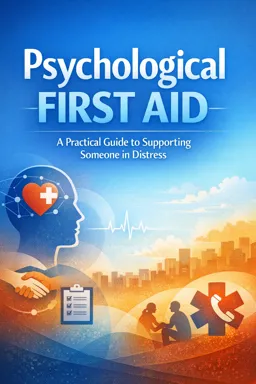
Psychological First Aid: A Practical Guide to Supporting Someone in Distress
This free ebook offers practical, compassionate guidance for responding when someone is overwhelmed, frightened, grieving, or affected by a crisis. Psychological first aid is not therapy or diagnosis. It is a humane approach that prioritizes safety, calm, connection, and practical support.
Respond with care and clarity
Learn how to notice urgent safety concerns, create a calmer immediate environment, and listen without pressure or judgment. The guide explains how validation, simple language, and respectful presence can help a distressed person feel less alone and more able to make their next decision.
Offer support without taking control
Effective help respects the person’s choices, culture, privacy, and pace. Explore ways to identify immediate needs, encourage manageable next steps, reconnect people with trusted supports, and suggest professional or emergency services when risks exceed what informal support can safely address.
Use words that help
The ebook provides guidance on communicating during panic, shock, loss, and overwhelm. It also highlights common responses that can unintentionally minimize distress, such as forcing optimism, demanding details, making promises, or telling someone how they should feel.
Help sustainably and ethically
Supporting another person can be emotionally demanding. Learn why boundaries, confidentiality, realistic roles, debriefing, and your own wellbeing matter. This resource helps helpers act with steadiness and compassion while recognizing when additional care is needed.
A practical resource for everyday moments of distress
Use these principles to offer grounded, respectful support while keeping safety and dignity at the center of every interaction.
What are the core principles of psychological first aid?
Prioritize safety, help restore calm, listen respectfully, strengthen connection, and support practical next steps.
When should I contact emergency or professional support for someone in distress?
Seek urgent help when there is immediate danger, risk of self-harm or harm to others, severe confusion, or inability to stay safe.
What should I avoid saying to someone who is overwhelmed or grieving?
Avoid minimizing their feelings, forcing them to talk, making promises you cannot keep, or telling them to “just calm down.”
This ebook includes:

11 content chapters

Digital certificate of course completion (Free)

Exercises to train your knowledge

100% free, from content to certificate
Ready to get started?

 recommended
In the app you will also find...

Over 5,000 free courses
Programming, English, Digital Marketing and much more! Learn whatever you want, for free.

Study plan with AI
Our app's Artificial Intelligence can create a study schedule for the course you choose.

From zero to professional success
Improve your resume with our free Certificate and then use our Artificial Intelligence to find your dream job.
You can also use the QR Code or the links below.