
Free ebook on recognizing child and adolescent anxiety, building coping skills, supporting school attendance, and knowing when to seek help.
Free ebook content
-

Child and Adolescent Anxiety: What It Is and How It Shows Up
+ Exercise: Which situation best illustrates persistent anxiety (rather than normal fear) in a child or teen?
-
Developmental Patterns of Anxiety from Early Childhood to Late Adolescence
+ Exercise: Which observation best fits a red flag for anxiety in elementary-aged children rather than a typical short-term worry?
-
Recognizing Key Presentations: School Refusal, Social Anxiety, Worry, and Irritability
+ Exercise: Which detail best supports that a child’s difficulty attending school is primarily anxiety-driven (school refusal/avoidance) rather than deliberate defiance?
-
Body and Behavior Clues: Somatic Symptoms, Sleep, and Avoidance
+ Exercise: Which observation pattern most suggests an anxiety-related loop rather than an isolated physical illness?


-
Supportive Communication that Reduces Escalation and Builds Trust
+ Exercise: When a child is escalating with anxiety, which response best uses supportive communication to reduce threat and build trust?
-
Building Coping Skills and Bravery: Gradual Exposure and Confidence Steps
+ Exercise: Which approach best follows a gradual exposure “bravery ladder” when a child refuses a planned step because it feels too scary?
-
Home Environment Supports: Routines, Boundaries, and Reducing Accommodation
+ Exercise: Which adult response best reflects supportive boundaries that reduce anxiety accommodation while keeping routines intact?
-
Collaborating with Schools: Communication, Supports, and Attendance Plans
+ Exercise: Which support plan best prevents reinforcing avoidance while still helping an anxious student return to learning?
-
When to Seek Professional Assessment and What to Expect
+ Exercise: Which situation best matches a yellow flag, meaning you should schedule a professional evaluation soon?
-
Supporting Long-Term Growth: Relapse Prevention, Autonomy, and Healthy Risk-Taking
+ Exercise: Which response best supports long-term growth by balancing autonomy with support when a child seeks repeated reassurance about an upcoming school transition?
About the free ebook
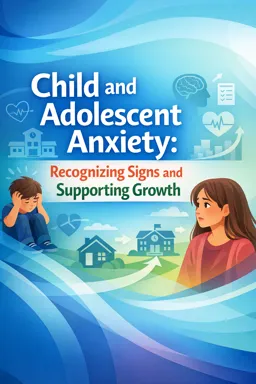
Child and Adolescent Anxiety: Recognizing Signs and Supporting Growth
This free ebook offers a practical, compassionate guide to understanding anxiety in children and adolescents. It explains how anxiety can appear differently across developmental stages and why it may be expressed through worry, irritability, physical complaints, sleep difficulties, avoidance, social withdrawal, or resistance to school.
Recognize patterns without labeling every concern
Readers learn to notice the difference between ordinary fears and anxiety patterns that interfere with daily life. The ebook explores common presentations such as school refusal, social anxiety, persistent reassurance-seeking, and somatic symptoms including headaches or stomachaches.
Respond in ways that build safety and confidence
Supportive communication can reduce escalation and strengthen trust. This resource introduces calm listening, validation, predictable routines, clear boundaries, and ways to avoid unintentionally reinforcing avoidance. It also describes gradual, manageable confidence steps that help young people face feared situations at a sustainable pace.
Work together across home, school, and care settings
Families and caregivers will find guidance for communicating with schools, planning attendance supports, and recognizing when professional assessment may be helpful. The ebook emphasizes long-term growth through autonomy, healthy risk-taking, coping practice, and relapse-prevention planning.
A practical resource for supportive adults
- Identify emotional, physical, and behavioral signs of anxiety.
- Use supportive language during difficult moments.
- Encourage coping and bravery without forcing or dismissing fears.
- Know when additional professional support should be considered.
This ebook is educational and does not replace assessment or treatment from a qualified health professional.
What are common physical signs of anxiety in children?
Common signs include stomachaches, headaches, nausea, fatigue, sleep changes, restlessness, and frequent visits to the school nurse.
How can parents respond to school refusal linked to anxiety?
Stay calm, validate the distress, coordinate with the school, and use a gradual attendance plan rather than prolonged avoidance.
When should a child be assessed for anxiety?
Consider assessment when fears or worries persist, worsen, or interfere with school, sleep, relationships, daily routines, or safety.
This ebook includes:

10 content chapters

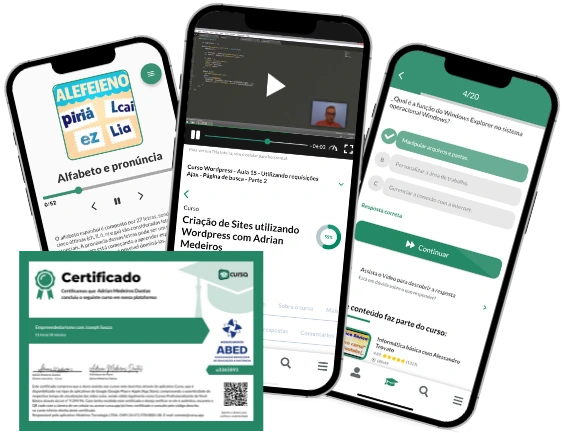
Digital certificate of course completion (Free)

Exercises to train your knowledge

100% free, from content to certificate
Ready to get started?

 recommended
In the app you will also find...

Over 5,000 free courses
Programming, English, Digital Marketing and much more! Learn whatever you want, for free.

Study plan with AI
Our app's Artificial Intelligence can create a study schedule for the course you choose.

From zero to professional success
Improve your resume with our free Certificate and then use our Artificial Intelligence to find your dream job.
You can also use the QR Code or the links below.