Introduction
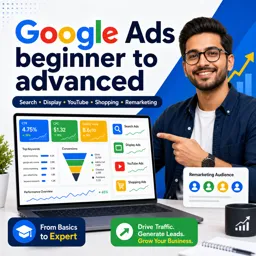
If you want to attract more customers online, Google Ads is one of the most effective tools available. It allows businesses to display ads on Google search results and across its advertising network, reaching people who are actively searching for products or services like yours.
What Is Google Ads?
Google Ads is an online advertising platform that enables businesses to promote products and services on Google Search, YouTube, and partner websites. Operating on a pay-per-click (PPC) model, advertisers only pay when someone clicks their ad, making it a cost-effective way to drive traffic and sales.
Setting Up Your First Google Ads Campaign
- Create a Google Ads Account: Sign up at the Google Ads homepage and follow the setup instructions.
- Define Your Campaign Goal: Choose whether you want to drive sales, leads, website traffic, or brand awareness.
- Choose Your Campaign Type: For beginners, starting with the Search Network is ideal since ads appear when users search for relevant keywords.
- Target Your Audience: Specify location, language, and demographics to reach the right people.
- Set Your Budget: Determine your daily spending limit. Start small and adjust as you learn.
- Write Your Ads: Craft attention-grabbing headlines and benefit-driven descriptions with a clear call to action (CTA).
- Set Keywords: Use keywords your ideal customers are searching for. Google’s Keyword Planner can help you select the best ones.
- Launch and Monitor: Activate your campaign and track performance regularly to make necessary adjustments.
Best Practices for Effective Google Ads Campaigns
- Use Specific Keywords: Focus on highly relevant search terms to minimize wasted spending.
- Write Compelling Ad Copy: Highlight your unique value and benefits to encourage clicks.
- Optimize Landing Pages: Ensure visitors land on relevant, persuasive pages that encourage conversion.
- Test and Refine: Continuously analyze results, test variations, and pause underperforming ads.
Conclusion
Google Ads is a powerful platform to grow your business, but success depends on careful planning and consistent optimization. By defining clear goals, selecting precise keywords, and refining campaigns over time, you can turn Google Ads into a high-performing marketing channel that delivers real results.