Lasting weight loss rarely comes from finding the “perfect” diet. It comes from building repeatable skills: structuring meals, navigating cravings, planning for real-life schedules, and adjusting based on feedback from your body. This behavior-first approach helps you make progress even when motivation is low—because your environment and routines do most of the work.
This guide introduces a practical framework you can apply immediately and deepen through structured learning. If you want to explore step-by-step lessons with free certification, browse the https://cursa.app/free-courses-health-onlineor the broader https://cursa.app/free-online-health-courses.
Start with your “default day” (the meals you repeat most)
Most people don’t eat a completely new menu every day—they rotate a handful of breakfasts, lunches, snacks, and dinners. Your fastest wins come from improving these “default” choices rather than overhauling everything at once. Pick one meal you eat at least four times per week and upgrade it using three levers:
- Protein anchor: add a consistent protein source (e.g., eggs, Greek yogurt, tofu, chicken, beans).
- Produce volume: add fruits/vegetables for fullness and micronutrients.
- Fiber-rich carbs: choose options that keep you satisfied (e.g., oats, lentils, potatoes, whole grains).
These small upgrades reduce decision fatigue while making your diet more filling—key for weight loss adherence.
Build a plate you can repeat: the 3–2–1 method
Instead of counting everything, use a simple structure at main meals:
- 3 handfuls of non-starchy vegetables (or a mix of vegetables + fruit if vegetables are limited)
- 2 palm-sized portions of protein (adjust to appetite and body size)
- 1 cupped-hand portion of carbs (increase or decrease based on training, hunger, and progress)
Add a thumb-sized portion of fats when meals are very lean or when you need more satisfaction. This method supports fat loss while staying flexible and culturally adaptable. If you want to go deeper into body composition goals, explore learning paths like https://cursa.app/free-online-courses/fat-loss.

Hunger, cravings, and satiety: treat them like signals, not enemies
Cravings often spike when one (or more) of these is missing:
- Enough protein across the day
- Enough total food volume (especially from produce and soups/salads)
- Enough sleep and stress management
- Planned enjoyment (rigid rules can backfire)
A useful skill is creating “planned flexibility”: choose one small daily treat (or a few per week) and fit it into a consistent meal pattern. This lowers the risk of an all-or-nothing cycle.
Track the right things (without obsessing)
Tracking can be empowering when it answers a specific question. Instead of logging everything forever, rotate short “check-in” periods (e.g., 1–2 weeks) to learn patterns, then switch back to habits.
High-signal metrics to consider:
- Weekly trend weight (not day-to-day fluctuations)
- Waist measurement or how clothes fit
- Protein servings per day
- Steps and/or training sessions completed
- Sleep duration
If you’re curious about energy balance and why progress isn’t linear, reputable reading on appetite, behavior, and body weight regulation can be found via public health resources like the https://www.cdc.gov/healthyweight/index.html.
Make your environment do the hard work
Your food environment often predicts your choices more than willpower does. Use “friction” strategically:
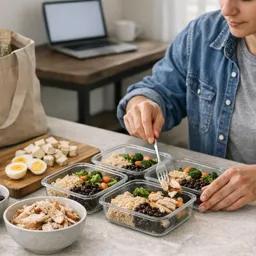
- Reduce friction for healthy options: pre-wash fruit, batch-cook proteins, keep a go-to salad kit, stock frozen vegetables.
- Increase friction for snack traps: store trigger foods out of sight, portion them, or avoid bulk buying.
- Set default portions: use smaller bowls for energy-dense foods and larger plates for vegetables.
Think of this as engineering consistency—once the default is healthier, you rely less on motivation.

Protein and strength training: protect results while losing weight
When weight drops, you want most of that loss to come from fat—not muscle. Two habits support this:
- Strength training a few times per week
- Consistent protein intake spread across meals
Even if your main goal is fat loss, building strength improves function, confidence, and long-term maintenance. To learn structured strategies around performance and recovery, explore https://cursa.app/free-online-courses/sports-nutrition. For a more targeted focus on gaining or preserving lean mass, see https://cursa.app/free-online-courses/nutrition-for-muscle-growth.
When supplements matter (and when they don’t)
Supplements can be helpful, but they work best as additions to a solid foundation: regular meals, protein, produce, hydration, and sleep. If you’re considering supplements, prioritize:
- Safety and quality (third-party testing when possible)
- Addressing real gaps (e.g., vitamin D in low-sun exposure, omega-3 intake, iron when medically indicated)
- Evidence-based choices over trendy blends
For a structured overview of common options, dosing considerations, and decision-making, explore https://cursa.app/free-online-courses/vitamins-and-supplements.
Create your personal “minimum effective plan”
A sustainable plan is one you can execute on busy weeks. Build a minimum effective plan with:
- One repeatable breakfast and two repeatable lunches
- Three simple dinners you can rotate (each with a protein + veg + carb)
- Two emergency options for when plans break (e.g., grocery rotisserie chicken + salad; yogurt + fruit + nuts)
- A movement baseline (daily steps plus a few short strength sessions)
Once your minimum plan is stable, you can add variety without losing momentum.

Keep learning: build skills, not rules
Nutrition and weight loss are easier when you learn the “why” behind the habits—so you can troubleshoot plateaus, travel weeks, social events, and stress without starting over. Continue building your toolkit by exploring the https://cursa.app/free-courses-health-online learning paths, and branch into related topics like https://cursa.app/free-online-courses/fat-loss and https://cursa.app/free-online-courses/sports-nutrition as your goals evolve.