Protein is generally the most satiating macronutrient and can help reduce hunger while supporting muscle retention during fat loss.

Duration of the online course: 3 hours and 49 minutes
New
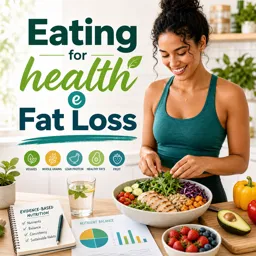
Eat smarter, feel fuller, and support fat loss with this free nutrition course—science-based strategies for lasting results and a healthier routine.
Getting leaner and healthier is rarely about willpower alone. It is about understanding how food choices shape hunger, energy, and consistency day after day. This free online course focuses on the science of eating for health and fat loss, helping you make nutrition decisions that are realistic, sustainable, and grounded in evidence rather than trends.
You will explore how the body regulates appetite and why some meals keep you satisfied for hours while others leave you searching for snacks soon after. A key theme is macronutrients: protein, carbohydrates, and fats. You will learn how each one influences satiety signals and how the balance of these nutrients can change the way you feel between meals. By understanding the mechanisms behind fullness, cravings, and adherence, you can design an approach that supports weight management without relying on extreme restriction.
The course also addresses an important goal for many people pursuing fat loss: maintaining muscle mass. You will connect the dots between meal composition, hunger control, and body composition outcomes, so your plan supports performance and a healthy metabolism. Instead of chasing one perfect diet, you will practice thinking in principles: what drives satiety, what makes a diet easier to stick with, and how small adjustments can improve results over time.
Whether you are starting a weight-loss journey, trying to break through a plateau, or aiming to maintain your current weight with fewer cravings, this course gives you a clear framework to make informed choices. By the end, you will be better equipped to build satisfying meals, manage hunger more effectively, and approach fat loss with confidence and a long-term mindset.

3 hours and 49 minutes of online video course

Digital certificate of course completion (Free)

Exercises to train your knowledge

100% free, from content to certificate
Which macronutrient is most effective for controlling hunger during fat loss?
Protein is generally the most satiating macronutrient and can help reduce hunger while supporting muscle retention during fat loss.
How can I eat for fat loss without losing muscle mass?
Prioritize adequate protein, maintain resistance training, and use a sustainable calorie deficit rather than severe restriction.
Do carbohydrates and fats affect satiety differently for weight loss?
Yes. Fiber-rich carbohydrates can increase fullness, while fats add satisfaction and slow digestion; overall food quality and calorie intake still matter.
Ready to get started?Download the app and get started today.
Install the app now
to access the course
Over 5,000 free courses
Programming, English, Digital Marketing and much more! Learn whatever you want, for free.

Study plan with AI
Our app's Artificial Intelligence can create a study schedule for the course you choose.

From zero to professional success
Improve your resume with our free Certificate and then use our Artificial Intelligence to find your dream job.
You can also use the QR Code or the links below.



Free CourseWeight Loss Made Easy
5

(3)

1h02m

6 exercises
Free CourseLow-Cost, High-Nutrition Eating for Graduate and Professional Students
5
(1)
2h06m
8 exercises
Free CourseDairy and Food Processing Technology: Preservation, Quality and Packaging
5
(3)
31h03m
27 exercises
Free CourseThe Power of Nutrition
5
(6)
37m
1 exercises
Free CourseHuman Metabolism
5
(2)
14h23m
31 exercises
Free CourseThe Science of Nutrition
5
(3)
1h47m
15 exercises
Free CourseMediterranean Diet meal prep
5
(2)
28m
6 exercises
Free CourseSports Nutrition
4.9
(9)
8h30m
36 exercises
Free CourseNutrition Course
4.9
(7)
14h08m
20 exercises
Free CourseNutrition Strategies for Competition
4.9
(7)
23m
5 exercises
Carry knowledge in your pocket.
Download the Cursa app.
There are hundreds of free courses available, with a free certificate of completion that is saved in your mobile image gallery.
Download the app to access the Course Completion Certificate for Free.


+ 10 million
students

Free and Valid
Certificate

60 thousand free
exercises

4.8/5 rating in
app stores

Free courses in
video and ebooks