It explains how macronutrients are digested, used for energy, and support functions such as brain fuel, cholesterol health, and tissue repair.

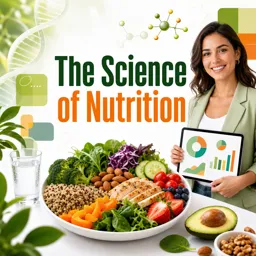
Duration of the online course: 1 hours and 47 minutes
5

(3)
Build healthier eating habits with a free online nutrition course—learn metabolism, macros, food safety, and weight management, plus a certificate option.
Understanding nutrition can feel overwhelming when advice changes daily. This course helps you cut through the noise by focusing on the science behind how food affects energy, health, and body weight. You will connect essential concepts—digestion, metabolism, and nutrient functions—to real choices you make at the table, so you can evaluate trends with confidence and build habits that actually fit your life.
You will explore how the body uses carbohydrates, fats, and proteins, why fluid and electrolyte balance matters, and how antioxidants support normal metabolic processes. Along the way, you will learn how nutrients influence blood health and energy production, and how food and movement work together to support fitness goals. Practical explanations make it easier to spot the difference between helpful guidance and common misconceptions, especially when it comes to dieting, portion sizes, and long-term weight maintenance.
The course also emphasizes life-stage needs, highlighting how nutrition priorities can shift from pregnancy and infancy through childhood and beyond. You will gain a clearer view of what supports bone health, why certain vitamins are essential during periods of rapid growth, and how everyday eating patterns can be adjusted thoughtfully over time. This makes the learning useful whether you are planning meals for yourself, supporting a family member, or simply wanting a stronger foundation for wellness decisions.
To round out the science with real-world skills, the course reinforces safe food handling and smart meal preparation. You will see how small actions in the kitchen help reduce risk and protect health, turning food safety into a simple routine rather than an afterthought.
With short assessments throughout, you can check your understanding and build momentum as you go. By the end, you will be able to design a balanced diet, make informed choices about weight management, and apply nutrition principles to daily life with clarity and consistency—all in a flexible, free online learning experience.

1 hours and 47 minutes of online video course

Digital certificate of course completion (Free)

Exercises to train your knowledge

100% free, from content to certificate
What does the Science of Nutrition course teach about carbohydrates, fats, and proteins?
It explains how macronutrients are digested, used for energy, and support functions such as brain fuel, cholesterol health, and tissue repair.
How does nutrition affect bone health, blood health, and fluid balance?
The course covers key nutrients including calcium, vitamin D, electrolytes, folate, and antioxidants and their roles in these body systems.
Does the nutrition course cover diet planning for weight management, pregnancy, and different life stages?
Yes. It addresses healthful diet design, body-weight maintenance, physical activity, pregnancy and infancy nutrition, and age-appropriate portions for children.
Ready to get started?Download the app and get started today.
Install the app now
to access the course
Over 5,000 free courses
Programming, English, Digital Marketing and much more! Learn whatever you want, for free.

Study plan with AI
Our app's Artificial Intelligence can create a study schedule for the course you choose.

From zero to professional success
Improve your resume with our free Certificate and then use our Artificial Intelligence to find your dream job.
You can also use the QR Code or the links below.



Free CourseWeight Loss Made Easy
5
(3)

1h02m

6 exercises
Free CourseLow-Cost, High-Nutrition Eating for Graduate and Professional Students
5
(1)
2h06m
8 exercises
Free CourseDairy and Food Processing Technology: Preservation, Quality and Packaging
5
(3)
31h03m
27 exercises
Free CourseThe Power of Nutrition
5
(6)
37m
1 exercises
Free CourseHuman Metabolism
5
(2)
14h23m
31 exercises
Free CourseMediterranean Diet meal prep
5
(2)
28m
6 exercises
Free CourseSports Nutrition
4.9
(9)
8h30m
36 exercises
Free CourseNutrition Course
4.9
(7)
14h08m
20 exercises
Free CourseNutrition Strategies for Competition
4.9
(7)
23m
5 exercises
Free CourseVitamins in Nutrition
4.8
(5)
8h20m
27 exercises
Carry knowledge in your pocket.
Download the Cursa app.
There are hundreds of free courses available, with a free certificate of completion that is saved in your mobile image gallery.
Download the app to access the Course Completion Certificate for Free.


+ 10 million
students

Free and Valid
Certificate

60 thousand free
exercises

4.8/5 rating in
app stores

Free courses in
video and ebooks

Course comments: The Science of Nutrition
Dhalesh PATIL
excellent