Healthy eating and weight loss often get framed as a test of motivation. In practice, daily choices are heavily shaped by your environment: what foods are visible, how easy they are to prepare, and what your routine makes “automatic.” A food environment reset is a practical way to reduce friction for nutritious choices—without tracking every bite or relying on constant willpower.
This approach is especially useful if you’ve tried meal plans before but struggle with consistency. By changing what’s easiest to do—what you see, what you reach for, what’s ready—you make healthy eating feel like the default rather than a daily negotiation.
1) Start with a quick audit: what’s your kitchen encouraging?
Walk through your normal day and note the “first available” options. When you’re hungry and busy, what’s the quickest thing you can assemble in 5 minutes? The goal isn’t to judge the items—it’s to identify what your current setup rewards.
Look for common friction points:
- Healthy ingredients are present but hard to use (hidden in drawers, unwashed, no go-to recipes).
- Snack foods are visible and ready (countertop, front-of-pantry, easy-open packaging).
- Meals require too many steps (no staples cooked, no sauces, no planned leftovers).
2) Use “visibility wins”: put your best options where your eyes go
A simple rule: the foods you see first are the foods you’re more likely to eat. Make nutritious choices visually dominant.
Try these placements:
- Counter: fruit bowl, nuts (portioned), a water bottle, or a high-protein snack option you enjoy.
- Fridge eye level: Greek yogurt, eggs, washed salad greens, pre-cooked protein, chopped vegetables.
- Front of pantry: oats, canned beans/lentils, tuna/salmon, whole-grain pasta/rice, spices.
Make the “sometimes foods” less visible (not forbidden): move them to opaque containers, higher shelves, or the back. You’re not relying on discipline—you’re reducing prompts.

3) Build a 10-minute meal system (not a complicated meal plan)
Instead of planning every meal, create a short list of “default meals” you can assemble quickly. This lowers decision fatigue and prevents the common swing from “I’ll cook something healthy” to “I’m starving—order takeout.”
A reliable template is: protein + produce + fiber-rich carb + flavor
Examples you can rotate:
- Eggs + spinach + whole-grain toast + salsa
- Greek yogurt + berries + oats + cinnamon
- Chicken (or tofu) + frozen veggies + microwave rice + soy/ginger sauce
- Beans + salad greens + olive oil/lemon + whole-grain pita
If you want to learn structured nutrition foundations beyond these templates, explore:
https://cursa.app/free-online-health-courses
https://cursa.app/free-courses-health-online
4) Prep for “assembly,” not perfection
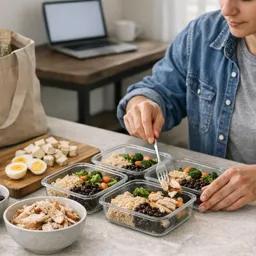
Meal prep doesn’t have to mean cooking an entire week of identical containers. A more flexible strategy is prepping components that snap together into different meals.
Pick 2–3 of these each week:
- Protein: roast chicken thighs, bake tofu/tempeh, cook lentils, hard-boil eggs.
- Produce: wash greens, chop crunchy vegetables, roast a sheet pan of mixed veggies.
- Carbs: cook rice/quinoa, portion oats, keep frozen potatoes or whole-grain wraps.
- Flavor builders: hummus, yogurt-based sauce, vinaigrette, spice blends, salsa.
With components ready, your “healthy meal” becomes a 3–5 minute assembly task—ideal for busy schedules.
5) Upgrade snacks using a “pairing rule”
Snacking isn’t inherently a problem; unmanaged snacking often becomes low-satiety, high-repeat. Use a pairing rule to increase fullness and stabilize energy: pair carbs with protein or fiber.
Easy pairings:
- Apple + peanut butter
- Crackers + tuna
- Banana + yogurt
- Carrots + hummus
- Popcorn + edamame
If you’re focusing on body composition outcomes, explore:
https://cursa.app/free-online-courses/fat-loss
6) Make hydration and “default drinks” effortless
Liquid calories and low hydration can quietly undermine progress. Instead of trying to “drink more water” abstractly, design defaults:
- Keep a filled bottle in your most-used location.
- Set a “first drink” habit (water or unsweetened tea/coffee) before other beverages.
- Stock low-calorie flavor options: lemon, mint, sparkling water.
If performance and training are part of your goals:
https://cursa.app/free-online-courses/sports-nutrition
7) Engineer your “high-risk moments”
Most people struggle in predictable situations: late afternoons, post-work fatigue, late-night habits, or stressful days.
Add a simple “if-then” plan:
- If I get home starving, then I’ll eat a planned protein-forward snack before cooking.
- If I want something sweet at night, then I’ll have a portioned dessert option and tea.
- If I order takeout, then I’ll add a vegetable side and choose a protein-based main.
These are flexible scripts that reduce decision fatigue when energy is low.

8) Keep progress visible without obsessing
Use small environmental cues to reinforce your habits:
- A shopping list template on the fridge (proteins, produce, fiber carbs, flavor).
- A short “default meals” list inside a cabinet door.
- Pre-portioned containers that match your needs.
For additional strategies:
https://cursa.app/free-online-courses/nutrition-for-muscle-growth
A simple 7-day food environment reset (checklist)
- Day 1: Kitchen audit (identify your easiest current meals/snacks).
- Day 2: Visibility reset (move best options to eye level; reduce visual triggers).
- Day 3: Choose 4 default meals you can do in 10 minutes.
- Day 4: Component prep (one protein + one produce + one carb).
- Day 5: Snack pairing setup (stock 3 pairings; portion if helpful).
- Day 6: Hydration defaults (bottle placement + first-drink habit).
- Day 7: Identify one high-risk moment and write one if-then plan.
The win isn’t doing everything perfectly—it’s creating a setup where your routine naturally produces better choices.