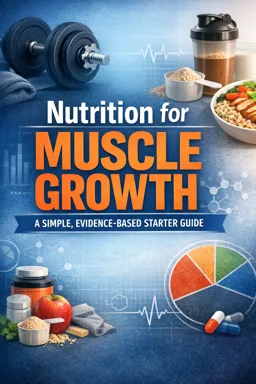

Free ebook on evidence-based muscle-gain nutrition: calories, protein, carbs, meal timing, supplements, and lean bulk tracking.
Free ebook content
-

Nutrition for Muscle Growth: Setting Targets for Lean Gains
+ Exercise: When aiming for lean gains, what is the most appropriate way to decide whether to change your calorie intake?
-
Protein for Muscle Growth: Daily Intake, Distribution, and Food Choices
+ Exercise: A lifter wants to support hypertrophy but often struggles to hit their daily protein. Which approach best matches the recommended strategy for setting a realistic target and improving consistency?
-
Carbohydrates for Training Performance and Muscle Gain
+ Exercise: If your daily calories and protein are already set, what is a practical way to determine carbohydrate intake to support lifting performance?
-
Dietary Fats and Hormonal Health: Getting Enough Without Overdoing It
+ Exercise: After setting your daily calorie and protein targets, what is the recommended way to balance fats and carbs for muscle gain?


-
Meal Frequency, Meal Timing, and Building a Sustainable Routine
+ Exercise: When building a meal-timing routine for muscle growth, which priority best reflects the recommended order for making the plan sustainable and effective?
-
Pre-Workout and Post-Workout Nutrition to Support Hypertrophy Training
+ Exercise: Which pre-workout choice best matches the guideline “the closer you are to training, the smaller and easier-to-digest the meal” for a 30–60 minute window?
-
Micronutrients, Fiber, Hydration, and Recovery Nutrition
+ Exercise: After you’ve already set a calorie surplus and adequate protein for muscle gain, what is the main way micronutrients, fiber, hydration, and recovery nutrition help you make progress?
-
Supplements for Muscle Growth: What’s Worth It and What to Skip
+ Exercise: A lifter starts taking creatine and gains 1 kg on the scale within the first two weeks. According to the guidance, what is the most likely explanation and best response?
-
Tracking Progress: Adjusting Calories and Macros Without Overcomplicating
+ Exercise: When should you adjust your calorie intake if daily scale weight is fluctuating but you’re trying to make steady progress?
-
Avoiding Common Bulking Mistakes: Staying Lean, Consistent, and Patient
+ Exercise: Your weight and waist have both been rising quickly for the past 2–3 weeks during a bulk. What is the most appropriate next step to get back on track while staying lean?
-
Putting It All Together: A Simple Starter System for Muscle-Gain Nutrition
+ Exercise: When calibrating your muscle-gain nutrition plan, what is the recommended approach before changing your calorie target?
About the free ebook
Nutrition for Muscle Growth: A Simple, Evidence-Based Starter Guide
This free ebook provides a practical, evidence-based approach to eating for muscle growth without turning nutrition into a complicated spreadsheet. Learn how to set realistic calorie and macronutrient targets that support lean gains, productive training, and long-term consistency.
Build muscle with clear nutrition priorities
Muscle gain is supported by progressive resistance training, sufficient energy intake, adequate protein, quality food choices, recovery, and patience. This guide explains how these pieces work together so you can make decisions based on your own progress rather than relying on extreme bulking methods.
- Set calorie targets for gradual, controlled weight gain.
- Choose an effective daily protein intake and distribute it across meals.
- Use carbohydrates to fuel training and support recovery.
- Include enough dietary fat while keeping meals balanced.
- Create realistic pre- and post-workout nutrition habits.
Make your plan sustainable
Food timing and meal frequency can be useful tools, but they do not need to be rigid. The ebook helps you build a routine around your schedule, preferences, appetite, and training demands. It also covers fiber, hydration, micronutrients, and recovery nutrition for a more complete foundation.
Supplements and progress tracking
Understand which supplements may offer practical value, which claims deserve skepticism, and why whole-food nutrition remains the base of a muscle-gain plan. You will also learn simple ways to monitor body weight, performance, and measurements, then adjust calories and macros only when the data suggests a change is needed.
Finish with a straightforward starter system designed to help you avoid common bulking mistakes, stay relatively lean, and make steady progress with confidence.
How much protein should I eat daily for muscle growth?
A practical evidence-based range is about 1.6 to 2.2 grams of protein per kilogram of body weight per day.
Do I need a calorie surplus to build muscle?
A small calorie surplus often supports muscle gain, especially for trained lifters, while progress can be monitored to limit excess fat gain.
What should I eat after a hypertrophy workout?
Have a meal with protein and carbohydrates within your normal eating routine to support recovery and replenish training fuel.
This ebook includes:

11 content chapters

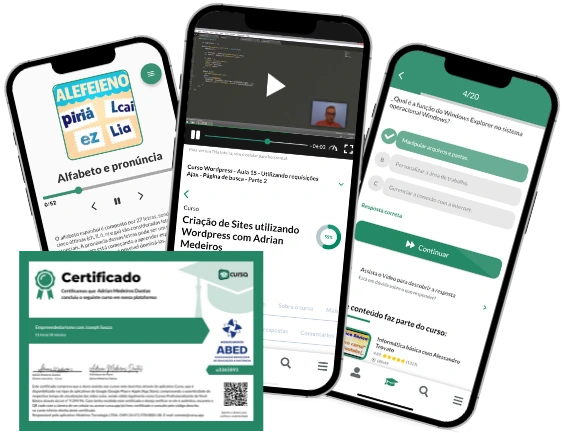
Digital certificate of course completion (Free)

Exercises to train your knowledge

100% free, from content to certificate
Ready to get started?

 recommended
In the app you will also find...

Over 5,000 free courses
Programming, English, Digital Marketing and much more! Learn whatever you want, for free.

Study plan with AI
Our app's Artificial Intelligence can create a study schedule for the course you choose.

From zero to professional success
Improve your resume with our free Certificate and then use our Artificial Intelligence to find your dream job.
You can also use the QR Code or the links below.