What Is Radioactivity?
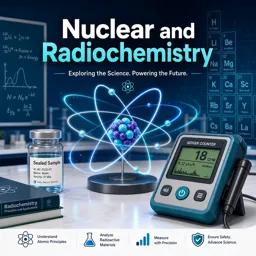
Radioactivity is a natural process in which unstable atomic nuclei release energy by emitting radiation. First observed in the late 19th century, this phenomenon has become fundamental in physics, chemistry, and many real-world applications. In simple terms, radioactivity transforms unstable atoms into more stable forms, often releasing particles or energy during the process.
The Discovery of Radioactivity
Henri Becquerel first observed radioactivity in 1896 when he discovered that uranium salts emitted rays capable of fogging photographic plates. Later, Marie and Pierre Curie expanded this research, leading to the discovery of radioactive elements such as polonium and radium, which helped shape the scientific understanding of atomic energy.
Types of Radiation
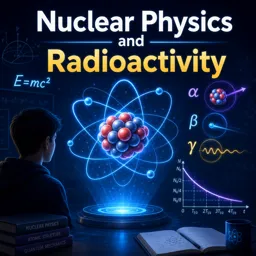
Radioactive decay occurs in several ways, mainly through three forms of radiation:
- Alpha Particles (α): Consist of two protons and two neutrons. They can be stopped by paper or human skin.
- Beta Particles (β): High-energy electrons or positrons that penetrate deeper than alpha particles but can be blocked by a thin sheet of aluminum.
- Gamma Rays (γ): High-energy electromagnetic waves that require dense shielding, such as lead or concrete, to be blocked effectively.
Half-Life and Measurement
Each radioactive element decays at a predictable rate measured by its half-life—the time required for half of a sample to decay. Half-lives can range from fractions of a second to billions of years. Radioactive activity is commonly measured in becquerels (Bq) or curies (Ci), helping scientists track and manage radiation levels.
Real-Life Applications of Radioactivity
- Medical Uses: Radioisotopes play a key role in cancer treatments (radiotherapy) and imaging techniques like PET scans.
- Industrial Applications: Radioactivity is used in material testing, food preservation, and as tracers to detect pipeline leaks.
- Energy Production: Nuclear reactors use radioactive fuels to generate electricity efficiently.
- Scientific Research: Techniques like radiocarbon dating help determine the ages of archaeological and geological samples.
Safety and Radioactive Protection
Although radioactivity has many benefits, excessive exposure can be dangerous. Safety measures include using shielding materials (such as lead), limiting exposure time, and applying remote handling tools. Regulatory agencies enforce strict safety standards to ensure radiation levels remain within safe limits.
Conclusion
Radioactivity is a powerful natural process with wide-ranging applications in medicine, industry, and research. By understanding its mechanisms, benefits, and safety protocols, we can harness its potential while minimizing risks.