For an ideal gas, the molar heat capacities obey Cp - Cv = R, where R is the universal gas constant.

Duration of the online course: 14 hours and 53 minutes
New
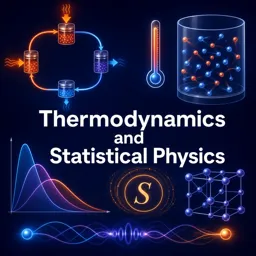
Master thermodynamics and statistical physics to solve real heat and energy problems. Free online course with practice questions and exam-ready concepts.
Build a clear, confident understanding of how heat, work, energy and temperature shape the physical world in this free online course on thermodynamics and statistical physics. You will move beyond memorizing formulas and learn to reason from first principles: what temperature really measures, why absolute zero matters, and how microscopic motion connects to macroscopic behavior. Along the way, you will develop the intuition to interpret processes on PV diagrams, predict how systems respond to heating or compression, and explain everyday phenomena using the laws of thermodynamics.
The course starts with the foundations of thermal physics, including specific heat capacity and kinetic theory, then guides you through the first and second laws, isochoric and adiabatic changes, and the meaning of key constraints such as constant volume or no heat transfer. You will also learn to work with heat capacities at constant pressure and constant volume and understand the relationships between them, helping you choose the right model when solving problems. As you progress, thermodynamic potentials bring a powerful perspective for analyzing equilibrium and spontaneous change, and idealized engines such as the Carnot cycle reveal the hard limits on efficiency that every real machine must obey.
After the macroscopic viewpoint is secure, statistical physics opens the door to a deeper explanation: how microstates, entropy, and probability lead to the laws you observe in bulk matter. You will see how Gibbs entropy and the Boltzmann distribution organize equilibrium behavior, and how the partition function becomes a central tool for extracting thermodynamic quantities. From there, you will connect statistics to materials and modern physics topics, including equipartition, quantum gases, fermions versus bosons, Bose-Einstein condensation, and models of solids that explain heat capacity and excitations such as phonons.
With practice questions integrated throughout, you can test understanding as you learn, strengthen problem-solving habits, and prepare for school or early university physics. By the end, you will be able to translate between microscopic models and measurable properties, reason about phase behavior and transitions, and interpret landmark ideas such as Planck’s resolution of the ultraviolet catastrophe and the statistical origins of magnetism and superconductivity.

Explore free online Thermodynamics courses and build essential skills in heat, energy, entropy, gases, engines, and thermodynamic laws. Learn at your own pace with expert-led lessons for beginners, students, and professionals. Enroll today, complete practical modules, and earn a certificate to showcase your knowledge.

Explore free online Modern Physics courses and master quantum mechanics, relativity, particle physics, atomic theory, and cosmology at your own pace. Learn through flexible lessons from trusted educators, build career-ready scientific skills, and earn a certificate upon completion. Start studying modern physics online for free today.

Explore free online Statistical Physics courses and master thermodynamics, kinetic theory, phase transitions, ensembles, and complex systems at your own pace. Learn from expert-led lessons, build practical problem-solving skills, and earn a certificate upon completion. Start studying statistical mechanics online for free today.

14 hours and 53 minutes of online video course

Digital certificate of course completion (Free)

Exercises to train your knowledge

100% free, from content to certificate
What is the relationship between heat capacity at constant pressure and constant volume for an ideal gas?
For an ideal gas, the molar heat capacities obey Cp - Cv = R, where R is the universal gas constant.
What does the partition function represent in statistical mechanics?
The partition function sums the statistical weights of all possible microstates and is used to calculate thermodynamic properties.
Why is n! used in the N-particle partition function for an ideal gas?
Dividing by n! prevents overcounting arrangements of indistinguishable particles and resolves the Gibbs paradox.
Ready to get started?Download the app and get started today.
Install the app now
to access the course
Over 5,000 free courses
Programming, English, Digital Marketing and much more! Learn whatever you want, for free.

Study plan with AI
Our app's Artificial Intelligence can create a study schedule for the course you choose.

From zero to professional success
Improve your resume with our free Certificate and then use our Artificial Intelligence to find your dream job.
You can also use the QR Code or the links below.



Free CourseRelativity Course: Special and General Relativity, Tensors, Black Holes, Gravitational Waves and Cosmology
5

(3)

19h01m

39 exercises
Free CourseIntroduction to Thermodynamics
5
(1)
1h48m
9 exercises
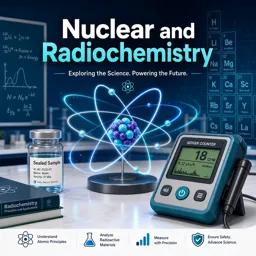
Free CourseNuclear and Radiochemistry
5
(1)
31h56m
31 exercises
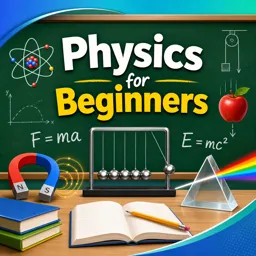
Free CoursePhysics for beginners
5
(1)
1h57m
2 exercises
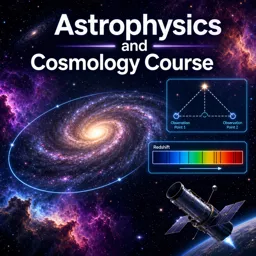
Free CourseAstrophysics and Cosmology Course
5
(1)
1h24m
5 exercises
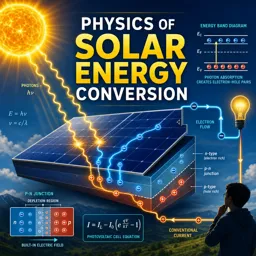
Free CoursePhysics of Solar Energy Conversion
5
(4)
4h59m
16 exercises
Free CourseQuantum Physics
5
(1)
24m
4 exercises
Free CourseFundamentals of Physics
5
(45)
28h44m
23 exercises
Free CoursePhysics 1 course
4.8
(6)
4h10m
19 exercises
Free CourseFundamentals of Physics II
4.7

(24)
29h48m
24 exercises
Carry knowledge in your pocket.
Download the Cursa app.
There are hundreds of free courses available, with a free certificate of completion that is saved in your mobile image gallery.
Download the app to access the Course Completion Certificate for Free.


+ 10 million
students

Free and Valid
Certificate

60 thousand free
exercises

4.8/5 rating in
app stores

Free courses in
video and ebooks