The course uses NumPy for array-based numerical operations, F2Py for connecting Fortran code to Python, and OpenMP concepts for multicore parallelism.

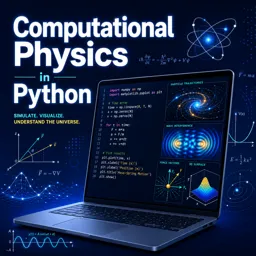
Duration of the online course: 35 hours and 45 minutes
2

(1)
Build real-world physics simulation skills with this free Python course—numerical methods, Monte Carlo and modeling tools to boost study and career results.
Turn core physics ideas into working code and learn how scientists and engineers explore systems that are too complex for pencil-and-paper math. In this free online course, you will use Python to model, simulate, and analyze physical problems with the mindset of computational physics: choose an approach, implement it efficiently, validate results, and interpret what the numbers mean. It is designed for learners who want more than formulas, aiming to gain practical problem-solving skills that translate to exams, research projects, and technical roles where simulation and data-driven reasoning matter.
Throughout the lessons, you will strengthen your Python foundations in a way that serves computation: working with arrays, slicing and indexing, structured code, and reusable components. You will also see why performance becomes a scientific issue, and how faster numerical workflows can come from optimized libraries, compiled extensions, and parallel thinking. The course builds intuition for accuracy and stability, highlighting why certain numerical choices succeed or fail and how to spot common pitfalls such as accumulated error, sensitivity to initial conditions, or unreliable approximations.
As you progress, you will connect algorithms to real physics use cases. You will work with iterative procedures and root-finding, explore ordinary differential equations as models of dynamical systems, and engage with techniques used in quantum problems such as the Schrödinger equation. You will also develop a practical understanding of randomness as a tool, using Monte Carlo ideas for high-dimensional integration and simulation, along with variance reduction and importance sampling strategies that make results more useful in realistic time.
The course experience emphasizes learning by doing: short exercises and targeted questions help you test understanding, reinforce concepts, and build confidence in translating a physical question into computational steps. By the end, you will be better prepared to read and write scientific Python code, evaluate numerical output critically, and approach new physics problems with a toolbox that scales from classroom assignments to research-style exploration.

35 hours and 45 minutes of online video course

Digital certificate of course completion (Free)

Exercises to train your knowledge

100% free, from content to certificate
What Python tools are used for high-performance numerical computing in this course?
The course uses NumPy for array-based numerical operations, F2Py for connecting Fortran code to Python, and OpenMP concepts for multicore parallelism.
How does the course solve physics problems such as the Schrödinger equation?
It covers numerical techniques including stable integration, root finding, and methods suited to boundary-value quantum mechanics problems.
Which Monte Carlo methods are covered in Computational Physics in Python?
Topics include importance sampling, Vegas integration, Metropolis-style Ising simulations, energy-space sampling, and simulated annealing.
Ready to get started?Download the app and get started today.
Install the app now
to access the course
Over 5,000 free courses
Programming, English, Digital Marketing and much more! Learn whatever you want, for free.

Study plan with AI
Our app's Artificial Intelligence can create a study schedule for the course you choose.

From zero to professional success
Improve your resume with our free Certificate and then use our Artificial Intelligence to find your dream job.
You can also use the QR Code or the links below.



Free CourseRelativity Course: Special and General Relativity, Tensors, Black Holes, Gravitational Waves and Cosmology
5
(3)

19h01m

39 exercises
Free CourseIntroduction to Thermodynamics
5
(1)
1h48m
9 exercises
Free CourseNuclear and Radiochemistry
5
(1)
31h56m
31 exercises
Free CoursePhysics for beginners
5
(1)
1h57m
2 exercises
Free CourseThermodynamics and Statistical Physics
5
(1)
14h53m
23 exercises
Free CourseAstrophysics and Cosmology Course
5
(1)
1h24m
5 exercises
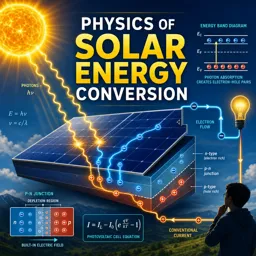
Free CoursePhysics of Solar Energy Conversion
5
(4)
4h59m
16 exercises
Free CourseQuantum Physics
5
(1)
24m
4 exercises
Free CourseFundamentals of Physics
5
(45)
28h44m
23 exercises
Free CoursePhysics 1 course
4.8
(6)
4h10m
19 exercises
Carry knowledge in your pocket.
Download the Cursa app.
There are hundreds of free courses available, with a free certificate of completion that is saved in your mobile image gallery.
Download the app to access the Course Completion Certificate for Free.


+ 10 million
students

Free and Valid
Certificate

60 thousand free
exercises

4.8/5 rating in
app stores

Free courses in
video and ebooks