Modern IT work rarely lives inside a single tool. A code change might start in Git, trigger an automated deployment, affect site performance, and ultimately show up in analytics and SEO outcomes. The fastest learners are the ones who can bridge tools—turning scattered knowledge into a repeatable workflow that reduces errors, saves time, and lowers operational cost.
This article focuses on the practical connective tissue between common IT tools—without rehashing tool-specific deep dives. You’ll learn a toolchain mindset you can apply whether you’re managing systems, supporting a product team, or building a portfolio of demonstrable skills.
1) Start with a “single source of truth”: Git as the change ledger
Even when you’re not a full-time developer, version control is the most reliable way to track changes across scripts, configs, dashboards-as-code, documentation, and even SEO experiments. The core bridge skill is learning to treat Git as the ledger of intent: what changed, why it changed, who approved it, and how to roll it back.
Practical habits that connect Git to the rest of your stack:
- Commit messages as operational context (e.g., “Reduce homepage JS bundle; expected LCP improvement”).
- Pull requests as review checkpoints for security, tracking changes, and performance impact.
- Tags/releases as anchors for analytics comparisons (before/after a deployment).
Explore structured learning paths in https://cursa.app/free-online-courses/git and broaden into the main https://cursa.app/free-online-information-technology-courses for adjacent skills.
2) Instrumentation is a tool, not a task: make Analytics and SEO measurable
Analytics and SEO become far more valuable when they’re treated as instrumentation—a way to validate outcomes of IT changes. This is where many teams stumble: they ship changes without a measurement plan, then argue about results later.
Bridge skills that unify analytics and SEO with IT work:
- Define success signals: page speed metrics, conversion events, crawl/index coverage, error rates.
- Version your tracking plan (events, naming conventions, dashboards) alongside code/config changes.
- Annotate releases so reports can be segmented by deployment or experiment window.
If you’re building analytics fluency, start with https://cursa.app/free-online-courses/google-analytics and pair them with basic technical SEO resources such as https://developers.google.com/search/docs to understand how crawling, indexing, and performance signals intersect with engineering changes.
3) Create a “change-to-impact” loop (the missing system in many teams)
To connect tools into a coherent workflow, build a simple loop that anyone can follow:
- Plan: define hypothesis + measurement (analytics/SEO signals).
- Change: implement and record in Git (code/config/docs).
- Verify: validate in a controlled environment (tests, previews, staging).
- Release: deploy with a clear version/release note.
- Observe: monitor performance, tracking integrity, and SEO crawl/index health.
- Learn: document outcomes and roll forward or back.
This loop reduces cost by preventing “silent failures” (broken tracking, regressions, misconfigured redirects, unstable deployments) that are expensive to detect later.

4) Standardize interfaces between tools: naming, environments, and documentation
When tools don’t connect cleanly, the root cause is often inconsistency—not complexity. Standardization is a high-leverage bridge skill that makes teams faster without adding new software.
High-impact standards to adopt:
- Naming conventions for events, tags, branches, dashboards, and alerts.
- Environment parity: consistent configuration between local/staging/production.
- Documentation that lives with changes: short, versioned notes in the repo.
- Checklists for releases (tracking, SEO, performance, security basics).
To support this, develop comfort with tooling fundamentals like the https://cursa.app/free-online-courses/command-line, which often becomes the “glue” between systems.
5) Automate the boring bridges: lightweight automation that pays off fast
You don’t need heavy infrastructure to get automation benefits. Even a few scripts can connect tools and prevent repetitive mistakes.
Automation ideas that bridge IT tools together:
- Pre-merge checks: linting, link validation, basic performance budgets.
- Post-deploy verification: confirm key pages return 200, canonical tags exist, and critical events still fire.
- Alerting rules: sudden drop in conversions, spike in 404s, increase in crawl errors.
- Scheduled exports: snapshot key dashboards for weekly review.
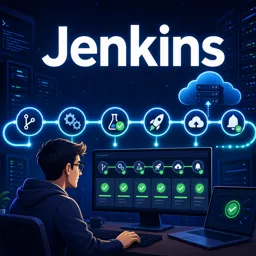
If your workflow grows, these automations often evolve naturally into broader operational practices. Learning paths in https://cursa.app/free-online-courses/devops can help you structure these bridges into reliable pipelines.
6) Where containers fit: consistent environments for repeatable results
One reason “it worked on my machine” persists is that tools behave differently across environments. Containers can help standardize runtimes so your scripts, checks, and site verification steps run the same way across machines.
Practical bridge use cases for containers:
- Run the same verification toolkit locally and in CI.
- Package SEO/performance auditing scripts with fixed dependencies.
- Spin up reproducible testing environments for tracking changes.
To learn these skills from the ground up, explore https://cursa.app/free-online-courses/docker and, when you’re ready for orchestration concepts, https://cursa.app/free-online-courses/kubernetes.

7) A practical learning roadmap (and why it leads to certifications)
If your goal is to enhance skills efficiently and earn free certifications, study in a sequence that builds bridges early:
- Foundation: command line basics and file operations.
- Change management: Git workflows and collaboration patterns.
- Measurement: analytics fundamentals + clean event naming.
- Outcomes: technical SEO basics and performance indicators.
- Reliability: automation habits and simple pipeline thinking.
- Consistency at scale: containers and deployment practices.
You can browse the curated https://cursa.app/free-courses-information-technology-online to assemble a learning path that matches your current level and the workflows you want to master.
Conclusion: the competitive edge is the connection
Knowing one tool is helpful. Knowing how tools connect is transformative. By building a “change-to-impact” loop and standardizing the interfaces between Git, analytics, SEO, and operational tooling, you’ll ship safer changes, troubleshoot faster, and show measurable results—exactly the kind of skill that translates across roles and industries.