APIs are the glue of modern software: they connect mobile apps to backends, automate workflows between services, and let teams ship features without rewriting everything. Learning how to design, consume, and test APIs across different programming languages builds a skill that transfers to almost any project—whether you’re building internal tools or public-facing products.
This guide focuses on practical API fundamentals—request/response structure, authentication, error handling, and testing—shown through the lens of Python, Ruby, Java, and C. For hands-on practice, explore the broader https://cursa.app/free-online-information-technology-courses and the dedicated https://cursa.app/free-courses-information-technology-online.
1) The API mental model that works in any language
Regardless of the language, working with web APIs usually means the same core steps:
1. Build a request: choose the endpoint URL, method (GET/POST/etc.), headers, and body.
2. Send it over HTTP: using a client library (or raw sockets in lower-level environments).
3. Parse the response: status code, headers, payload (often JSON).
4. Handle failures: timeouts, retries, rate limits, 4xx vs 5xx errors.
5. Test the behavior: unit tests for request construction; integration tests with a real or mocked server.
2) Build a simple REST API: what changes by language?
When creating an API, you’re really making decisions about interface design: routes, data shapes, validation, and error messages. The frameworks differ, but the design principles remain stable.
Python: fast prototyping with clear data models
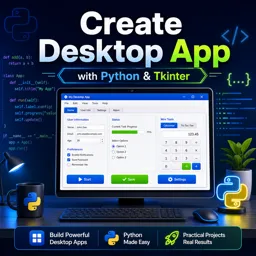
Python is often chosen when you want to iterate quickly and keep the code readable. In API work, the key is to define strict request/response schemas early (even if the language is flexible). If you’re learning Python alongside API development, the https://cursa.app/free-online-courses/python pair well with building JSON endpoints and input validation.
Ruby: expressive routing and convention-driven structure
Ruby shines when you want concise code and strong conventions. For APIs, pay extra attention to consistent error formats and versioning strategy (for example, /v1/ paths or media-type versioning), because Ruby projects often scale quickly through shared patterns. Explore the https://cursa.app/free-online-courses/ruby to reinforce routing, controllers, and API-friendly serialization.
Java: explicit types and production-ready defaults
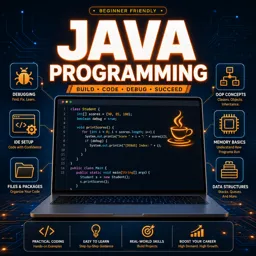
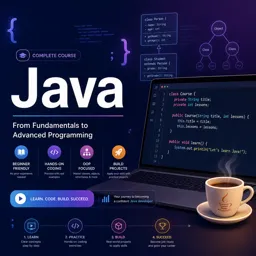
Java is a common choice for APIs that need maintainability, strong typing, and performance consistency. Good Java API design leans on DTOs, clear validation rules, and robust logging. If you’re advancing your Java foundation, the https://cursa.app/free-online-courses/java help you connect types, serialization, and service layers into a clean API architecture.
C: low-level control for embedded and systems-facing APIs
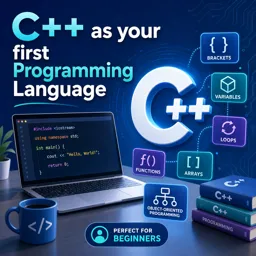
While C isn’t the most common choice for “typical” web REST services, it’s highly relevant when your API surface sits close to the system: embedded devices, high-performance networking components, or custom protocol gateways. In C, you’ll think more about memory management, buffer boundaries, and parsing. For broader systems fundamentals, see the https://cursa.app/free-online-courses/c-and-c-plus-plus.

3) Consuming APIs: building reliable clients in each language
Most developers spend as much time using APIs as they do building them. A solid API client does more than “just call the endpoint”—it standardizes timeouts, retries, authentication, and error mapping so the rest of your code stays clean.
HTTP essentials to implement everywhere
When consuming an API in Python, Ruby, Java, or C, make these behaviors deliberate instead of accidental:
Timeouts: set connection and read timeouts explicitly.
Retries: retry only safe operations (e.g., GET) unless you have idempotency keys.
Backoff: exponential backoff prevents retry storms.
Pagination: support page tokens/offsets and stop conditions.
Rate limiting: detect 429 and honor Retry-After when present.
Serialization: ensure JSON encoding/decoding is consistent and tested.
4) Authentication patterns: API keys, OAuth, and signed requests
Authentication is where API integrations often fail in production—not because the concept is hard, but because edge cases pile up (expired tokens, clock skew, missing scopes, wrong environments). These patterns show up across languages:
API keys: simple, often passed via header (prefer headers over query strings).
OAuth 2.0: token acquisition + refresh flow; store tokens securely.
Signed requests: compute a signature from request data (common in cloud services); be careful about canonicalization.
For deeper protocol specifics, a good external reference is the OAuth 2.0 framework overview at https://oauth.net/2/, which helps you understand the moving parts independent of language and library.
5) Testing APIs: unit, integration, and contract tests
API testing isn’t one thing—it’s a stack. The goal is fast feedback during development and high confidence at release.
Unit tests: validate request building, URL composition, serialization, and error mapping without making network calls.
Integration tests: hit a real server (local or staging) and verify end-to-end behavior.
Contract tests: ensure client and server agree on schemas, status codes, and edge cases.
A practical habit across Python, Ruby, and Java is to treat your API payloads as stable “contracts” and write tests for them explicitly—especially for error responses. In C-based clients, add tests for parsing robustness: malformed JSON, unexpected fields, and oversized payloads.
6) Designing better endpoints: stability, versioning, and error messages
Most API pain comes from breaking changes and unclear failures. These design choices make your API easier to integrate—no matter the language used to implement it:
Use consistent error shapes: e.g., {"error": {"code": "INVALID_INPUT", "message": "...", "details": [...]}}.
Prefer explicit status codes: 400 for validation, 401/403 for auth, 404 for missing, 409 for conflicts, 422 when appropriate, 500+ for server errors.
Version deliberately: version the API surface, not internal code; document deprecations.
Idempotency for writes: support idempotency keys on POST where retries might happen.
Observability: return request IDs and log them server-side.
7) A learning route: build one API, then re-implement the client in four languages
A highly effective way to learn multiple programming languages is to keep the problem constant while changing the tool. Try this sequence:
Step 1: Design a tiny API (e.g., tasks: create/list/complete).
Step 2: Implement the server in one language you’re strongest in.
Step 3: Write clients in Python, Ruby, Java, and C that call the same endpoints.
Step 4: Add authentication and standardized errors.
Step 5: Add tests and run them in CI.
To expand beyond these languages later, you can also branch into strongly typed functional and modern systems options via the https://cursa.app/free-online-courses/golang, https://cursa.app/free-online-courses/scala-programming, or https://cursa.app/free-online-courses/rust—each adds a different perspective on concurrency, types, and safety.

8) Common pitfalls (and how to avoid them)
Ignoring timeouts: “It works locally” becomes “it hangs in production.” Always set them.
Assuming JSON fields always exist: defensive parsing matters—especially in C or when APIs evolve.
Leaking secrets: never log raw tokens; keep auth headers out of debug output.
Silent error handling: map errors into actionable messages and include request IDs.
No schema discipline: even in dynamic languages, treat payload shape as a contract.
Conclusion
APIs are a universal programming skill: once you can design clean endpoints, build resilient clients, and test contracts thoroughly, switching between Python, Ruby, Java, and C becomes far less intimidating. Pick one small service idea, implement it end-to-end, then re-implement the client in each language to build real fluency.
Continue your path through https://cursa.app/free-courses-information-technology-online and deepen each language track via https://cursa.app/free-online-courses/python, https://cursa.app/free-online-courses/ruby, https://cursa.app/free-online-courses/java, and https://cursa.app/free-online-courses/c-and-c-plus-plus.