
Free ebook on API gateways: routing, authentication, rate limiting, observability, deployment, and scaling for web APIs.
Free ebook content
-

API Gateways in Practice: Where They Fit in Web APIs
+ Exercise: In a system with multiple backend services, what is a primary benefit of placing an API gateway in front of them?
-
Gateway Request Routing: Paths, Methods, Hosts, and Backends
+ Exercise: In an API gateway, why should more specific routes like /users/admin/ be placed before broader routes like /users/ (or given higher priority)?
-
Request and Response Transformation: Headers, Payloads, and Protocols
+ Exercise: Why should an API gateway validate an external request before transforming it for an upstream service?
-
API Versioning and Lifecycle Management Through the Gateway
+ Exercise: In a gateway-managed API deprecation workflow, which action best ensures clients receive consistent deprecation notice before a version is retired?


-
Authentication at the Gateway: API Keys, JWT, and OAuth2 Basics
+ Exercise: In a gateway setup that forwards identity context to upstream services, which practice best prevents clients from spoofing user identity headers (for example, X-User-Id or X-Scopes)?
-
Authorization and Policy Enforcement: Roles, Scopes, and Least Privilege
+ Exercise: In a multi-tenant API, what is the most appropriate gateway authorization check to enforce tenant isolation?
-
Rate Limiting, Quotas, and Traffic Shaping for API Protection
+ Exercise: You want to allow brief request spikes above a steady rate while still enforcing an average limit over time. Which algorithm best fits this goal, and what two parameters mainly control its behavior?
-
Observability at the Gateway: Logs, Metrics, Traces, and Correlation IDs
+ Exercise: Which approach best connects gateway logs, upstream service logs, and distributed traces for a single request?
-
Reference Architecture: Putting an API Gateway in Front of Microservices
+ Exercise: Which guideline best describes where to enforce rules that require reading domain data (such as order status or account tier)?
-
Reference Architecture: API Gateway for Serverless Backends
+ Exercise: When should an API operation in a serverless backend switch from a synchronous HTTP-to-function pattern to an asynchronous pattern using a queue or workflow?
-
Comparing Managed and Self-Managed Options: AWS API Gateway, Azure API Management, Kong, and NGINX
+ Exercise: A team needs the same API gateway runtime to run across multiple Kubernetes clusters in different environments and wants to extend behavior through plugins. Which option best fits these needs?
-
Deploying and Operating an API Gateway: Environments, Security Hardening, and Scaling
+ Exercise: When multiple gateway instances enforce API rate limits, what is a key trade-off between using local counters and centralized counters?
About the free ebook
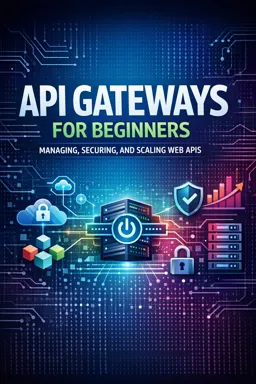
API Gateways for Beginners: Managing, Securing, and Scaling Web APIs
This free ebook explains how an API gateway provides a secure, controlled entry point for web APIs, microservices, and serverless applications. Learn how gateways help teams centralize cross-cutting concerns while keeping backend services focused on business logic.
Build safer and more reliable API access
Explore practical approaches to routing requests by path, method, and host; directing traffic to the appropriate backend; and adapting requests or responses when services use different headers, payloads, or protocols.
The ebook introduces gateway-level security controls, including API keys, JWTs, OAuth2, roles, scopes, and least-privilege policies. It also shows how rate limits, quotas, and traffic shaping can protect APIs from misuse, accidental overload, and abusive clients.
Operate APIs with visibility and control
Understand how API gateways support versioning, lifecycle management, logging, metrics, distributed traces, and correlation IDs. These capabilities help teams diagnose failures and observe requests as they move across distributed systems.
Choose and run the right gateway model
Review reference architectures for microservices and serverless backends, then compare managed and self-managed options such as AWS API Gateway, Azure API Management, Kong, and NGINX. The final guidance covers deployment environments, security hardening, operational practices, and scaling strategies.
- Route and transform API traffic consistently
- Apply authentication, authorization, and traffic policies
- Improve observability across backend services
- Plan gateway deployments for growth and resilience
Designed for developers, cloud practitioners, and technical teams who need a clear foundation for making API gateways work in real-world web architectures.
What is an API gateway used for in a microservices architecture?
It provides one entry point for clients and centralizes routing, security, traffic controls, transformations, and observability.
How do API gateways enforce rate limiting and quotas?
They track requests by client, key, user, or route and apply limits or quotas before traffic reaches backend services.
What is the difference between a managed and self-managed API gateway?
Managed gateways reduce infrastructure operations, while self-managed options offer more direct control over configuration and hosting.
This ebook includes:

12 content chapters

Digital certificate of course completion (Free)

Exercises to train your knowledge

100% free, from content to certificate
Ready to get started?

 recommended
In the app you will also find...

Over 5,000 free courses
Programming, English, Digital Marketing and much more! Learn whatever you want, for free.

Study plan with AI
Our app's Artificial Intelligence can create a study schedule for the course you choose.

From zero to professional success
Improve your resume with our free Certificate and then use our Artificial Intelligence to find your dream job.
You can also use the QR Code or the links below.