
Exercises
Challenge your understanding of classical mechanics with this quiz covering core physics concepts. Explore vector quantities, projectile motion, SI units of work, Newton's law of inertia, conservation of momentum in inelastic collisions, displacement-time graphs, and acceleration due to gravity on Earth. Ideal for students reviewing foundational mechanics topics, this quiz helps assess your grasp of motion, forces, energy, and graphical analysis.
Answer the questions below and check the explanation for each answer.
0/7 answered
Auto audio on: the next questions will be read aloud when you click Continue.
A vector quantity has both magnitude and direction. Velocity is a vector quantity because it describes how fast something is moving (magnitude) and the direction in which it is moving. In contrast, mass (Option 1) and temperature (Option 2) are scalar quantities as they only have magnitude and no direction.
In projectile motion, ignoring air resistance, the horizontal velocity remains constant. This is because there are no horizontal forces acting on the projectile, allowing it to maintain its initial horizontal velocity throughout its flight.
The unit of work done in the International System of Units (SI) is the Joule (J). Work is defined as the product of force and displacement in the direction of the force, and is measured in Joules. A Joule is equivalent to one Newton-meter.
Newton's First Law, often called the law of inertia, states that an object at rest stays at rest, and an object in motion stays in motion with the same speed and direction unless acted upon by an unbalanced external force.
In an isolated system during an inelastic collision, momentum is conserved, while kinetic energy is not necessarily conserved. The transformation of kinetic energy into other forms, like heat or sound, is typical in inelastic collisions.
The slope of a displacement-time graph represents velocity. This is because the slope shows the rate of change of displacement over time, which is the definition of velocity.
The correct value for the acceleration due to gravity on Earth's surface is 9.8 m/s2, which corresponds to Option 1. This value is a standard approximation used in physics for calculations involving gravity near the Earth's surface.
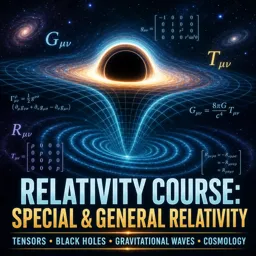
Free CourseRelativity Course: Special and General Relativity, Tensors, Black Holes, Gravitational Waves and Cosmology
5

(3)

19h01m

39 exercises
Free CourseIntroduction to Thermodynamics
5
(1)
1h48m
9 exercises
Free CourseNuclear and Radiochemistry
5
(1)
31h56m
31 exercises
Free CoursePhysics for beginners
5
(1)
1h57m
2 exercises
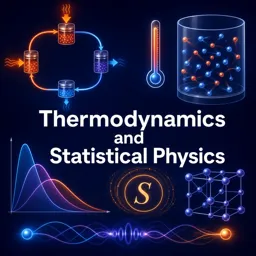
Free CourseThermodynamics and Statistical Physics
5
(1)
14h53m
23 exercises
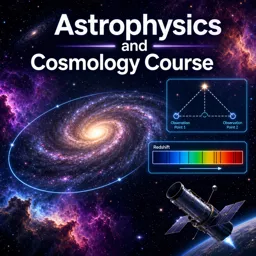
Free CourseAstrophysics and Cosmology Course
5
(1)
1h24m
5 exercises
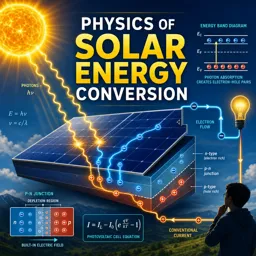
Free CoursePhysics of Solar Energy Conversion
5
(4)
4h59m
16 exercises
Free CourseQuantum Physics
5
(1)
24m
4 exercises
Thousands of online courses in video, ebooks and audiobooks.
To test your knowledge during online courses
Generated directly from your cell phone's photo gallery and sent to your email

Download our app via QR Code or the links below:.



Carry knowledge in your pocket.
Download the Cursa app.
There are hundreds of free courses available, with a free certificate of completion that is saved in your mobile image gallery.
Download the app to access the Course Completion Certificate for Free.


+ 10 million
students

Free and Valid
Certificate

60 thousand free
exercises

4.8/5 rating in
app stores

Free courses in
video and ebooks