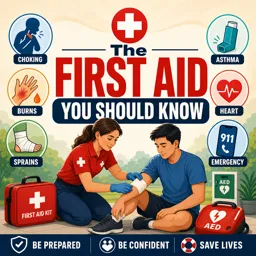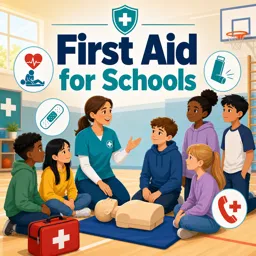

Free ebook on school first aid for teachers and staff, covering safe responses to everyday injuries, illness, emergencies, and reporting.
Free ebook content
-

School First Aid Readiness for Teachers and Staff: Roles, Limits, and Safety
+ Exercise: When a student is injured at school, which sequence best matches the recommended first-aid priorities for non-medical staff?
-
Assessment and Immediate Actions for Everyday School Incidents
+ Exercise: During a playground fall, a student is responsive and breathing normally but has wrist swelling and persistent pain. What is the most appropriate next action?


-
Playground Bumps, Bruises, Sprains, and Suspected Fractures: Safe Care and Supervision
+ Exercise: A student falls during recess and has immediate ankle pain with rapid swelling and cannot bear weight. What is the most appropriate response?
-
Bleeding Control in School Settings: Cuts, Scrapes, and Open Wounds
+ Exercise: A student has steady bleeding from a scrape. After applying direct pressure with gauze, when should you first check whether the bleeding has stopped?
-
Nosebleeds at School: Positioning, Comfort, and Escalation Criteria
+ Exercise: A student has an active nosebleed at school. Which response best helps control bleeding and prevents blood from flowing into the throat?
-
Head Injuries at School: Red Flags, Concussion Concerns, and Return-to-Activity Boundaries
+ Exercise: A student hits their head during recess and now reports dizziness and feeling “foggy,” but insists they are fine and wants to return to PE the same day. What is the most appropriate response?
-
Asthma Support Basics for Teachers and Staff: Recognizing Distress and Assisting Safely
+ Exercise: During a suspected asthma episode at school, which observation most strongly indicates severe distress requiring immediate emergency services activation?
-
Allergic Reactions and Anaphylaxis in Schools: Early Recognition and Rapid Escalation
+ Exercise: Which situation most clearly meets the escalation threshold for a possible anaphylaxis emergency in a school setting?
-
Fainting, Dizziness, and Low Blood Sugar Concerns: Safe Response and Monitoring
+ Exercise: A student says they feel dizzy and looks pale and sweaty, as if they might faint. What is the best immediate response to prioritize safety and monitoring?
About the free ebook
School First Aid for Teachers and Staff: Everyday Incidents and Response
This free ebook supports teachers and school staff in responding calmly, safely, and within their role when everyday health incidents occur. It focuses on immediate priorities: protecting the student, getting appropriate help, following school procedures, and communicating clearly with families and health personnel.
Practical action for common school situations
Learn how to assess the scene, identify urgent warning signs, provide basic comfort measures, and maintain supervision while help is arranged. Guidance covers playground injuries, bleeding, nosebleeds, breathing difficulties, allergic reactions, fainting, possible low blood sugar, and head injuries.
Safe boundaries matter
First aid at school is not a substitute for medical diagnosis or emergency care. Staff should follow local policies, individual student health plans, medication authorizations, and emergency protocols. When symptoms are severe, worsening, or uncertain, seek urgent medical assistance without delay.
- Recognize when an incident may require emergency services.
- Use safe positioning and observation while awaiting support.
- Apply basic bleeding-control and injury-care principles.
- Identify red flags following a fall or possible concussion.
- Record observations, actions, times, and communications accurately.
Clear communication and follow-through
Effective school first aid includes more than the immediate response. Accurate documentation helps protect students and supports continuity of care. This ebook encourages factual reporting, timely parent or guardian notification, and appropriate handover to school nurses, administrators, or emergency responders.
Important: Always prioritize emergency procedures and trained medical guidance over general information when a student may be seriously unwell or injured.
What should school staff do for a student with a suspected concussion?
Stop activity, supervise the student, watch for red flags, notify the appropriate school contacts, and seek urgent care when indicated.
How should a nosebleed be managed at school?
Have the student sit forward, pinch the soft part of the nose continuously, and escalate if bleeding is heavy, prolonged, or follows a serious injury.
What are key signs of anaphylaxis in a student?
Signs can include breathing trouble, throat or tongue swelling, widespread hives, dizziness, or collapse. Follow the student’s emergency plan and get emergency help immediately.
This ebook includes:

10 content chapters

Digital certificate of course completion (Free)

Exercises to train your knowledge

100% free, from content to certificate
Ready to get started?

 recommended
In the app you will also find...

Over 5,000 free courses
Programming, English, Digital Marketing and much more! Learn whatever you want, for free.

Study plan with AI
Our app's Artificial Intelligence can create a study schedule for the course you choose.

From zero to professional success
Improve your resume with our free Certificate and then use our Artificial Intelligence to find your dream job.
You can also use the QR Code or the links below.