
Free ebook on practical economics: make choices, understand prices, analyze supply and demand, and apply simple market thinking.
Free ebook content
-

Scarcity and Trade-Offs in Everyday Decisions
+ Exercise: When evaluating a choice, what is the main reason to write the full cost in multiple currencies such as money, time, energy, and stress?
-
Opportunity Cost and Choosing Between Alternatives
+ Exercise: Which statement best describes opportunity cost when choosing between two realistic options?
-
Marginal Thinking and Small Changes That Matter
+ Exercise: When deciding whether to add one more unit of an activity (like an extra 10 minutes of study or an upgrade), what rule best matches marginal thinking?
-
Preferences, Incentives, and How People Respond to Prices
+ Exercise: When analyzing the impact of a price increase on something you regularly buy, which approach best separates preferences from price-driven constraints?
-
Budget Constraints, Subscriptions, and Practical Spending Plans
+ Exercise: Why can subscriptions tighten a monthly budget constraint more than a one-time purchase of the same monthly cost?


-
Demand: What Buyers Want and How Quantity Changes with Price
+ Exercise: A cafe raises the price of a latte, and you buy fewer lattes per week while your income and preferences stay the same. What best describes this change?
-
Supply: How Sellers Decide What to Offer and at What Price
+ Exercise: A tutor is consistently fully booked at $60 per hour. According to the supply decision logic, what is the best explanation for why the tutor might raise prices rather than simply add more hours immediately?
-
Market Equilibrium: How Prices Coordinate Buyers and Sellers
+ Exercise: Which situation best indicates that the posted price is below the market’s coordinating (equilibrium) level?
-
Elasticity: Measuring Sensitivity to Price Changes and Discounts
+ Exercise: A seller raises a product price and wants to predict what happens to revenue. If the demand for that product is inelastic (absolute value of elasticity is less than 1), which outcome is most likely?
-
Consumer and Producer Surplus: Value, Gains from Trade, and Deals
+ Exercise: A buyer values an item at a maximum of 300 and a seller would accept as little as 180. Which statement best describes the gains from trade and how price affects them?
-
Price Signals and Simple Market Thinking in Real-Life Purchases
+ Exercise: When comparing two online offers for the same item, which approach best uses the idea of a price signal to make a better decision?
-
Case Studies and Review Questions: Applying Microeconomics to Choices
+ Exercise: When comparing a fixed monthly fee to pay-per-use pricing, which approach best reflects practical microeconomic thinking from the case studies?
About the free ebook
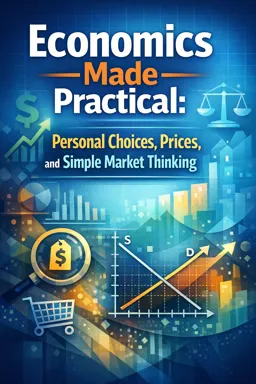
Economics Made Practical: Personal Choices, Prices, and Simple Market Thinking
This free ebook makes core microeconomics useful for everyday decisions. It shows how scarcity shapes choices, why every decision has an opportunity cost, and how small marginal changes can affect spending, saving, work, and consumption.
Think clearly about personal choices
Explore how preferences, incentives, and budget constraints influence what people buy. Practical examples involving subscriptions, discounts, and competing priorities help connect economic ideas to real spending plans.
Understand how markets use prices
Learn how demand and supply interact, how equilibrium prices coordinate buyers and sellers, and why price changes can produce different reactions depending on elasticity. The ebook also explains consumer and producer surplus as ways to assess value and gains from trade.
Apply simple market reasoning
Use price signals to evaluate purchases and recognize how incentives affect behavior. Economics is not only about markets—it is a practical framework for comparing alternatives and making more informed choices.
What you will practice
- Identifying trade-offs and opportunity costs
- Using marginal thinking for small decisions
- Explaining shifts in demand and supply
- Evaluating discounts, price sensitivity, and value
- Applying microeconomic reasoning to real-life cases
Short case studies and review questions encourage you to turn concepts into practical analysis.
What is opportunity cost in everyday spending?
Opportunity cost is the value of the best alternative you give up, such as saving money instead of buying a subscription.
How does elasticity affect discounts and price changes?
Elasticity shows how strongly buyers respond to a price change. More elastic demand usually means quantity changes more.
How is market equilibrium determined?
Market equilibrium occurs where the quantity buyers want equals the quantity sellers are willing to offer.
This ebook includes:

12 content chapters

Digital certificate of course completion (Free)

Exercises to train your knowledge

100% free, from content to certificate
Ready to get started?

 recommended
In the app you will also find...

Over 5,000 free courses
Programming, English, Digital Marketing and much more! Learn whatever you want, for free.

Study plan with AI
Our app's Artificial Intelligence can create a study schedule for the course you choose.

From zero to professional success
Improve your resume with our free Certificate and then use our Artificial Intelligence to find your dream job.
You can also use the QR Code or the links below.