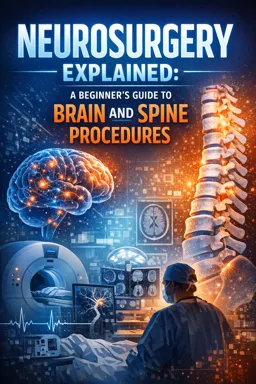

Free ebook explaining brain and spine conditions, neurosurgical tests, procedures, risks, recovery, and care decisions.
Free ebook content
-

Neurosurgery Explained: What Neurosurgeons Treat and How Care Decisions Are Made
+ Exercise: Which situation best supports a neurosurgical decision to proceed with surgery rather than continue non-surgical care?
-
Understanding the Brain and Spine for Neurosurgery Beginners
+ Exercise: A patient has months of hand clumsiness, unsteady gait, and brisk reflexes in the legs. Which localization best fits this pattern?
-
Imaging and Diagnostic Tools in Neurosurgery: MRI, CT, Angiography, and More
+ Exercise: In an emergency setting where minutes matter (e.g., sudden severe neurologic symptoms), which imaging choice best fits the goal of quickly identifying acute blood or bone injury?
-
Monitoring and Safety in Neurosurgical Care: Neuro Exams, ICP, and Intraoperative Monitoring
+ Exercise: During intraoperative neuromonitoring, what is the most appropriate first interpretation of a sudden drop in SSEPs or MEPs compared with baseline?


-
Herniated Discs and Sciatica: When Symptoms Need Neurosurgical Evaluation
+ Exercise: Which situation most strongly indicates the need for urgent neurosurgical evaluation in a person with suspected lumbar disc herniation?
-
Spinal Stenosis and Myelopathy: Recognizing Cord Compression and Restoring Function
+ Exercise: Which clinical pattern most strongly suggests cervical spinal cord compression (myelopathy) rather than lumbar nerve root compression?
-
Traumatic Brain Injury and Spinal Trauma: From Emergency Evaluation to Rehabilitation
+ Exercise: In the first minutes of managing suspected traumatic brain injury with possible cervical spine injury, which approach best helps prevent secondary injury?
-
Brain Tumors: From Incidental Findings to Surgical Planning
+ Exercise: Which statement best explains why surgeons may recommend biopsy or resection even when MRI findings seem suggestive of a brain tumor type?
-
Brain Aneurysms and Hemorrhage Risk: Evaluation and Treatment Options
+ Exercise: Which statement best explains why a wide aneurysm neck affects the choice of treatment?
-
Hydrocephalus and CSF Disorders: Shunts, ETV, and Symptom Tracking
+ Exercise: In suspected communicating hydrocephalus, why is a ventricular shunt often chosen over endoscopic third ventriculostomy (ETV)?
-
Common Neurosurgical Procedures: Conceptual Walkthroughs of Approaches and Goals
+ Exercise: In a transsphenoidal approach to the pituitary region, what is a key closure priority that helps prevent a major complication?
-
Recovery After Brain and Spine Surgery: What to Expect and How Complications Are Managed
+ Exercise: Which situation most strongly suggests a possible CSF leak after brain or spine surgery and should be reported promptly?
-
Understanding Risks, Second Opinions, and Pre-Op Questions in Neurosurgery
+ Exercise: When a surgeon says an approach “reduces stroke risk by 50%,” what follow-up best helps you interpret the practical meaning of that risk change?
About the free ebook
Neurosurgery Explained: A Beginner’s Guide to Brain and Spine Procedures
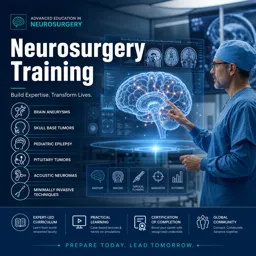
This free ebook introduces the field of neurosurgery in clear, patient-focused language. It explains how neurosurgeons assess conditions affecting the brain, spine, nerves, and cerebrospinal fluid, and how care decisions are made with imaging, examinations, symptom patterns, and multidisciplinary input.
Understand common brain and spine conditions
Learn the essential concepts behind herniated discs, sciatica, spinal stenosis, myelopathy, brain tumors, aneurysms, hydrocephalus, traumatic brain injury, and spinal trauma. The ebook distinguishes symptoms that may need urgent assessment from issues that can be monitored or discussed at a planned appointment.
See how diagnosis and safety guide treatment
Explore the purpose of MRI, CT, angiography, neurological examinations, intracranial pressure monitoring, and intraoperative monitoring. These tools help clinicians identify the problem, estimate risk, and plan the safest appropriate approach.
Build confidence for care conversations
- Understand the goals of common brain and spine procedures.
- Learn why surgery is one option among observation, rehabilitation, medication, and other treatments.
- Prepare practical questions about recovery, complications, second opinions, and pre-operative planning.
A practical educational resource
Neurosurgery can involve complex choices, but patients and families do not need to face unfamiliar terms alone. This guide provides a foundational framework for understanding procedures and discussing individual circumstances with qualified healthcare professionals. It is educational content and does not replace personal medical advice, diagnosis, or emergency care.
When should sciatica or a herniated disc be evaluated urgently?
Urgent evaluation is needed for new weakness, saddle numbness, loss of bladder or bowel control, or rapidly worsening symptoms.
What is the difference between CT, MRI, and angiography in neurosurgery?
CT is fast and useful in emergencies, MRI gives detailed soft-tissue images, and angiography maps blood vessels.
What questions should I ask before brain or spine surgery?
Ask about the treatment goal, alternatives, expected benefits, major risks, recovery plan, and signs that require urgent follow-up.
This ebook includes:

13 content chapters

Digital certificate of course completion (Free)

Exercises to train your knowledge

100% free, from content to certificate
Ready to get started?

 recommended
In the app you will also find...

Over 5,000 free courses
Programming, English, Digital Marketing and much more! Learn whatever you want, for free.

Study plan with AI
Our app's Artificial Intelligence can create a study schedule for the course you choose.

From zero to professional success
Improve your resume with our free Certificate and then use our Artificial Intelligence to find your dream job.
You can also use the QR Code or the links below.