A stroke is a medical emergency in which time is the single most important factor. Treatment options narrow rapidly as the minutes pass, so recognising the signs quickly and calling for help without hesitation genuinely changes outcomes. The good news is that the core warning signs can be checked by anyone, without any equipment.
What a stroke is
A stroke happens when the blood supply to part of the brain is interrupted. Brain tissue depends on a constant flow of oxygen and glucose, and when that flow stops, cells begin to be damaged.
There are two broad types. In an ischaemic stroke, a clot blocks a blood vessel supplying the brain. In a haemorrhagic stroke, a vessel ruptures and bleeds. The two require different treatments, which is one reason why hospital imaging is essential and why nothing should be given to the person by mouth beforehand.
The FAST checklist
FAST is a widely taught memory aid used by health services around the world. Each letter is a quick check.
| Letter | Check | Warning sign |
|---|---|---|
| F — Face | Ask the person to smile. | One side of the face droops or looks uneven. |
| A — Arms | Ask them to raise both arms. | One arm drifts downward or cannot be lifted. |
| S — Speech | Ask them to repeat a simple sentence. | Speech is slurred, strange or impossible to produce. |
| T — Time | Note the time symptoms began. | Call emergency services immediately. |
If any single one of these signs is present, that is enough. You do not need all of them, and you should not wait to see whether the symptoms improve.
Other symptoms worth knowing
FAST captures the most common presentations, but strokes can appear in other ways, particularly when they affect different areas of the brain:
- Sudden numbness or weakness on one side of the body, including the leg.
- Sudden confusion or difficulty understanding what others are saying.
- Sudden trouble seeing in one or both eyes, or double vision.
- Sudden severe dizziness, loss of balance or difficulty walking.
- A sudden, unusually severe headache with no obvious cause.
The word that repeats in every item is sudden. Symptoms that appear abruptly, especially on one side of the body, deserve an emergency response.
Why the time of onset matters so much
Hospital treatment decisions depend heavily on when symptoms started. Clot-dissolving medication and clot-removal procedures are only appropriate within limited time windows, and only after imaging confirms the type of stroke.
This is why “last known well” — the last moment the person was seen behaving normally — is one of the first questions the emergency team will ask. If someone wakes up with symptoms, the relevant time is when they were last seen without them, not when they woke up. Writing the time down while you wait is genuinely helpful.
What to do while waiting for help
- Call emergency services first. Do not drive the person yourself unless advised to; an ambulance can begin assessment on the way and alert the receiving hospital.
- Keep the person still and comfortable. If they are conscious, help them sit or lie down with the head slightly raised.
- Do not give food, drink or medication. Swallowing may be impaired, and the type of stroke is still unknown.
- Loosen tight clothing around the neck and keep the person warm.
- Stay with them and keep talking calmly. Note any changes in symptoms to report to the paramedics.
- If they become unresponsive and are not breathing normally, follow the emergency operator’s instructions for resuscitation.
Gathering a short list of the person’s regular medications, known conditions and allergies, if it can be done without leaving them alone, saves valuable time on arrival.
Symptoms that disappear are still an emergency
Sometimes stroke symptoms resolve within minutes. This can indicate a transient ischaemic attack, often called a mini-stroke. Although the symptoms pass, it is a serious warning sign that a larger stroke may follow, and it requires urgent medical assessment rather than relief that the episode ended.
Common reasons people delay calling
Studies of emergency care consistently find that delay is the biggest obstacle to good stroke outcomes, and the delay usually happens before the ambulance is ever called. Understanding the reasoning behind that hesitation makes it easier to overcome.
- “It might be nothing.” Emergency services would far rather assess someone who turns out to be fine than arrive too late for someone who was not.
- “I do not want to cause a fuss.” Stroke is exactly the situation these services exist for.
- “Let me lie down and see if it passes.” Resting wastes the window in which treatment is possible.
- “I will call my family doctor first.” A clinic cannot provide the imaging and treatment a stroke requires.
Talking about this in advance with older relatives or colleagues is worthwhile. Someone experiencing a stroke may have impaired judgement or difficulty speaking, so the people around them often have to make the decision on their behalf.
Risk factors and prevention
Some risk factors cannot be changed, such as age and family history. Many others can be managed with medical guidance:
- High blood pressure, which is the single most important modifiable risk factor.
- Smoking.
- Diabetes and high cholesterol.
- Irregular heart rhythms such as atrial fibrillation.
- Physical inactivity, excess weight and heavy alcohol consumption.
Regular check-ups matter because several of these conditions produce no symptoms until something serious happens.
Knowing what to do is a skill worth having
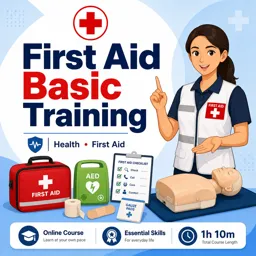
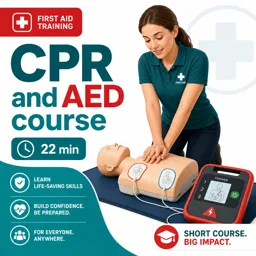
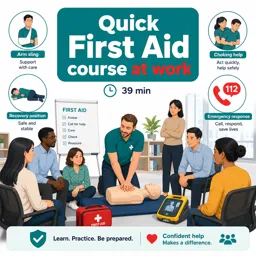
This article is general educational information and does not replace professional medical advice or formal first aid training. Practical courses teach the hands-on techniques that written explanations cannot, and they are valuable for anyone who works with the public, cares for older relatives or simply wants to be prepared at home.
If you would like to build that knowledge, Cursa offers free courses in first aid, nursing and health fundamentals that cover emergency recognition and response in more depth.