Physiology is the study of how the body works—and one idea connects nearly every organ system: homeostasis. Homeostasis is the body’s ability to keep internal conditions within a workable range, even when the environment changes. From body temperature to blood pressure to blood glucose, stability is maintained through coordinated sensing, signaling, and response.
This matters for learning because many “separate” topics—like breathing rate, heart function, kidney filtration, and hormones—are easier to understand when you see them as parts of feedback loops. If you’re exploring physiology as a whole, start with the broader path:
https://cursa.app/free-online-health-courses
and then dive into the dedicated
https://cursa.app/free-courses-health-online
The Core Components of a Feedback Loop
Most homeostatic control systems follow the same blueprint:
- Stimulus: something changes (e.g., body temperature rises).
- Receptor (sensor): detects the change (e.g., thermoreceptors in skin/brain).
- Control center: compares the value to a set point (e.g., hypothalamus).
- Effector: carries out the response (e.g., sweat glands, blood vessels).
- Response: reduces the original change (negative feedback) or amplifies it (positive feedback).
In most cases, the body relies on negative feedback—responses that push conditions back toward baseline. Positive feedback exists too, but it’s used sparingly and usually has a clear stopping point (like childbirth contractions).
Negative Feedback in Action: Temperature Regulation
When your core temperature rises, sensors signal the hypothalamus. The hypothalamus coordinates effectors: skin blood vessels dilate to release heat, sweat glands increase sweating, and behavior changes (seeking shade, reducing activity). When temperature falls, vasoconstriction conserves heat, shivering generates heat, and hormones can shift metabolic rate.
What’s useful for learners is that this same “sensor → controller → effector” structure repeats across physiology. Once you recognize the pattern, complex topics become a set of understandable loops.

Blood Glucose Control: Hormones as Long-Distance Messengers
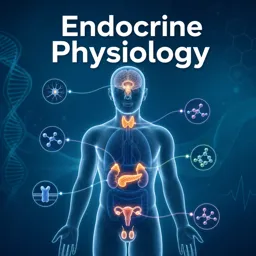
Blood glucose is tightly regulated because cells—especially neurons—depend on a steady supply of fuel. After a meal, glucose rises and triggers insulin release from the pancreas, promoting glucose uptake and storage. During fasting, glucose drops and stimulates glucagon release, prompting the liver to release glucose into the blood.
This is a classic homeostatic loop where the endocrine system acts as the signaling network. If you want to build a strong foundation in hormone-based control, explore
https://cursa.app/free-online-courses/endocrine-physiology
Blood Pressure Regulation: Fast Neural Control Meets Slower Hormonal Support
Blood pressure must remain high enough to perfuse the brain and organs, but not so high that it damages vessels. A rapid control system called the baroreflex uses stretch receptors in major arteries to detect pressure changes. Signals travel to brainstem centers that adjust heart rate, heart contractility, and vessel diameter within seconds.
When longer-term adjustments are needed, kidneys and hormones help regulate blood volume and vascular tone. For deeper study of heart and vessel function, see
https://cursa.app/free-online-courses/cardiovascular-physiology
Oxygen and Carbon Dioxide: Breathing as a Feedback-Control System
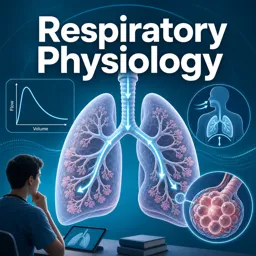
Ventilation isn’t just “automatic”—it’s regulated to manage blood gases. Chemoreceptors sense carbon dioxide (and related pH changes) and oxygen levels, feeding information to brain centers that adjust breathing rate and depth. This is why breathing increases during exercise: CO₂ production rises, pH trends downward, and ventilation responds to stabilize the system.
If you’re mapping how lung function fits into whole-body control, continue with
https://cursa.app/free-online-courses/respiratory-physiology
Fluid and Electrolytes: Kidneys as Precision Regulators
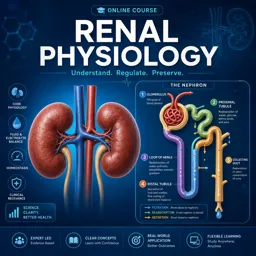
Hydration and electrolyte balance (like sodium and potassium) are essential for nerve signaling, muscle contraction, and blood pressure control. The kidneys regulate these by adjusting filtration, reabsorption, and secretion. They respond to signals like changes in blood volume, osmolarity, and hormones that fine-tune how much water and salt are conserved or excreted.
To understand how the body balances fluid compartments and maintains internal chemistry, explore
https://cursa.app/free-online-courses/renal-physiology
Integrating Systems: One Disturbance, Multiple Responses
A powerful way to learn physiology is to trace a single challenge across systems. Example: dehydration can reduce plasma volume (cardiovascular), increase osmolarity (renal/endocrine), change heart rate (neural reflexes), and alter temperature regulation (less sweating capacity). The “correct” response is rarely isolated—it’s coordinated.
For a broad roadmap of topics (Anatomy, Neuro, Cardiovascular, and more), browse the full
https://cursa.app/free-courses-health-online
section and connect each course to a homeostatic loop.
How to Study Homeostasis (and Remember It)
- Always identify the variable: What is being regulated (temperature, glucose, pH)?
- Find the sensors: What detects the change?
- Name the control center: Brain region? Endocrine gland? Local tissue controller?
- List effectors: What organs/tissues execute the response?
- Check the sign: Does the response reduce the stimulus (negative feedback) or amplify it (positive feedback)?
As you practice, you’ll start seeing physiology as a repeatable set of control strategies rather than disconnected facts.

Where to Go Next
Homeostasis is the thread that ties together neural signaling, circulation, breathing, kidney function, digestion, and hormones. To explore the specific systems that implement these feedback loops, you can move into focused topics like
https://cursa.app/free-online-courses/neuro-physiology
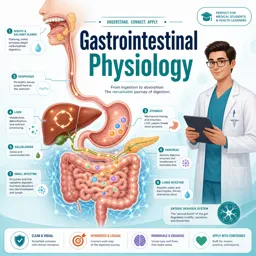
https://cursa.app/free-online-courses/gastrointestinal-physiology
and the system links above—then return to homeostasis to connect everything into one coherent framework.
For additional background reading on control systems in biology, see the overview of
https://en.wikipedia.org/wiki/Homeostasis
and the concept of
https://en.wikipedia.org/wiki/Negative_feedback