Free Course Image Neuro Physiology

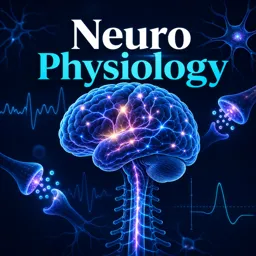
Free online courseNeuro Physiology

Duration of the online course: 6 hours and 38 minutes

New

Master synapses, action potentials and cranial nerves with a free neuro physiology course—clear lessons, practice questions and certificate-ready skills.

In this free course, learn about

  • Synaptic transmission basics: calcium-triggered vesicle fusion and neurotransmitter release
  • CNS vs PNS organization, including key structures and where they belong
  • Olfactory nerve (CN I): anatomy, function, and injury patterns (e.g., crista galli fracture)
  • Optic nerve (CN II): CNS features, myelination by oligodendrocytes, and core functions
  • Visual pathway mapping, including nasal fiber crossing at the optic chiasm
  • Trigeminal nerve (CN V): V1/V2/V3 divisions and mixed sensory-motor role in mastication
  • Parasympathetic cranial nerves involved in autonomic function (CN III, VII, IX, X)
  • Glaucoma pathophysiology and drug targets to lower IOP (incl. beta-blockers reducing secretion)
  • Dopamine neurotransmission; nigrostriatal deficiency symptoms (Parkinsonian features)
  • Neuron structure and function: dendrites increasing receptive surface area
  • Membrane potentials: RMP determinants, intracellular ion distribution, and K+ permeability
  • Nernst and Goldman equations: how ion gradients/permeabilities set membrane voltage
  • Action potentials: Na+ vs K+ channel kinetics, depolarization, and all-or-none vs local response
  • Myelin effects on conduction (saltatory propagation) and fiber susceptibility to pressure

Course Description

Understanding how the nervous system works is a game-changer for anyone studying health or working close to patient care. This free Neuro Physiology course helps you connect foundational biology to real clinical reasoning, so terms like synapse, myelin, resting membrane potential, or visual pathway stop being memorized facts and start becoming a coherent system you can explain.

You will build a strong intuition for neuronal communication, from calcium-driven neurotransmitter release to how signals travel along nerve fibers. As you progress, you will learn to interpret core electrical principles that govern nerve excitability, including resting membrane potential, ion gradients, and why sodium and potassium channels behave so differently during depolarization and repolarization. These concepts are essential for making sense of normal physiology and for understanding what changes in disease states.

The course also strengthens your neuroanatomy map, guiding you through the organization of the central and peripheral nervous systems and the practical significance of that division. You will connect structures to function across major cranial nerves, including olfaction, vision, and facial sensation and motor control. By following the logic of pathways like the optic nerve and visual system, you will be better prepared to reason about what happens when a lesion occurs and what symptoms it can produce.

To make the learning stick, you will practice with targeted questions that reinforce the why behind each answer. This approach is especially helpful if you are preparing for exams, returning to study after a break, or trying to translate classroom knowledge into bedside understanding. You will also see how neurophysiology relates to common clinical topics such as glaucoma pharmacology and dopaminergic pathways, bridging mechanisms to the problems healthcare professionals encounter in real life.

Whether you are a student in the health sciences, an aspiring clinician, or simply curious about how the brain and nerves communicate, this course gives you a structured, practical route to mastering neurophysiology concepts with confidence and clarity.

Course content

  • Video class: The Synapse | Neuro | Biology 08m
  • Exercise: What role does calcium play in neurotransmitter release at the synapse?
  • Video class: Introduction to Neuroanatomy - Learn the Basics - Neuroanatomy Playlist 32m
  • Exercise: What component of the nervous system is specifically identified as being located in the peripheral nervous system (PNS) and not the central nervous system (CNS)?
  • Exercise: Which structure is part of the central nervous system?
  • Exercise: Which of the following statements is true regarding the organization of the central nervous system and peripheral nervous system?
  • Video class: Neuroanatomy | Olfactory Nerve, Olfaction 27m
  • Exercise: Which cranial nerves are considered part of the autonomic nervous system and possess parasympathetic functions?
  • Exercise: Which cranial nerve is responsible for carrying sensory information related to smell?
  • Video class: Optic Nerve 30m
  • Exercise: Which cranial nerve is considered a part of the central nervous system despite being classified as a peripheral nerve of the cranial group?
  • Exercise: What is the myelin-producing cell type for the optic nerve?
  • Exercise: Which of the following statements about the optic nerve is correct?
  • Video class: Visual Pathway 27m
  • Exercise: Which of the following best represents the function of the optic nerve?
  • Exercise: What is specifically true about the optic nerve compared to other cranial nerves?
  • Exercise: In the visual pathway, where do the nasal fibers of the optic nerve cross to the opposite side?
  • Video class: Trigeminal Nerve...5th Cranial Nerve (CN V) — Ophthalmic (V1), Maxillary (V2), and Mandibular (V3) 34m
  • Exercise: Which cranial nerve is responsible for both sensory and motor functions and is involved in muscles of mastication?
  • Exercise: Which of the following cranial nerves supplies both sensory and motor functions to the face and jaw muscles?
  • Video class: Glaucoma Pharmacology | 5-Minute Review 08m
  • Exercise: What is the primary pathophysiological definition of glaucoma?
  • Exercise: In the management of glaucoma, which pharmacological approach helps to decrease aqueous humor secretion by directly inhibiting the beta receptors in the ciliary body?
  • Video class: Neurotransmitters - Dopamine 06m
  • Exercise: What symptom is most likely to occur due to a deficiency of dopamine in the nigrostriatal pathway?
  • Video class: Action Potential - Nerve Impulse Transmission - Neurons | Biology Series 12m
  • Video class: Nerve Physiology - Introduction to the Action Potential - Physiology Playlist 21m
  • Exercise: Which of the following ions is more prevalent inside the intracellular fluid compared to the extracellular fluid?
  • Video class: Structure of Neurons - Nerve Physiology Quick Review - Antomy and Physiology 23m
  • Exercise: Which component of the nerve cell is primarily responsible for increasing the surface area for the reception of signals?
  • Video class: The Strength-Duration Curve | Nerve Physiology 23m
  • Exercise: When discussing nerve fibers, which one is most affected by pressure?
  • Video class: Resting Membrane Potential (RMP) | Nerve Physiology 24m
  • Exercise: What is the primary ion movement responsible for maintaining the resting membrane potential in medium-sized neurons?
  • Video class: Nernst Potential and Goldman's Equation | Nerve Physiology 22m
  • Exercise: Which ion primarily determines the resting membrane potential in neurons, due to its higher permeability?
  • Video class: Action Potential | Most COMPREHENSIVE Explanation | Nerve Physiology 21m
  • Exercise: What is the primary reason voltage-gated sodium channels are capable of rapid depolarization compared to potassium channels?
  • Video class: Subthreshold Stimulus, Local Response, Catelectrotonus, Anelectrotonus | Nerve Physiology 22m
  • Exercise: What happens to the nerve membrane during a sub-threshold stimulus?
  • Video class: Propagation of the Action Potential - Nerve Excitability - Nerve Physiology Series 11m
  • Exercise: What is the role of the myelin sheath in the propagation of action potentials in myelinated nerve fibers?
  • Video class: Action Potential vs. Local Response | Comparison | Nerve Physiology 04m
  • Exercise: Which of the following statements about the action potential and the local response is correct?
  • Video class: Nerve Physiology - Action Potential - Quick Review - Physiology Series 16m
  • Exercise: What happens during depolarization as part of the nerve impulse process?
  • Video class: Neuro Cases (with answers)- TrueLearn Qbank - Vignettes 18m
  • Exercise: Which cranial nerve is likely affected by a fracture of the crista galli?
  • Exercise: A patient is experiencing difficulty with balance and has a loss of proprioception. Which structure in the central nervous system is most likely affected?

This free course includes:

6 hours and 38 minutes of online video course

Digital certificate of course completion (Free)

Exercises to train your knowledge

100% free, from content to certificate

Ready to get started?Download the app and get started today.

Install the app now

to access the course
Icon representing technology and business courses

Over 5,000 free courses

Programming, English, Digital Marketing and much more! Learn whatever you want, for free.

Calendar icon with target representing study planning

Study plan with AI

Our app's Artificial Intelligence can create a study schedule for the course you choose.

Professional icon representing career and business

From zero to professional success

Improve your resume with our free Certificate and then use our Artificial Intelligence to find your dream job.

You can also use the QR Code or the links below.

QR Code - Download Cursa - Online Courses

More free courses at Physiology

Free Ebook + Audiobooks! Learn by listening or reading!

Download the App now to have access to + 5000 free courses, exercises, certificates and lots of content without paying anything!

  • 100% free online courses from start to finish

    Thousands of online courses in video, ebooks and audiobooks.

  • More than 60 thousand free exercises

    To test your knowledge during online courses

  • Valid free Digital Certificate with QR Code

    Generated directly from your cell phone's photo gallery and sent to your email

Cursa app on the ebook screen, the video course screen and the course exercises screen, plus the course completion certificate