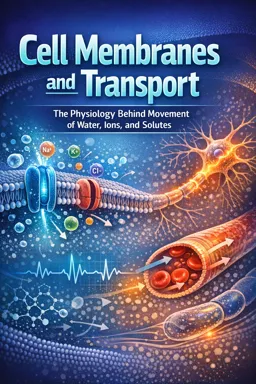
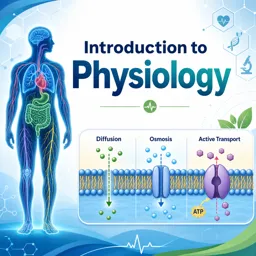
Simple diffusion moves molecules down a concentration gradient, osmosis is water movement across a membrane, and active transport uses energy to move substances against a gradient.

Duration of the online course: 52 minutes
3

(1)
Understand how your body works at the cellular level in this free physiology course, with practical quizzes and a certificate option to boost your skills.
Physiology is the language of how the body functions, from the smallest structures in a cell to the systems that keep you alive every day. This course offers a clear, beginner-friendly path into core physiological thinking by starting where life’s most important processes happen: at the cell membrane and inside the organelles that power and regulate cells. If you are preparing for health studies, strengthening your scientific foundation, or simply curious about how the body maintains balance, this training gives you a solid starting point that connects concepts to real biological outcomes.
You will build an understanding of how substances move across cell membranes and why that movement matters for hydration, nutrition, and normal cellular activity. Concepts like simple diffusion, osmosis, and active transport become easier when you can visualize what drives them, what requires energy, and how gradients influence the direction of movement. By learning to reason through these mechanisms, you gain a practical skill that supports many areas of health and life sciences, including anatomy, pharmacology, and clinical problem-solving.
The course also highlights the role of mitochondria, not only as the cell’s main source of usable energy, but as a key player in cell regulation and survival. You will explore how energy production supports function, how cellular components work together, and how disruptions can impact tissues and overall health. Along the way, targeted practice questions help you confirm your understanding and sharpen recall, turning important definitions into knowledge you can actually use.
As a free online course in physiology, it fits flexible schedules and works well for self-paced study. Whether you are exploring a new direction in health, building confidence for future courses, or refreshing fundamentals, you will finish with a clearer picture of the processes that keep cells functioning and the body in balance.

52 minutes of online video course

Digital certificate of course completion (Free)

Exercises to train your knowledge

100% free, from content to certificate
What is the difference between simple diffusion, osmosis, and active transport?
Simple diffusion moves molecules down a concentration gradient, osmosis is water movement across a membrane, and active transport uses energy to move substances against a gradient.
Why are mitochondria called the powerhouse of the cell?
Mitochondria produce most cellular ATP, the energy-carrying molecule used to power many cell processes.
How do mitochondria participate in apoptosis?
Mitochondria can release signaling proteins, including cytochrome c, that activate programmed cell death pathways.
Ready to get started?Download the app and get started today.
Install the app now
to access the course
Over 5,000 free courses
Programming, English, Digital Marketing and much more! Learn whatever you want, for free.

Study plan with AI
Our app's Artificial Intelligence can create a study schedule for the course you choose.

From zero to professional success
Improve your resume with our free Certificate and then use our Artificial Intelligence to find your dream job.
You can also use the QR Code or the links below.



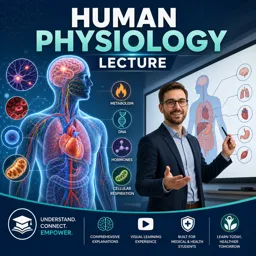
Free CourseHuman Physiology Lecture
5
(4)

52h21m

50 exercises
Free CourseNeuro Physiology
5
(2)
6h38m
19 exercises
Free CourseCardiovascular Physiology
5
(2)
9h02m
16 exercises
Free CourseAnatomy and Physiology
4.8

(4)
15h19m
24 exercises
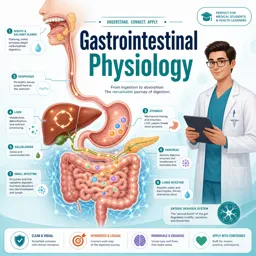
Free CourseGastrointestinal Physiology
4
(1)
13h16m
18 exercises
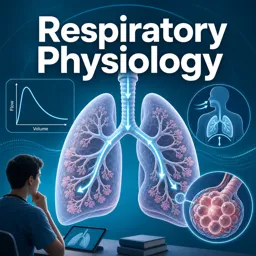
Free CourseRespiratory Physiology
New
9h24m
19 exercises
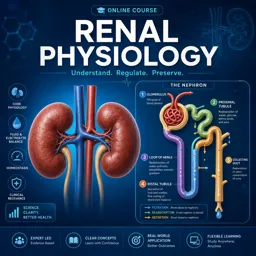
Free CourseRenal Physiology
New
5h04m
9 exercises
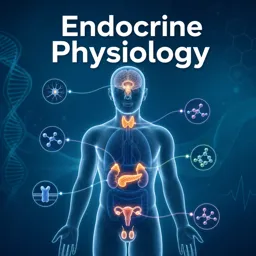
Free CourseEndocrine Physiology
New
8h46m
25 exercises
Carry knowledge in your pocket.
Download the Cursa app.
There are hundreds of free courses available, with a free certificate of completion that is saved in your mobile image gallery.
Download the app to access the Course Completion Certificate for Free.


+ 10 million
students

Free and Valid
Certificate

60 thousand free
exercises

4.8/5 rating in
app stores

Free courses in
video and ebooks