Free Course Image Endocrine Physiology

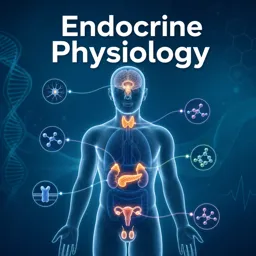
Free online courseEndocrine Physiology

Duration of the online course: 8 hours and 46 minutes

New course

Dive into Endocrine Physiology with this comprehensive free online course covering hormone pathways, glands, and reproductive cycles. Ideal for health and physiology learners.

In this free course, learn about

  • Hormone Receptors and Hypothalamic-Pituitary Axis
  • Pituitary Hormones and Functions
  • Thyroid and Parathyroid Physiology
  • Adrenal Gland: Cortex and Medulla
  • Pancreatic Endocrine Function and Glucose Regulation
  • Pineal Gland and Circadian Regulation
  • Female Reproductive Endocrinology
  • Male Reproductive Endocrinology

Course Description

Welcome to "Endocrine Physiology," an extensive and meticulously crafted course designed to explore the intricate world of endocrine physiology. Over the span of 8 hours and 46 minutes, you will delve deep into the fundamental and advanced concepts of endocrinology, moving through a sequence of well-structured topics that shed light on various hormonal pathways and their physiological impacts.

The course begins with a detailed examination of receptor pathways within endocrinology, laying the foundational understanding required to comprehend how hormones interact with cellular receptors to elicit specific biological responses. This is followed by an exploration of the critical connections between the hypothalamus and the pituitary gland, both posterior and anterior, elucidating the regulatory mechanisms that these connections impart on bodily functions.

Several specialized hormones are covered in depth, including oxytocin and antidiuretic hormone (ADH). The course methodically explains their synthesis, secretion, and the roles they play in processes such as parturition and water balance, respectively. Additionally, growth hormone and prolactin are discussed, detailing their influence on growth and lactation.

Moving on to the thyroid gland, the course includes comprehensive lessons on the synthesis of thyroid hormones and their target organs, providing an overview of thyroid function and its systemic effects. The parathyroid gland's role in calcium homeostasis is covered with a particular focus on calcitonin.

The adrenal gland receives a significant portion of attention, with in-depth segments on aldosterone, cortisol, and gonadocorticoids, along with a discussion on the catecholamines produced by the adrenal medulla. The overview of adrenal gland function integrates these components to illustrate the gland's multifaceted role in stress response and metabolic regulation.

Pancreatic function is another cornerstone of this course. You will gain insights into the actions of glucagon and insulin, how they regulate blood sugar levels, and an overarching view of pancreatic activity.

The endocrine role of the pineal gland is also explored, particularly in the regulation of circadian rhythms. Furthermore, the course provides a detailed look at the female reproductive cycle, including both ovulation and the menstrual cycle, along with the hormonal intricacies involved. The male reproductive system is not left behind, with focused discussions on spermatogenesis and the physiological mechanisms underlying erection.

This course is tailored for students and professionals in the health and physiology fields who seek a deeper understanding of endocrine physiology. As it stands, the course has yet to receive reviews, offering a fresh opportunity for new learners to engage with and benefit from its comprehensive content. Whether you are looking to augment your knowledge base or seeking clarity on complex physiological processes, "Endocrine Physiology" is poised to provide valuable insights.

Course content

  • Video class: Endocrinology | Receptor Pathways 28m
  • Exercise: Which of the following statements best describes the mechanism of action for steroid hormones?
  • Video class: Endocrinology | Hypothalamus: Posterior Pituitary Connection 15m
  • Exercise: What is the primary factor that stimulates the release of Anti-Diuretic Hormone (ADH) from the posterior pituitary gland?
  • Video class: Endocrinology | Hypothalamus: Anterior Pituitary Connection 17m
  • Exercise: Which of the following hormones is responsible for stimulating the release of ACTH from the anterior pituitary?
  • Video class: Endocrinology | Oxytocin 14m
  • Exercise: What is the main function of oxytocin in the female reproductive system during childbirth?
  • Video class: Endocrinology | Antidiuretic Hormone (ADH) 18m
  • Exercise: What are the two primary stimuli that regulate the secretion of antidiuretic hormone (ADH)?
  • Video class: Endocrinology | Growth Hormone 24m
  • Exercise: What is one of the main functions of growth hormone (GH) as it relates to skeletal muscle?
  • Video class: Endocrinology | Prolactin 15m
  • Exercise: Which hormone acts primarily to stimulate milk production in the mammary glands?
  • Video class: Endocrinology | Synthesis of Thyroid Hormone 24m
  • Exercise: What is the function of the thyroid peroxidase enzyme in the synthesis of thyroid hormone?
  • Video class: Endocrinology | Target Organs of the Thyroid 34m
  • Exercise: In the context of thyroid hormone function, what process occurs when T4 is converted into T3 within target tissues?
  • Video class: Endocrinology | Thyroid Overview 07m
  • Exercise: What is the effect of thyroid hormones (T3 and T4) on the body's basic metabolic rate?
  • Video class: Endocrinology | Parathyroid Gland | Calcitonin 35m
  • Exercise: What is the primary stimulus for parathyroid hormone (PTH) secretion?
  • Video class: Endocrinology | Adrenal Gland: Aldosterone 25m
  • Exercise: What is the primary role of the adrenal cortex layer known as the Zona Glomerulosa?
  • Video class: Endocrinology | Adrenal Gland: Cortisol 29m
  • Exercise: Which hormone is primarily synthesized in the zona fasciculata of the adrenal cortex and plays a crucial role in the stress response?
  • Video class: Endocrinology | Adrenal Gland: Gonadocorticoids 13m
  • Exercise: What is the primary role of the zona reticularis in the adrenal gland?
  • Video class: Endocrinology | Adrenal Medulla | Catecholamines 25m
  • Exercise: What is the primary chemical output of the adrenal medulla in response to acute stressors?
  • Video class: Endocrinology | Adrenal Gland Overview 10m
  • Exercise: Which of the following hormones is primarily responsible for regulating mineral balance in the body by promoting sodium reabsorption in the kidneys?
  • Video class: Endocrinology | Pancreas: Glucagon Function 23m
  • Exercise: What is the primary stimulus for the secretion of glucagon from the alpha cells of the pancreas?
  • Video class: Endocrinology | Pancreas: Insulin Function 31m
  • Exercise: Regarding the pancreatic hormones discussed, what is the primary function of insulin following its release into the bloodstream?
  • Video class: Endocrinology | Pancreas: Overview 09m
  • Exercise: Which of the following hormones is primarily responsible for decreasing blood glucose levels by promoting cellular uptake and glycogenesis?
  • Video class: Endocrinology | Pineal Gland 11m
  • Exercise: What is the primary role of the pineal gland?
  • Video class: Female Reproductive Cycle | Ovulation 33m
  • Exercise: Which hormone is primarily responsible for stimulating the conversion of cholesterol into androgens within the thecal cells during the female reproductive cycle?
  • Video class: Female Reproductive Cycle | Menstrual Cycle 21m
  • Exercise: During the menstrual cycle, which hormone is primarily responsible for the thickening of the endometrium during the secretory phase?
  • Video class: Female Reproductive Cycle | Ovulation 11m
  • Exercise: Which phase of the menstrual cycle is primarily influenced by high levels of progesterone and is characterized by thickening of the endometrial lining to prepare for potential embryo implantation?
  • Video class: Male Reproductive System | Spermatogenesis 22m
  • Exercise: What is the primary function of the androgen-binding protein in the seminiferous tubules?
  • Video class: Male Reproductive System | Erection 23m
  • Exercise: In the physiological process of erection, which part of the nervous system is primarily responsible for initiating it through vasodilation?

This free course includes:

8 hours and 46 minutes of online video course

Digital certificate of course completion (Free)

Exercises to train your knowledge

100% free, from content to certificate

Ready to get started?Download the app and get started today.

Install the app now

to access the course
Icon representing technology and business courses

Over 5,000 free courses

Programming, English, Digital Marketing and much more! Learn whatever you want, for free.

Calendar icon with target representing study planning

Study plan with AI

Our app's Artificial Intelligence can create a study schedule for the course you choose.

Professional icon representing career and business

From zero to professional success

Improve your resume with our free Certificate and then use our Artificial Intelligence to find your dream job.

You can also use the QR Code or the links below.

QR Code - Download Cursa - Online Courses

More free courses at Physiology

Free Ebook + Audiobooks! Learn by listening or reading!

Download the App now to have access to + 3300 free courses, exercises, certificates and lots of content without paying anything!

  • 100% free online courses from start to finish

    Thousands of online courses in video, ebooks and audiobooks.

  • More than 48 thousand free exercises

    To test your knowledge during online courses

  • Valid free Digital Certificate with QR Code

    Generated directly from your cell phone's photo gallery and sent to your email

Cursa app on the ebook screen, the video course screen and the course exercises screen, plus the course completion certificate

+ 9 million
students

Free and Valid
Certificate

60 thousand free
exercises

4.8/5 rating in
app stores

Free courses in
video and ebooks