Whisk oil into vinegar and, for a moment, you get a creamy dressing. Wait five minutes and it has split back into two layers. Yet mayonnaise made from the same oil stays thick for weeks. The difference between those two outcomes is one of the most useful pieces of kitchen science a cook can learn: the emulsion. Understanding it turns a long list of sauce recipes into a single technique you can adapt at will.
What an emulsion actually is
An emulsion is a mixture in which tiny droplets of one liquid are suspended inside another liquid that would normally refuse to mix with it. In cooking, that almost always means fat and water.
Water molecules are polar: they attract each other strongly. Fat molecules are not, so water pushes them out of the way and they clump together. Left alone, the two separate into layers, with fat on top because it is less dense. To make a sauce, you have to break the fat into droplets small enough to stay dispersed — and then keep them from finding each other again.
Two kinds of emulsion appear in the kitchen:
- Oil-in-water: fat droplets dispersed in a watery base. Mayonnaise, vinaigrette, hollandaise and most cream sauces work this way.
- Water-in-oil: water droplets dispersed in fat. Butter and margarine are the classic examples.
The three requirements
Every stable emulsion needs the same three things, whatever the recipe on the page says.
- Energy. Whisking, blending or shaking tears the fat into droplets. The more vigorous the agitation, the smaller the droplets and the more stable the result.
- An emulsifier. A molecule with a water-loving end and a fat-loving end. It parks itself at the boundary of each droplet and stops droplets from merging.
- Gradual addition. Adding fat slowly gives the emulsifier time to coat each new droplet. Dumping it in all at once overwhelms the system.
Common kitchen emulsifiers
| Ingredient | Active component | Typical use |
|---|---|---|
| Egg yolk | Lecithin and proteins | Mayonnaise, hollandaise, aioli |
| Mustard | Mucilage and fine particles | Vinaigrette, creamy dressings |
| Honey | Sugars and proteins | Sweet dressings and glazes |
| Butter | Milk proteins and phospholipids | Pan sauces, beurre blanc |
| Garlic paste | Cell wall material | Garlic sauces, some aiolis |
| Starch or cheese | Starch granules, casein | Pasta sauces, cheese sauces |
This is why a spoonful of mustard rescues a vinaigrette that keeps splitting, and why the starchy water from cooking pasta helps a sauce cling to the noodles instead of pooling at the bottom of the bowl.
Temporary and permanent emulsions
Not all emulsions are meant to last. A simple oil-and-vinegar dressing shaken in a jar is a temporary emulsion: it holds together for a few minutes because there is nothing to keep the droplets apart. That’s perfectly fine — you shake it and pour it straight away.
Mayonnaise is a permanent emulsion. The lecithin in egg yolk surrounds each droplet, and the droplets are packed so tightly that they can barely move. That packing, not thickening agents, is what gives mayonnaise its body. In a well-made mayonnaise, oil can account for the great majority of the volume, and the sauce is thick precisely because there is so little room left between droplets.
Making a mayonnaise that holds
- Start with the yolk, a little acid (lemon juice or vinegar) and a pinch of salt. The acid also helps with flavour and food safety.
- Add the oil drop by drop at first, whisking constantly. Only once the mixture visibly thickens can you move to a thin, steady stream.
- Keep everything at similar temperature. Very cold oil poured into a room-temperature yolk is a common cause of failure.
- If the sauce becomes too thick to whisk, loosen it with a teaspoon of water before adding more oil.
How to fix a broken sauce
“Breaking” means the droplets have merged and the fat has separated out. The fix is almost always the same idea: start a fresh, stable base and add the broken sauce to it slowly, as if it were oil.
- Broken mayonnaise: put a fresh yolk (or a teaspoon of prepared mustard) in a clean bowl and whisk the broken mixture into it drop by drop.
- Broken hollandaise or butter sauce: whisk in a spoonful of hot water, or start again with a fresh yolk over gentle heat and add the split sauce gradually.
- Split pan sauce: take the pan off the heat, add a splash of cold stock or a small cube of cold butter, and swirl rather than boil.
Why heat is the enemy
Warm droplets move faster and collide more often, and in egg-based sauces excessive heat also cooks the proteins that were doing the stabilising. That is the reason hollandaise is built over gently simmering water rather than direct flame, and why a cream sauce that is boiled hard often turns grainy. Gentle heat, constant movement and patience solve most sauce problems before they start.
Emulsions beyond sauces
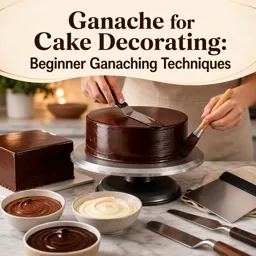
Once you recognise the pattern, you start seeing it everywhere. Milk is a natural emulsion of fat droplets in water. Ice cream is an emulsion that also contains air and ice crystals. A ganache is chocolate fat emulsified into cream. Even a well-made cake batter depends on fat being dispersed evenly through a watery mixture — which is exactly why recipes tell you to add eggs one at a time.
Conclusion
Emulsions look like magic and behave like physics. Give the mixture enough energy, include something that can sit between fat and water, and add the fat slowly enough for that molecule to do its job. Master those three points and you can build vinaigrettes, mayonnaises, pan sauces and creamy dressings without a recipe — and rescue them when they misbehave.
If you enjoy the practical side of cooking, Cursa offers free online culinary courses covering sauces, basic techniques and professional kitchen skills, with video lessons and a certificate of completion.