Cardiac arrest can happen to anyone, anywhere: at home, at work or in the street. When the heart stops pumping effectively, blood no longer reaches the brain and other vital organs, and a person’s chance of survival falls with every minute that passes without help. The good news is that ordinary bystanders can make a real difference.
The “chain of survival” is a simple model that describes the sequence of actions that give a person the best chance of recovery. Each link depends on the one before it, so understanding all of them helps you know exactly where you fit in.
What Is Cardiac Arrest?
Cardiac arrest is the sudden loss of effective heart function. The person becomes unresponsive and is not breathing normally, or is only gasping. It is different from a heart attack, which is a blockage of blood flow to part of the heart muscle. A person having a heart attack is usually awake and breathing, although a heart attack can lead to cardiac arrest.
Cardiopulmonary resuscitation (CPR) is the technique used to keep blood moving artificially until the heart can be restarted or professional help arrives.
The Links in the Chain of Survival
Different organisations describe the chain with slightly different wording, and guidelines are updated over time, but the core ideas are consistent. Here are the main links for an adult who collapses outside a hospital.
| Link | What it means | Who acts |
|---|---|---|
| 1. Recognise and call for help | Notice the emergency and contact the emergency services immediately | Bystander |
| 2. Early CPR | Start chest compressions straight away to keep blood flowing | Bystander |
| 3. Early defibrillation | Use an automated external defibrillator (AED) as soon as one is available | Bystander or responder |
| 4. Advanced care | Professional treatment by paramedics and emergency teams | Emergency services |
| 5. Recovery | Hospital care, rehabilitation and ongoing support | Healthcare teams and family |
Link 1: Recognise and Call for Help
Everything starts with noticing that something is seriously wrong. Check that the area is safe, then see whether the person responds when you speak to them or gently tap their shoulders. Look at their breathing: if they are not breathing, or only gasping occasionally, treat it as cardiac arrest.
Call your local emergency number straight away, or ask a specific person nearby to do it. Pointing at someone and saying “You, call for help and bring an AED if there is one” works better than a general shout. The call handler can also guide you through CPR step by step.
Link 2: Early CPR
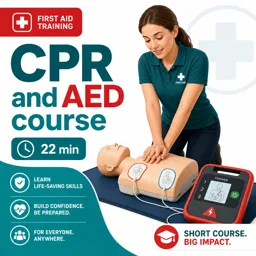
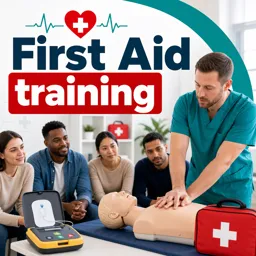
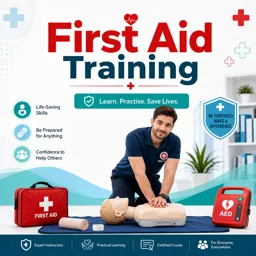
Chest compressions are the heart of CPR. They keep some blood circulating to the brain and heart while the person cannot do it themselves. The widely taught basics for an adult are:
- Place the person on their back on a firm surface.
- Put the heel of one hand on the centre of the chest, with the other hand on top.
- Keep your arms straight and push hard and fast, allowing the chest to rise fully between compressions.
- Compress at a rate of roughly 100 to 120 per minute and to a depth of about 5 to 6 centimetres in an adult.
- Continue without stopping until the emergency services arrive, an AED is ready or the person starts to breathe normally.
Many guidelines say that untrained bystanders can perform hands-only CPR, meaning compressions without rescue breaths. People who have been trained may add breaths, usually in a cycle of 30 compressions followed by 2 breaths. Whichever approach applies to you, doing something is far better than doing nothing.
Link 3: Early Defibrillation
In some cardiac arrests, the heart falls into a chaotic electrical rhythm that CPR alone cannot fix. A defibrillator delivers a controlled electric shock that can help the heart return to a normal rhythm. Automated external defibrillators (AEDs) are designed for the public: they give voice instructions, analyse the heart rhythm and only advise a shock when it is appropriate.
If an AED is available, switch it on, follow the spoken prompts and attach the pads as shown in the pictures. Continue CPR until the device tells you to stop for analysis. You cannot make things worse by using an AED correctly, because it will not shock a heart that does not need it.
Link 4: Advanced Care
When paramedics or emergency teams arrive, they take over with advanced life support. This can include medication, airway management and further monitoring and treatment before and during transport to hospital. Your role here is to hand over what you know: when the person collapsed, what you did, and whether an AED was used.
Link 5: Recovery
Survival does not end at the hospital door. Many people need continued medical care, rehabilitation and emotional support, and family members and bystanders may also need support after a stressful event. Modern descriptions of the chain increasingly emphasise this link, because long-term recovery matters as much as the initial rescue.
Common Questions and Fears
- “What if I hurt them?” Compressions can sometimes cause rib injuries, but a person in cardiac arrest is at serious risk of dying without help. Rib injuries can heal; a stopped heart cannot wait.
- “What if I do it wrong?” Imperfect CPR is better than none. Push hard, push fast and keep going.
- “Do I need to be certified?” No. Anyone can start CPR in an emergency, although training builds confidence and skill.
- “Is CPR the same for children and babies?” The principles are similar, but technique differs, for example in depth and hand position. Training specific to infants and children is worth having if you care for them.
Note that this article is general educational information and not a replacement for hands-on training. Guidelines can differ slightly between countries and change over time, so follow the instructions of your local emergency service and a recognised training provider.
Conclusion
The chain of survival turns a frightening situation into a clear sequence: recognise the emergency and call for help, start CPR, use an AED, hand over to professionals, and support recovery. Each link strengthens the next, and the first three are often in the hands of the people standing nearby. Learning them in advance means that if the moment ever comes, you will know what to do.
To build confidence, consider exploring first aid learning options. Cursa offers free online courses related to first aid and health that can help you prepare for emergencies.