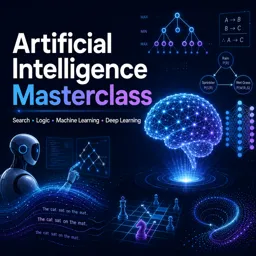
Artificial Intelligence can feel overwhelming because it includes many specialties—prediction, perception, language, decision-making, and deployment. The fastest way to make real progress is to choose a clear outcome (a role and a portfolio), then learn only what supports that outcome. This roadmap helps you move from “AI-curious” to job-ready by building demonstrable skills and projects that employers can evaluate.
Step 1: Pick an AI target role (so you know what to learn)
Start by selecting a destination. Each role uses different tools, depth, and types of projects:
- Machine Learning Engineer: builds models and deploys them in production systems.
- Data Scientist: frames business questions, experiments, and communicates insights; may deploy lightweight models.
- Applied AI/ML Specialist: focuses on a domain (marketing, healthcare, finance) with end-to-end use cases.
- Research-oriented ML: deeper math, papers, and experimental rigor.
If you’re unsure, default to a machine-learning-first path that includes practical deployment. You can always specialize later. Browse the broader tech curriculum via https://cursa.app/free-online-information-technology-courses and focus your learning inside the https://cursa.app/free-courses-information-technology-online collection.
Step 2: Build your foundation stack (the minimum that unlocks everything)
You don’t need to master every theorem to start building AI, but you do need reliable fundamentals in three areas:
- Programming: Python basics, functions, classes, debugging, notebooks, and writing reusable scripts.
- Data literacy: data types, missing values, leakage, train/validation/test splits, and metrics.
- Math essentials: linear algebra intuition, derivatives/gradients, probability, and statistics.
A focused math sprint pays off quickly—especially when you’re tuning models or explaining results. A structured path through https://cursa.app/free-online-courses/mathematics-for-machine-learning can remove a lot of friction later.

Step 3: Learn core machine learning by building small, complete projects
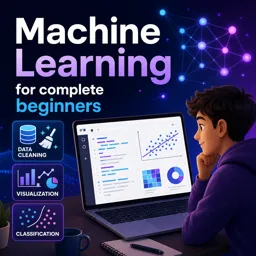
Before chasing advanced architectures, get comfortable with classic supervised learning. The goal is not “knowing algorithms,” but reliably producing an end-to-end result:
- Problem framing (classification vs regression, baseline expectations)
- Feature preparation (scaling, encoding, simple feature engineering)
- Model training (linear/logistic regression, trees, ensembles)
- Evaluation (confusion matrix, ROC-AUC, MAE/RMSE, calibration)
- Error analysis (where it fails and why)
If you want one hub that connects these skills, start with https://cursa.app/free-online-courses/machine-learning. Complement that with practical workflows from https://cursa.app/free-online-courses/data-science to sharpen analysis and storytelling.
Step 4: Choose one specialization track (and go deeper)
After you can ship basic ML projects, pick a specialization track so your portfolio looks coherent. Here are strong options:
Track A: Deep learning for modern applications
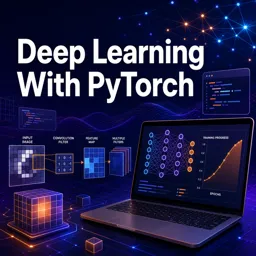
Deep learning becomes useful when you work with complex signals (images, text, audio) or need representation learning. You’ll learn about neural networks, training stability, regularization, and hardware-aware choices (batching, precision, runtime). A guided route through https://cursa.app/free-online-courses/deep-learning is ideal once you’ve done classic ML end-to-end.
Track B: Computer vision and visual systems
If you like building systems that “see,” focus on vision tasks such as classification, segmentation, and detection, plus practical concerns like labeling strategy, augmentation, and model speed. Explore a curated learning path in https://cursa.app/free-online-courses/computer-vision and design projects that can run in real time or on edge devices.
Track C: Large language models (LLMs) and language applications
Language-focused work often centers on prompting strategies, retrieval, evaluation, and building safe, reliable workflows around models. To focus on this specialty, use https://cursa.app/free-online-courses/large-language-models-llm. If conversational interfaces are your priority, add https://cursa.app/free-online-courses/chat-gpt for practical patterns and use cases.
Track D: Generative AI as a product capability (without making it your whole identity)
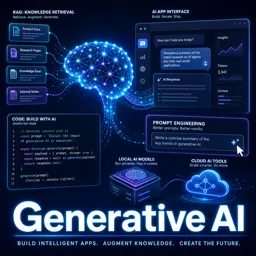
Generative AI can be one feature inside a larger system—summarization, drafting, ideation, content transformation, or synthetic data generation. If you want this as a complementary skill, learn the building blocks and evaluation methods using https://cursa.app/free-online-courses/generative-ai, then apply them to a domain-specific project (support, sales, education, analytics).

Step 5: Add tooling that makes you hireable: frameworks, reproducibility, and deployment
Employers value engineers who can move beyond notebooks. Add these capabilities:
- Framework fluency: training loops, callbacks, saving/loading models, and inference pipelines. For many stacks, https://cursa.app/free-online-courses/tensorflow provide a direct route to production-grade workflows.
- Experiment tracking: consistent runs, hyperparameter logs, and versioned datasets.
- Packaging & APIs: simple REST endpoints, batch inference jobs, and clean repo structure.
- Monitoring mindset: drift, performance decay, and feedback loops.
Step 6: Build a portfolio that proves your skills (3 projects is enough)
A strong AI portfolio isn’t a long list—it’s a small set of complete projects with clear decisions and evidence. Aim for three portfolio pieces:
- Project 1 (Core ML): a supervised learning project with thorough evaluation and error analysis.
- Project 2 (Specialization): vision, deep learning, or LLM-based system—whichever matches your target role.
- Project 3 (Production-lite): deploy a model behind an API, add a simple UI, or build a batch scoring pipeline with logging.
For each project, include: the problem statement, dataset source, baseline, metrics, what you tried, what failed, what improved, and how to run it. This makes your work legible to reviewers and interviewers.
Step 7: Validate your readiness with interview-style practice
To turn learning into career momentum, practice the skills that come up repeatedly in interviews:
- Explain bias/variance tradeoffs using examples from your own projects.
- Walk through a metric choice (why AUC vs accuracy, why MAE vs RMSE).
- Describe how you prevented data leakage and how you would detect drift.
- Discuss limitations and ethical considerations (privacy, fairness, reliability).
For a deeper overview of responsible practices and standards, explore guidance from organizations like the https://www.nist.gov/itl/ai-risk-management-framework to understand how real teams think about risk, evaluation, and governance.
Common mistakes that slow down AI learners (and what to do instead)
- Mistake: Jumping between topics daily. Fix: pick one track for 4–6 weeks and ship one project.
- Mistake: Only watching videos. Fix: every session produces an artifact (notebook, script, README, plot).
- Mistake: Chasing “state-of-the-art.” Fix: prioritize correct baselines, clean evaluation, and deployment basics.
- Mistake: Ignoring communication. Fix: write short project summaries with results and tradeoffs.

Your next steps
Use this roadmap as a loop: learn fundamentals, build a small project, specialize, and then ship something deployable. Start by browsing https://cursa.app/free-courses-information-technology-online, then select a focused sequence in https://cursa.app/free-online-courses/machine-learning, https://cursa.app/free-online-courses/deep-learning, https://cursa.app/free-online-courses/computer-vision, https://cursa.app/free-online-courses/large-language-models-llm, or https://cursa.app/free-online-courses/tensorflow. A clear target and three well-explained projects can be enough to move from learning to interviewing—without trying to learn all of AI at once.