When teams plan how to deliver a project, one of the first decisions they face is which methodology to follow. Two of the most widely known approaches are Agile and Waterfall. They represent very different ways of thinking about planning, work, and delivery. Understanding how each one works helps you choose the approach that best fits your project, your team, and your goals. In this article, we will break down both methods in a clear and practical way.
What is the Waterfall approach?
Waterfall is a traditional, linear approach to project management. The work is divided into clearly defined phases that happen one after another, like water flowing down a series of steps. A typical sequence includes gathering requirements, design, development, testing, and delivery. Each phase must be completed before the next one begins, and there is usually little going back.
This method works well when the requirements are clear and unlikely to change. Because everything is planned in detail from the start, it offers predictability in terms of scope, budget, and timeline. It is common in industries such as construction and manufacturing, where changes midway can be very costly.
What is the Agile approach?
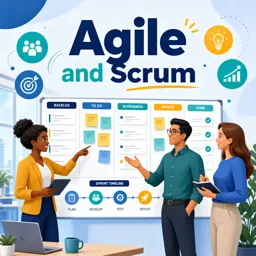
Agile is a flexible, iterative approach that emerged largely from the software industry. Instead of planning everything upfront, Agile teams work in short cycles, often called sprints, that usually last one to four weeks. At the end of each cycle, they deliver a small, working part of the product and gather feedback before continuing.
This constant feedback allows the team to adapt quickly to changes and to improve the product as they learn. Agile values collaboration, communication, and responding to change over strictly following a fixed plan. Popular frameworks based on Agile principles include Scrum and Kanban.
Comparing the two approaches
| Aspect | Waterfall | Agile |
|---|---|---|
| Structure | Linear, sequential phases | Iterative, short cycles |
| Flexibility | Low, changes are difficult | High, adapts to change |
| Planning | Detailed and upfront | Ongoing and evolving |
| Delivery | At the end of the project | Continuous, in increments |
| Best for | Stable, well-defined projects | Evolving, uncertain projects |
Advantages and disadvantages
Each approach has clear strengths and trade-offs. Knowing them helps you make an informed decision:
- Waterfall advantages: clear structure, easy to measure progress, predictable budget and schedule, thorough documentation.
- Waterfall disadvantages: difficult to accommodate changes, problems may appear only late in testing, less customer involvement during development.
- Agile advantages: flexible, fast feedback, continuous delivery of value, strong collaboration with stakeholders.
- Agile disadvantages: less predictability in final scope, requires an engaged team and customer, can be harder to plan long-term costs.
How to choose the right one
There is no universally “best” methodology; the right choice depends on the nature of your project. Ask yourself a few key questions. Are the requirements clear and stable, or are they likely to change? How much involvement will the client have during the process? How important is it to deliver value early and often?
If your project has fixed requirements, a defined scope, and strict regulations, Waterfall may be the safer choice. If your project is innovative, uncertain, or expected to evolve, Agile is often more effective because it embraces change. Many organizations also adopt a hybrid approach, combining the structured planning of Waterfall with the flexibility of Agile to get the best of both worlds.
A closer look at Agile in practice
To make Agile more concrete, it helps to look at how a Scrum team organizes its work. Scrum, one of the most popular Agile frameworks, defines a few clear roles and events. The product owner represents the customer and decides what is most valuable to build next. The Scrum master helps the team work smoothly and removes obstacles. The development team does the actual work of building the product.
The team works in sprints, and each sprint includes short, regular meetings: a planning session at the start, a brief daily check-in to align on progress, and a review and retrospective at the end to inspect the results and improve the process. These simple rituals keep everyone informed and focused, which is a big reason Agile has become so widely adopted.
A practical example
Imagine two teams building a mobile app. A Waterfall team would define every feature in advance, design the entire app, build it completely, and only then release it to users, months later. An Agile team, on the other hand, would release a simple version with core features first, collect user feedback, and add improvements in each cycle. If users request a change, the Agile team can respond quickly, while the Waterfall team would find it much harder to adjust. This example shows why the choice of methodology can shape the entire outcome of a project.
Keep growing your skills
Whether you lead a small team or manage large initiatives, understanding Agile and Waterfall gives you a stronger foundation for planning and delivering successful projects. The most effective project managers know how to adapt their approach to each situation rather than relying on a single method. If you want to develop these skills further, explore the free project management and business courses available on Cursa, where you can learn practical techniques at your own pace.