
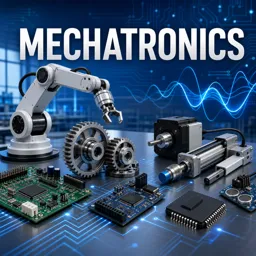
A mechatronic system integrates mechanical parts with electronics, sensors, actuators, control systems, and software to perform automated tasks.

Duration of the online course: 23 hours and 1 minutes
4.4


(7)
Build real mechatronics skills fast with a free online course covering sensors, actuators, circuits and signal conditioning—boost your engineering profile today.
Mechatronics is where mechanics, electronics, sensing, and control come together to create smart machines. If you want to understand how modern products and industrial equipment actually work—from automated mechanisms to sensor-driven devices—this course gives you a practical foundation that connects concepts across disciplines. You will learn to think in terms of complete systems: how inputs are sensed, how signals are processed, and how outputs are actuated to produce reliable motion and performance.
Starting with core ideas and real-world examples, you will develop the mindset needed to recognize what makes a system truly mechatronic and why integration is its defining advantage. You then build essential electronics knowledge, focusing on circuit components and the role they play in shaping current and voltage. As the course progresses, semiconductor fundamentals and transistor applications help you see how switching and amplification underpin both measurement and control in engineered systems.
A major emphasis is placed on sensors and how to evaluate them. You will interpret common performance terminology such as sensitivity and learn how measurements for displacement, position, force, flow, and acceleration are obtained and represented. Encoders, accelerometers, and force measurement principles are treated as part of a broader measurement chain, so you understand not only what a sensor does, but how it behaves in practice and how its output becomes usable information.
Actuation is covered from multiple angles, linking mechanical actuation with fluid power and electrical drives. By comparing hydraulic and pneumatic approaches with electrical actuator systems, you will gain an intuition for when each is advantageous, what trade-offs are involved, and how elements like stepper motors fit into motion control scenarios.
To tie everything together, the course introduces data presentation and signal conditioning, bridging the gap between raw sensor signals and meaningful digital information. You will explore instruments used to observe signals, the role of op-amps as conditioners, and the logic behind filtering and conversion between analog and digital domains. By the end, you should feel more confident reading system diagrams, communicating across mechanical and electrical boundaries, and approaching mechatronics problems with structured, job-relevant reasoning.

23 hours and 1 minutes of online video course

Digital certificate of course completion (Free)

Exercises to train your knowledge

100% free, from content to certificate
What components are combined in a mechatronic system?
A mechatronic system integrates mechanical parts with electronics, sensors, actuators, control systems, and software to perform automated tasks.
How do sensors and actuators work together in mechatronics?
Sensors measure variables such as position, force, flow, or acceleration, while actuators convert control signals into physical motion or force.
Why are ADCs and signal conditioning important in mechatronics?
Signal conditioning amplifies or filters sensor signals, and analog-to-digital converters turn them into digital data for processing by controllers.
Ready to get started?Download the app and get started today.
Install the app now
to access the course
Over 5,000 free courses
Programming, English, Digital Marketing and much more! Learn whatever you want, for free.

Study plan with AI
Our app's Artificial Intelligence can create a study schedule for the course you choose.

From zero to professional success
Improve your resume with our free Certificate and then use our Artificial Intelligence to find your dream job.
You can also use the QR Code or the links below.



Free CourseAerospace Engineering
5
(4)

17h32m

20 exercises
Free CourseFluid Mechanics
5
(3)
23h09m
16 exercises
Free CourseManagement - Business Analysis for Engineers
4.8
(84)
31h13m
29 exercises
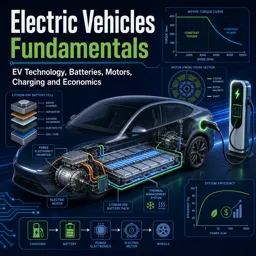
Free CourseElectric Vehicles Fundamentals: EV Technology, Batteries, Motors, Charging and Economics
4.8
(4)
33h11m
39 exercises
Free CoursePrinciple of industrial engineering
4.7
(7)
32h27m
33 exercises
Free CourseMechanical - Metal Casting
4.7
(93)
30h34m
30 exercises
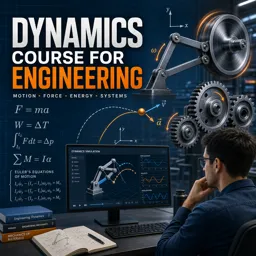
Free CourseDynamics course for Engineering
4.7
(3)
28h05m
30 exercises
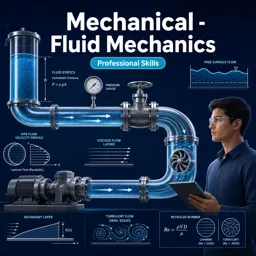
Free CourseMechanical - Fluid Mechanics
4.6
(63)
41h57m
32 exercises
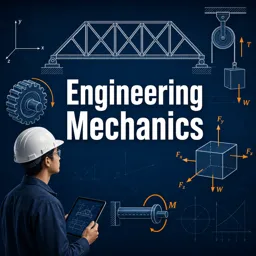
Free CourseEngineering Mechanics
4.6
(7)
40h32m
5 exercises
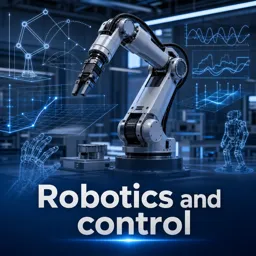
Free CourseRobotics and control
4.5
(4)
21h37m
31 exercises
Carry knowledge in your pocket.
Download the Cursa app.
There are hundreds of free courses available, with a free certificate of completion that is saved in your mobile image gallery.
Download the app to access the Course Completion Certificate for Free.


+ 10 million
students

Free and Valid
Certificate

60 thousand free
exercises

4.8/5 rating in
app stores

Free courses in
video and ebooks
Course comments: Mechatronics
Brayden Darnell
im 13 and as im not complete with this course I have still found it very useful and it is great for notes and studies so far.
Thanseer
hi
Andebet Sendekie
interesting course
yashaswini
Good explanation of concepts can be made more interactive to learn
Ravindu Lakruwan Sahabandu
Very Valuable Course.