Focus first on building a product users want and speaking directly with users to understand their needs.

Duration of the online course: 16 hours and 11 minutes
New
Turn an idea into a real company: take this free startup course to validate demand, build traction, grow sustainably, and learn investor-ready fundamentals.
Starting a startup can feel overwhelming because the stakes are high and the path is rarely linear. This free online course helps you move from a rough idea to a focused, testable plan, building the habits and decision-making skills that founders rely on when everything is uncertain. Instead of chasing hype, you will learn how to prioritize what actually creates momentum early: deep customer understanding, fast execution, and a product people genuinely want.
You will develop a founder’s mindset for choosing problems worth solving, narrowing your focus, and turning constraints into progress. The course emphasizes practical ways to get early traction, especially when you have few users and limited resources, and it highlights how to learn quickly from real conversations, not assumptions. You will also explore what separates durable businesses from short-lived trends, including strategies for positioning, defensibility, and avoiding competing on the wrong terms.
As your startup grows, the challenges change. You will learn how to think about growth that lasts, reduce churn by improving what users truly value, and make smarter product decisions with continuous feedback. The course also covers the founder responsibilities that emerge with scale: building a strong culture, hiring with intent, operating effectively, and making management decisions that do not create hidden long-term costs.
If fundraising is on your roadmap, you will gain a clear view of how investors evaluate early-stage companies and how to communicate strengths with credibility. You will also understand the basics of legal structure and the operational foundations that help a startup move faster without creating avoidable risks. By the end, you will have a clearer, more confident approach to validating demand, building what matters, and leading a startup through its earliest and most defining stages.

16 hours and 11 minutes of online video course

Digital certificate of course completion (Free)

Exercises to train your knowledge

100% free, from content to certificate
What should startup founders prioritize before PR, partnerships, and hiring?
Focus first on building a product users want and speaking directly with users to understand their needs.
How can a startup get its first customers before it has scalable marketing?
Use hands-on, unscalable tactics such as personally recruiting users, providing concierge support, and gathering direct feedback.
What legal entity is most investor-friendly for a U.S. startup?
A Delaware C corporation is generally the standard choice for venture-backed U.S. startups.
Ready to get started?Download the app and get started today.
Install the app now
to access the course
Over 5,000 free courses
Programming, English, Digital Marketing and much more! Learn whatever you want, for free.

Study plan with AI
Our app's Artificial Intelligence can create a study schedule for the course you choose.

From zero to professional success
Improve your resume with our free Certificate and then use our Artificial Intelligence to find your dream job.
You can also use the QR Code or the links below.



Free CourseOperations Management Course: Strategy, Planning, Quality and Inventory
5

(2)

32h22m

28 exercises
Free CourseBusiness Strategy
4.9
(12)
3h46m
24 exercises

Free CourseStartups Secrets
4.8
(12)
28h02m
14 exercises
Free CourseBusiness Fundamentals for Entrepreneurs
4.8
(5)
23h49m
50 exercises

Free CourseEntrepreneurship course
4.7

(10)
43h30m
43 exercises

Free CourseTechnology Entrepreneurship
4.7
(156)
7h19m
20 exercises

Free CourseLeadership and Team effectiveness
4.6
(18)
34h01m
33 exercises

Free CourseEntrepreneurship 101
4.6
(14)
1h15m
6 exercises
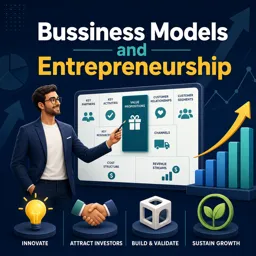
Free CourseBussiness Models and Entrepreneurship
4.5
(4)
21h44m
41 exercises
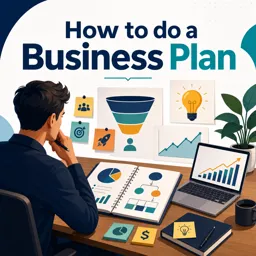
Free CourseHow to do a Business Plan
4.4
(10)
8h16m
7 exercises
Carry knowledge in your pocket.
Download the Cursa app.
There are hundreds of free courses available, with a free certificate of completion that is saved in your mobile image gallery.
Download the app to access the Course Completion Certificate for Free.


+ 10 million
students

Free and Valid
Certificate

60 thousand free
exercises

4.8/5 rating in
app stores

Free courses in
video and ebooks