Duration of the online course: 43 hours and 30 minutes
4.6
(7)
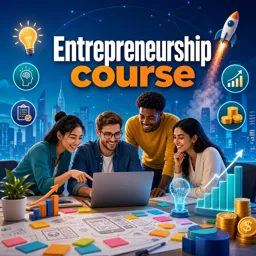
Turn ideas into a viable business with this free entrepreneurship course—learn ideation, MVP testing, commercialization and disruption skills, plus a certificate.
In this free course, learn about
Stages of the entrepreneurial journey and how ventures evolve over time
Entrepreneurial discovery: spotting, evaluating, and shaping opportunities
Differences between entrepreneurs and professional managers (mindset, risk, innovation)
Traits enabling long-term entrepreneurship and sustained venture creation
Personality tendencies linked to entrepreneurial success (MBTI-based view)
How startups differ from entrepreneurial firms in goals, activities, and scaling intent
Design thinking vs traditional market research: human-centered problem framing
Ideation methods (e.g., role-reversal) and running effective ideation workshops
Prototyping basics: rapid learning, iteration, and reducing uncertainty
Patent criteria: novelty, inventive step (non-obviousness), and industrial applicability
Testing & validation practices and key product development considerations
MVP value: fastest way to validate assumptions with minimal resources
Commercialization priorities for startups: go-to-market, traction, and growth
Sustaining vs disruptive innovation: why incumbents prefer sustaining; what triggers disruption
About the free online course
Starting a business is exciting, but the path from idea to impact is rarely straightforward. This free Entrepreneurship course helps you build the mindset and practical decision-making needed to move from early inspiration to a scalable, market-ready venture. Whether you want to launch your first startup, validate a side project, or strengthen your business thinking for a career in business and marketing, you will learn how entrepreneurs spot opportunities, act under uncertainty, and keep momentum through real-world constraints.
You will begin by exploring the entrepreneurial journey and discovery process, clarifying what separates entrepreneurial behavior from traditional professional management. This foundation helps you understand how opportunity recognition works, how entrepreneurs approach risk and learning, and why some ventures endure while others fade. You will also reflect on personal traits and working styles to better identify how you operate in teams, make choices, and persist through ambiguity—skills that matter as much as any tool.
From there, the course shifts into action. You will practice ways to generate strong concepts and shape them into testable solutions through ideation and prototyping. Instead of relying on assumptions or lengthy reports, you will focus on learning quickly from real people, reframing problems, and translating insights into simple prototypes that can be improved. You will also consider practical innovation concerns, including when intellectual property and patents may matter, so you can make informed decisions as your concept evolves.
Next, you will dive into testing and validation, where promising ideas meet evidence. You will learn how minimum viable products help reduce wasted time and budget, and how entrepreneurial teams can make smarter product decisions by measuring what customers actually do. The course then connects these learnings to commercialization and growth, highlighting what startups must prioritize when entering markets and how disruption can occur—plus why established firms often prefer sustaining innovations over disruptive moves.
By the end, you will be able to talk clearly about your value proposition, prototype and test solutions with purpose, and make better go-to-market choices. If you are looking for a structured, free course that builds entrepreneurial competence and job-relevant business skills, this program is a strong step toward launching ideas with confidence.
Course content
Video class: Entrepreneurial Journey Part 132m
Video class: Entrepreneurial Journey Part 229m
Video class: Entrepreneurial Journey Part 340m
Video class: Entrepreneurial Discovery Part 129m
Video class: Entrepreneurial Discovery Part 229m
Exercise: What distinguishes an entrepreneur from a professional manager according to the understanding of entrepreneurship?
Video class: Entrepreneurial Discovery Part 335m
Exercise: What is a key characteristic of successful entrepreneurs in perpetuating their entrepreneurship over time?
Video class: Entrepreneurial Discovery Part 434m
Exercise: Which type of personality is considered most advantageous for entrepreneurial success according to the MBTI methodology discussed in the text?
Video class: Ideation and Prototyping Part 127m
Exercise: What distinguishes a start-up from an entrepreneurial firm in terms of goals and activities?
Video class: Ideation and Prototyping Part 227m
Exercise: What is the primary focus of design thinking in entrepreneurship compared to traditional market research?
Video class: Ideation and Prototyping Part 324m
Exercise: What is one ideation technique mentioned in the text that reverses traditional roles in processes?
Video class: Ideation and Prototyping Part 427m
Exercise: What is a primary focus of an ideation workshop in an entrepreneurial setting?
Video class: Ideation and Prototyping Part 533m
Exercise: What is a key aspect of prototyping in entrepreneurship?
Video class: Ideation and Prototyping Part 636m
Exercise: What are the three main criteria an invention must meet to be granted a patent?
Video class: Testing and Validation Part 134m
Exercise: What is one of the critical considerations for product development in entrepreneurial firms?
Video class: Testing and Validation Part 240m
Exercise: What is the key benefit of developing a minimum viable product (MVP) for a startup?
Video class: Commercialisation and Disruption as Success Drivers Part 142m
Exercise: What is emphasized as a key priority for startups during commercialization?
Video class: Commercialisation and Disruption as Success Drivers Part 232m
Exercise: What is the primary reason that established firms focus on sustaining innovations rather than disruptive innovations?
Video class: Commercialisation and Disruption as Success Drivers Part 328m
Exercise: What triggers market disruption according to the video transcript?
Video class: Commercialisation and Disruption as Success Drivers Part 431m
Exercise: Which of the following Indian start-up companies is known for disrupting the online retail market and achieved a high valuation through strategic investments and market growth?
Video class: Commercialisation and Disruption as Success Drivers Part 531m
Exercise: What is a key factor for the success of many start-ups mentioned in the text?
Video class: Technological Innovation and Entrepreneurship Part 130m
Exercise: What is a key characteristic of disruptive innovation in the context of technological advancements?
Video class: Technological Innovation and Entrepreneurship Part 233m
Video class: Technological Innovation and Entrepreneurship Part 332m
Exercise: How can innovators utilize their R&D competencies in startup ventures?
Video class: Technological Innovation and Entrepreneurship Part 435m
Video class: Technological Innovation and Entrepreneurship Part 528m
Exercise: Which phase is characterized by significant development in hardware while operating systems became prominent bringing computing to personal devices?
Video class: Technology, Business, and Operations Strategies Part 126m
Video class: Technology, Business, and Operations Strategies Part 227m
Exercise: How can technology assist startups in the not-for-profit sector?
Video class: Technology, Business, and Operations Strategies Part 349m
Video class: Technology, Business, and Operations Strategies Part 441m
Exercise: What is a key difference between a business strategy and a business model?
Video class: Technology, Business, and Operations Strategies Part 526m
Video class: Raising Finances and Developing Financial Strategy Part 128m
Exercise: What is a significant difference between new age entrepreneurship and previous periods of entrepreneurship?
Video class: Raising Finances and Developing Financial Strategy Part 228m
Video class: Raising Finances and Developing Financial Strategy Part 331m
Exercise: What is one of the primary roles of angel investors in the startup ecosystem?
Video class: Raising Finances and Developing Financial Strategy Part 438m
Video class: Raising Finances and Developing Financial Strategy Part 532m
Exercise: What are the main decisions involved in the financial strategy of a firm?
Video class: Education and Entrepreneurship Part 130m
Video class: Education and Entrepreneurship Part 230m
Exercise: Which of the following career paths for STEM graduates is primarily focused on developing and introducing new products or services to the market?
Video class: Education and Entrepreneurship Part 334m
Video class: Beyond Founders and Founder-Families Part 131m
Exercise: What is one key challenge of having a large co-founding team in an entrepreneurial firm?
Video class: Beyond Founders and Founder-Families Part 222m
Video class: Beyond Founders and Founder-Families Part 330m
Exercise: What is considered a key cultural capability that a CEO should have when entering an entrepreneurial firm?
Video class: Beyond Founders and Founder-Families Part 428m
Video class: India as A Start-up Nation Part 137m
Exercise: According to the text, what are the two main types of entrepreneurial developments discussed?
Video class: India as A Start-up Nation Part 235m
Video class: India as A Start-up Nation Part 331m
Exercise: What approach is emphasized to ensure the success of small startups alongside large companies, according to the text?
Video class: National Entrepreneurial Culture - Part 139m
Video class: National Entrepreneurial Culture - Part 241m
Exercise: What is one way to encourage an entrepreneurial mindset within educational institutions?
Video class: Entrepreneurial Thermodynamics - Part 125m
Video class: Entrepreneurial Thermodynamics - Part 229m
Exercise: Which aspect of the second law of thermodynamics is relevant to entrepreneurial organizations?
Video class: Human Resources Strategy46m
Video class: Entrepreneurship and Employment - Part 132m
Exercise: What is the role of formal entrepreneurship in employment generation according to the NPTEL course on entrepreneurship?
Video class: Entrepreneurship and Employment - Part 225m
Video class: Entrepreneurship and Employment - Part 330m
Exercise: According to the MSMED Act, 2006, what defines a micro enterprise in the manufacturing sector?
Video class: Entrepreneurship and Employment - Part 436m
Video class: Corporate Governance35m
Exercise: What is a primary role of corporate governance within a company according to the principles discussed?
Video class: Marketing Strategy39m
Video class: Start up Case Studies Part 126m
Exercise: What is a key characteristic of successful startups, as highlighted in the NPTEL Entrepreneurship course?
Video class: Start up Case Studies Part 231m
Video class: Start up Case Studies Part 334m
Exercise: What is one of the key success factors for a social community startup like Poliyogare Travels?
Video class: Start up Case Studies Part 436m
Video class: In Closing11m
Exercise: Which of the following aspects was emphasized as a foundation for entrepreneurship in the NPTEL course?
Video class: Entrepreneurship _ Introductory video09m
Video class: Week 1 Special Lecture _ The Indian Unicorn Space1h06m
Exercise: What is a key factor to ensure the long-term sustainability of startups, especially in challenging macroeconomic conditions?
Video class: Week 2 Special Lecture _ Mergers and Acquisitions in Start-ups39m
Video class: Week 2 Special Lecture _ Performance of Start - ups in covid-1951m
Exercise: How did the COVID-19 pandemic influence the performance of startups?
Video class: Week 6 Special Lecture _ Leader Crest Academy1h07m
Video class: Week 5 Special Lecture _ Electric Scooter Start - ups51m
Exercise: What is one major advantage of lithium-ion batteries over lead-acid batteries in electric vehicles?
Video class: Week 4 Special Lecture _ Start - up Models42m
Video class: Week 9 Special Lecture _ SARA UV sanitiser Example44m
Exercise: Which key feature makes the proposed UV sanitizer device distinct from traditional liquid sanitizers?
Video class: Week 7 Special Lecture _ Digital Platforms1h03m
Video class: Week 8 Special Lecture _ Solar Charger for Mobile40m
Exercise: What is one of the primary advantages of a solar charger for mobile phones as discussed in the lecture?
Video class: Week 12 Special Lecture _ E - Compost Maker53m
Video class: Week 11 Special Lecture _ Lingua Reader51m
Exercise: In terms of segmentation, how can the e-reader/e-teacher market be divided based on device features?
Video class: Week 10 Special Lecture _ Home Gas Detector53m
This free course includes:
43 hours and 30 minutes of online video course
Digital certificate of course completion (Free)
Exercises to train your knowledge
100% free, from content to certificate
What is the difference between a start-up and an entrepreneurial firm?
A start-up is typically focused on finding a scalable, repeatable business model, while an entrepreneurial firm may operate an established business while pursuing growth and new opportunities.
Why do entrepreneurs create a minimum viable product (MVP)?
An MVP lets entrepreneurs test core assumptions with real users, gather feedback quickly, and reduce the cost of building unwanted features.
What must an invention meet to qualify for a patent?
It generally must be novel, involve an inventive step or be non-obvious, and be useful or industrially applicable.
Ready to get started?Download the app and get started today.











Course comments: Entrepreneurship course
Shadrack Mgiba
excellent
Sujal Gupta
thank you sir