Stress and long hours at a desk often settle into the same spots: the neck, shoulders, and hands. While a professional massage is a wonderful treat, you don’t need an appointment to ease everyday tension. With a few simple self-massage techniques, you can relieve tightness in just a few minutes, wherever you are.
Why tension builds up in specific areas
Muscles tighten in response to repeated postures, stress, and lack of movement. Sitting hunched over a screen, gripping a phone, or carrying stress in your shoulders all contribute to knots and stiffness. Self-massage works by increasing blood flow to the area, helping muscles relax and release built-up tension.
Neck and shoulder release
The neck and shoulders are among the most common places people hold tension, especially from computer work.
- Trapezius squeeze: use your opposite hand to squeeze the muscle between your neck and shoulder, holding and releasing for 10 to 15 seconds, then switch sides.
- Neck rolls with pressure: gently tilt your head to one side and use your fingertips to apply light circular pressure along the side of your neck.
- Shoulder blade press: reach across your body and press your fingers into the muscle just below your shoulder blade, holding steady pressure for a few breaths.
Hand and forearm relief
If you type or use your phone frequently, your hands and forearms can carry a surprising amount of tension.
- Palm press: use your thumb to press into the center of your opposite palm in small circles.
- Finger stretch and pull: gently pull each finger, one at a time, in a light stretch away from the palm.
- Forearm roll: use your thumb and fingers to knead along the length of your forearm, from wrist to elbow.
A simple 5-minute self-massage routine
| Area | Technique | Time |
|---|---|---|
| Neck | Neck rolls with pressure | 1 minute |
| Shoulders | Trapezius squeeze | 1 minute per side |
| Upper back | Shoulder blade press | 1 minute |
| Hands | Palm press and finger stretch | 1 minute |
Tools that can help
While your hands are enough to get started, a few simple tools can make self-massage easier and more effective:
- Tennis ball: place it between your back and a wall to apply pressure to hard-to-reach spots.
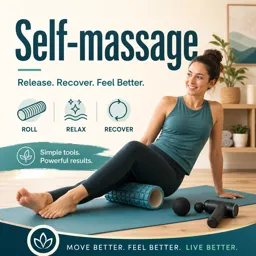
- Massage roller: a handheld roller can help work through tight forearms and calves.
- Warm compress: applying gentle heat before massaging can help muscles relax faster.
When to be cautious
Self-massage is generally safe for everyday muscle tension, but it isn’t a substitute for professional care. If you experience sharp pain, numbness, tingling, or tension that doesn’t improve after a few days, it’s a good idea to consult a healthcare professional or a licensed massage therapist rather than continuing to self-treat.
Conclusion
A few minutes of self-massage throughout the day can make a real difference in how your body feels, especially if you spend long hours sitting or working with your hands. These simple techniques are easy to learn and can be done almost anywhere. If you’d like to go deeper into professional massage techniques, Cursa’s Massage Therapy courses offer structured lessons for anyone interested in the field.