Human anatomy can feel overwhelming at first: hundreds of bones, countless muscles, branching nerves, and organs arranged in layered regions. The fastest way to make it manageable is to study anatomy like a map—zooming out to understand major landmarks and routes, then zooming in to learn the details that actually matter for exams and clinical reasoning.
This article lays out a practical, system-by-system anatomy study plan you can follow with free learning resources and certifications. You’ll learn what to study first, how to connect structures across systems, and how to retain anatomy long-term with active recall.
Start with the “orientation layer”: anatomical position and directional terms
Before diving into any system, lock in the language of anatomy. Make sure you can confidently use:
- anterior / posterior
- medial / lateral
- proximal / distal
- superficial / deep
- planes: sagittal, coronal, transverse
This prevents confusion when describing relationships like nerve paths or organ positions.
Step 1: Skeletal system—your framework for everything else
Study bones as landmarks. Focus on:
- major regions (skull, spine, thorax, limbs)
- key processes and foramina
- joint types
Retention tip: use “landmark drilling”
Pick one bone and list 5 key landmarks, then sketch it from memory in 60 seconds.
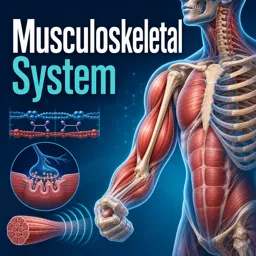
Step 2: Musculoskeletal anatomy—attachments to actions
Instead of memorizing tables, connect:
- origin & insertion → movement
- movement → function
- function → clinical relevance
Use the “three-question loop”:
- What joint does it cross?
- What movement does it produce?
- Which nerve controls it?

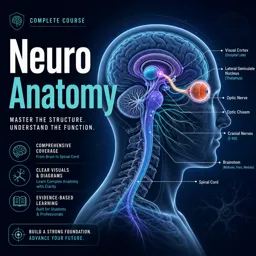
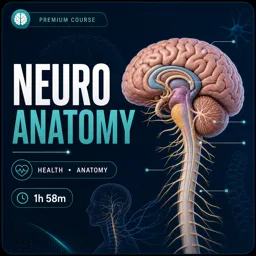
Step 3: Neuroanatomy basics—build pathways
Focus on flow, not lists:
- CNS vs PNS
- spinal cord (dermatomes, myotomes)
- plexuses and major nerves
High-yield strategy: lesion patterns
Link injuries to deficits (e.g., wrist drop → radial nerve).
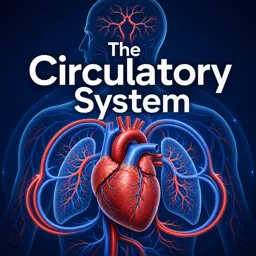
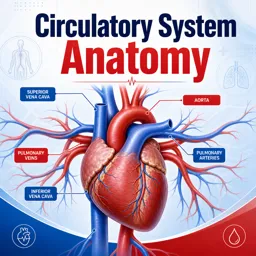
Step 4: Cardiovascular anatomy—think in routes
Study blood flow as a system:
- heart chambers and valves
- pulmonary vs systemic circulation
- arteries and veins by region
Quick win: draw the flow from memory:
RA → RV → lungs → LA → LV → body
Step 5: Thoracic and abdominal organs—relationships matter
Focus on spatial logic:
- anterior vs posterior
- superior vs inferior
- compartments and cavities
Use the “containers and contents” model:
- thoracic cavity
- pleural cavities
- peritoneal spaces
- retroperitoneal structures
Step 6: Head and neck anatomy—study in layers
Break complexity into sequence:
- bones and foramina
- muscles
- vessels
- nerves
Use neck triangles as organizers for structures.
How to study anatomy efficiently: the 4-tool method
- 3D visualization → rotate and identify
- Retrieval practice → quizzes and labeling
- Sketching → reinforces spatial memory
- Clinical anchors → link to symptoms/injuries
Build your learning path with free courses
Extra resources:
https://www.kenhub.com/en/library/anatomy
https://openstax.org/details/books/anatomy-and-physiology
A weekly anatomy routine you can repeat
- Day 1: landmarks and structures
- Day 2: muscles and vessels
- Day 3: nerves and function
- Day 4: quizzes and labeling
- Day 5: sketches + teach-back
- Day 6: case-based questions
- Day 7: review and spaced repetition
Common pitfalls (and how to avoid them)
- Memorizing without relationships → always connect structure + function
- Studying systems in isolation → integrate across systems
- Rereading notes → switch to active recall

Bring it all together
Anatomy becomes manageable when viewed as a system:
- Bones → structure
- Muscles → movement
- Nerves → control
- Vessels → supply
- Organs → function
With this map-based approach, you stop memorizing fragments and start recognizing patterns—making learning faster, deeper, and more useful.