Calcium binds to troponin, shifting tropomyosin away from actin’s binding sites so myosin can form cross-bridges and generate force.

Duration of the online course: 7 hours and 1 minutes
5

(1)
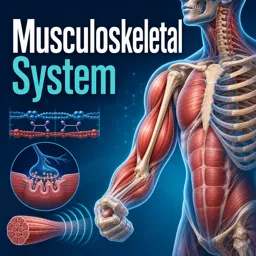
Master how muscles contract and generate force in this free online anatomy course—learn sarcomeres, motor units, and neuromuscular junction basics fast.
Build a clear, practical understanding of how the musculoskeletal system works by focusing on what truly explains movement: the way muscle tissue is structured, activated, and controlled. This free online course connects anatomy with function, helping you understand why muscles behave the way they do from the microscopic level to real-world force production. Whether you are revising for health sciences, strengthening anatomy foundations, or aiming to speak confidently about muscle physiology in a clinical or fitness setting, you will leave with a framework you can reuse again and again.
You will start by exploring the defining features of skeletal muscle and how its organization supports strength, speed, and endurance. From there, the course dives into sarcomere anatomy and the key proteins that shape muscle performance, clarifying how filaments interact and why structural elements matter for stability during contraction. The explanations are designed to make complex microscopic details feel intuitive, so you can recognize how muscle architecture translates into function.
A major emphasis is the neuromuscular junction and how a nerve signal becomes muscle action. You will follow the sequence from neurotransmitter release to the electrical changes in the muscle cell, then into excitation-contraction coupling and the events that ultimately produce tension. This thread makes it easier to understand what can go wrong in common neuromuscular pathologies, and it strengthens your ability to reason through exam questions rather than memorize isolated facts.
The course also brings mechanics into focus: twitches, summation, recruitment, threshold stimulus, and the difference between types of contractions such as isometric actions. You will learn how graded responses are produced and how multiple motor units combine to generate controlled force. Finally, you will compare muscle fiber types and see how their physiology supports different activities, while also expanding your view beyond skeletal muscle by examining the key properties of smooth muscle.
By the end, you will be able to explain muscle contraction step by step, relate cellular events to measurable force, and interpret core concepts across skeletal and smooth muscle. The included questions help reinforce the logic behind each mechanism and improve confidence for assessments or professional conversations in health and anatomy.

7 hours and 1 minutes of online video course

Digital certificate of course completion (Free)

Exercises to train your knowledge

100% free, from content to certificate
How does calcium trigger skeletal muscle contraction at the sarcomere?
Calcium binds to troponin, shifting tropomyosin away from actin’s binding sites so myosin can form cross-bridges and generate force.
What causes an end plate potential at the neuromuscular junction?
An end plate potential occurs when acetylcholine binds nicotinic receptors on the motor end plate, opening ion channels and depolarizing the muscle membrane.
What is the difference between isometric and isotonic muscle contractions?
Isometric contractions produce tension without changing muscle length, while isotonic contractions change muscle length as the muscle moves a load.
Ready to get started?Download the app and get started today.
Install the app now
to access the course
Over 5,000 free courses
Programming, English, Digital Marketing and much more! Learn whatever you want, for free.

Study plan with AI
Our app's Artificial Intelligence can create a study schedule for the course you choose.

From zero to professional success
Improve your resume with our free Certificate and then use our Artificial Intelligence to find your dream job.
You can also use the QR Code or the links below.



Free CourseThe Circulatory System
5
(3)

5h08m

19 exercises
Free CourseBone Anatomy
5
(3)
1h37m
21 exercises

Free CourseMuscle Anatomy
5
(2)
1h05m
6 exercises
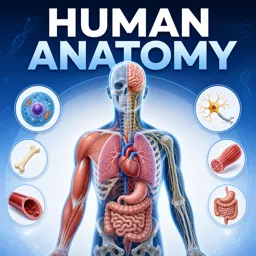
Free CourseHuman Anatomy
4.9
(7)
16h13m
36 exercises
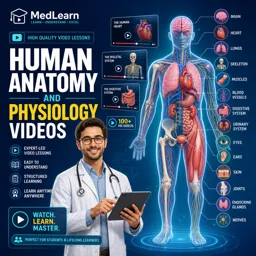
Free CourseHuman anatomy and physiology videos
4.8
(121)
18h47m
21 exercises
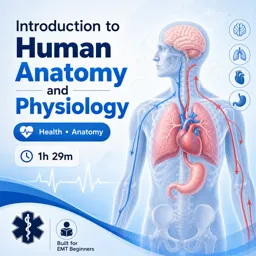
Free CourseIntroduction to human anatomy and physiology
4.8
(14)
1h29m
10 exercises
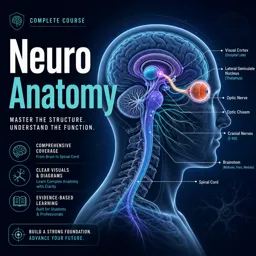
Free CourseNeuro Anatomy
4.5

(6)
6h09m
16 exercises
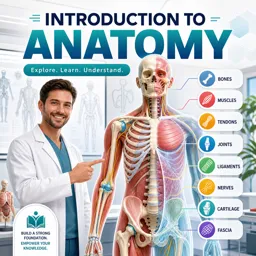
Free CourseIntroduction to Anatomy
4.2
(5)
36m
6 exercises
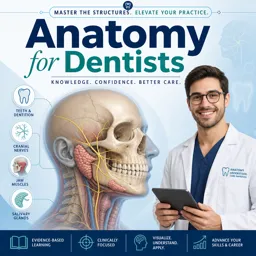
Free CourseAnatomy for Dentists
4
(4)
5h30m
45 exercises
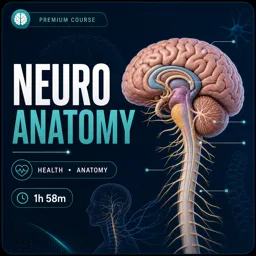
Free CourseNeuro Anatomy
3
(4)
1h47m
54 exercises
Carry knowledge in your pocket.
Download the Cursa app.
There are hundreds of free courses available, with a free certificate of completion that is saved in your mobile image gallery.
Download the app to access the Course Completion Certificate for Free.


+ 10 million
students

Free and Valid
Certificate

60 thousand free
exercises

4.8/5 rating in
app stores

Free courses in
video and ebooks