The coronal suture separates the frontal bone from the two parietal bones.

Duration of the online course: 1 hours and 37 minutes
5

(1)
Build strong bone anatomy skills with a free online course—learn major skeletal landmarks, sutures, and joints with quick quizzes and a certificate option.
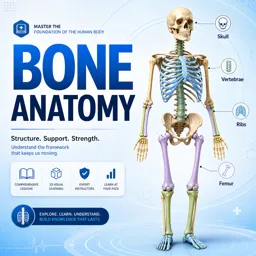
Understanding bone anatomy is the foundation for confidently navigating human health studies and many clinical conversations. This free online course in Anatomy helps you recognize the shapes, landmarks, and relationships that make the skeletal system more than a collection of names. You will develop the ability to look at a bone and orient it correctly, identify key features, and connect structure to function—skills that support learners in healthcare programs as well as anyone preparing for exams or refreshing core knowledge.
The course begins with the skull, building a practical mental map of cranial bones, sutures, and air-filled spaces. By exploring structures such as the sphenoid and ethmoid bones, you will learn why certain regions matter for protection, passage of nerves, and specialized senses. You will also see how fetal skull anatomy differs from the adult, clarifying how fontanelles and sutures relate to growth and clinical assessment.
From there, you will move down the axial skeleton, where orientation and articulation become essential. The upper cervical vertebrae are addressed with a focus on how the atlas and axis enable head movement and stability. As you continue through cervical, thoracic, and lumbar regions, you will strengthen your ability to distinguish vertebrae by hallmark features and understand how intervertebral discs contribute to shock absorption and motion. The sacrum and pelvic connections then tie these concepts into posture, load transfer, and everyday biomechanics.
The course also develops a clear framework for the appendicular skeleton, helping you relate upper and lower limbs to movement, weight-bearing, and joint design. You will study the shoulder and arm to understand how the clavicle and scapula set the stage for mobility, then connect humerus, radius, and ulna landmarks to elbow function and forearm rotation. In the lower limb, the course emphasizes the pelvis, femur, tibia, and the bones of the foot, reinforcing how surfaces, cartilage, and joint alignment support efficient gait and stability.
Throughout, short exercises reinforce retention by prompting you to recall sutures, foramina-related structures, articulations, and distinguishing landmarks. By the end, you will be better prepared to read anatomy resources, communicate accurately, and build confidence for further study in health and anatomy.

1 hours and 37 minutes of online video course

Digital certificate of course completion (Free)

Exercises to train your knowledge

100% free, from content to certificate
Which skull suture separates the frontal bone from the parietal bones?
The coronal suture separates the frontal bone from the two parietal bones.
What part of the sphenoid bone houses the pituitary gland?
The sella turcica, specifically its hypophyseal fossa, houses and protects the pituitary gland.
How can you distinguish the tibia from the fibula in the lower leg?
The tibia is the larger, medial weight-bearing bone; the fibula is the thinner bone on the lateral side.
Ready to get started?Download the app and get started today.
Install the app now
to access the course
Over 5,000 free courses
Programming, English, Digital Marketing and much more! Learn whatever you want, for free.

Study plan with AI
Our app's Artificial Intelligence can create a study schedule for the course you choose.

From zero to professional success
Improve your resume with our free Certificate and then use our Artificial Intelligence to find your dream job.
You can also use the QR Code or the links below.



Free CourseMusculoskeletal System
5
(1)

7h01m

12 exercises
Free CourseThe Circulatory System
5
(2)
5h08m
19 exercises

Free CourseMuscle Anatomy
5
(2)
1h05m
6 exercises
Free CourseHuman Anatomy
4.9
(7)
16h13m
36 exercises
Free CourseIntroduction to human anatomy and physiology
4.8
(13)
1h29m
10 exercises
Free CourseHuman anatomy and physiology videos
4.8
(121)
18h47m
21 exercises
Free CourseNeuro Anatomy
4.5

(6)
6h09m
16 exercises
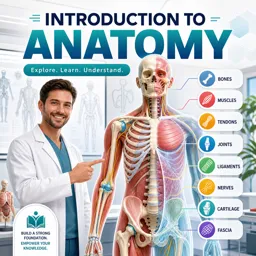
Free CourseIntroduction to Anatomy
4.2
(5)
36m
6 exercises
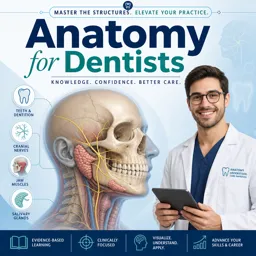
Free CourseAnatomy for Dentists
4
(4)
5h30m
45 exercises
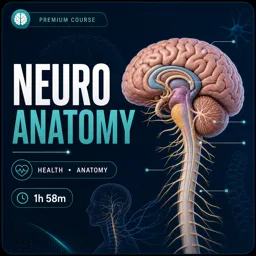
Free CourseNeuro Anatomy
3
(4)
1h47m
54 exercises
Carry knowledge in your pocket.
Download the Cursa app.
There are hundreds of free courses available, with a free certificate of completion that is saved in your mobile image gallery.
Download the app to access the Course Completion Certificate for Free.


+ 10 million
students

Free and Valid
Certificate

60 thousand free
exercises

4.8/5 rating in
app stores

Free courses in
video and ebooks