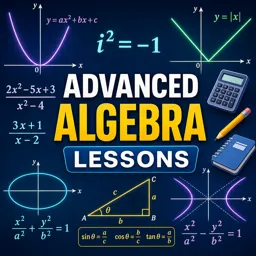
Algebra becomes much easier when you treat it like a set of skills—not a single subject. Instead of trying to “learn algebra” all at once, you can build a reliable toolkit: simplifying expressions, solving equations, understanding functions, working with systems, and (optionally) moving into linear algebra. This article lays out a practical, free study plan designed for structured learning and measurable progress—including how to practice efficiently and earn free certificates along the way.
Start with a quick self-check: what do you already know?
Before choosing a course sequence, spend 15–30 minutes testing yourself on these four areas: (1) arithmetic with negatives and fractions, (2) order of operations and simplifying expressions, (3) solving one-step and two-step equations, and (4) reading graphs on the coordinate plane. If any of these feel shaky, begin with pre-algebra and fundamentals. If they feel comfortable, you can move straight into algebra topics like functions and systems.
Step 1 (Core): Expressions and equation-solving as daily drills
The fastest way to gain confidence is repetition with feedback. Build a daily routine around a small set of “high-leverage” tasks: combining like terms, using the distributive property, handling parentheses, solving linear equations, and checking solutions by substitution. Aim for short sessions (20–40 minutes) where you do enough problems to see patterns—then correct mistakes immediately and redo similar problems until the process feels automatic.
To follow a structured learning track, explore the Algebra subcategory and pick a fundamentals-first course path: https://cursa.app/free-courses-basic-studies-online. If you want a targeted start, browse focused lessons in https://cursa.app/free-online-courses/algebra-basics.
Step 2 (Understanding): Functions as “machines” you can graph, interpret, and compare
Many learners stall not because equations are hard, but because functions feel abstract. A helpful approach: treat a function as a machine that takes an input and produces an output, then connect that machine to a table of values and a graph. Practice switching among representations: equation ⇄ table ⇄ graph ⇄ words. This is where algebra starts to feel cohesive because it links symbolic manipulation to visual and real-world interpretation.
As you study, focus on: domain and range, slope as a rate of change, intercepts as baseline values, and transformations like shifting and stretching graphs. These concepts are essential for later topics like systems, inequalities, and linear algebra.

Step 3 (Power move): Systems of equations and inequalities for decision-making
Systems are where algebra turns into a problem-solving engine. The key techniques—substitution, elimination, and graphing—let you solve multi-constraint questions: when two lines intersect, when multiple conditions can be true, and how to interpret “solution sets.” For practice, mix procedural drills (solve systems quickly) with word problems (translate constraints into equations/inequalities). The translation step is the real skill.
Once you’re comfortable, build intuition by checking answers visually: graph your lines, confirm the intersection, and reason about feasible regions for inequalities.
Step 4 (Structure): Polynomials, factoring, and rational expressions without memorizing tricks
Factoring is often taught as a bag of patterns, but it’s more stable when you connect it to structure: “What multiplied gives this expression?” Practice with common factors, difference of squares, and simple trinomials, and always verify by multiplying back out. For rational expressions, the essential habit is: factor first, then simplify, and track restrictions (values that make denominators zero).
If you’re progressing beyond fundamentals, a guided path through https://cursa.app/free-online-courses/intermediate-algebra helps consolidate these skills into a coherent toolkit.
Step 5 (Optional specialization): Linear algebra as the “language of systems”
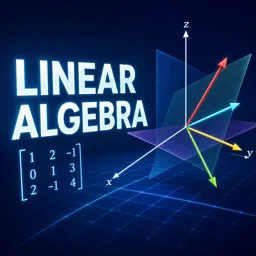
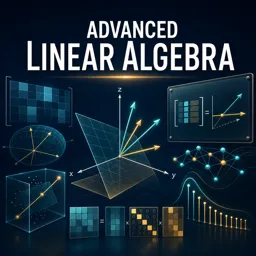
If you enjoy systems and want a powerful next step, linear algebra reframes many algebra ideas using vectors and matrices. You’ll revisit solving systems—but faster and more scalable—with matrix methods, and you’ll gain concepts like linear combinations, span, and transformations. This is especially useful for data, graphics, engineering, and advanced math.
Explore https://cursa.app/free-online-courses/linear-algebra when you’re comfortable with solving linear systems and reading graphs.
How to practice algebra effectively (without burning out)
A simple practice loop works better than long, unfocused sessions:
- Learn one idea (short lesson or example set)
- Do 8–15 problems that match the idea
- Check and categorize mistakes: arithmetic error, rule confusion, or translation error
- Redo 3 similar problems to confirm the fix
- Mix in review: spend 20% of your time on older topics so skills don’t fade
This approach also makes free certificates meaningful: you’re not just finishing content—you’re demonstrating mastery.
Mini-projects that make algebra stick
Projects are a fast way to turn symbols into intuition. Try one mini-project per unit:
- Budget model: Create a linear function for monthly savings with deposits and withdrawals; solve for when you reach a goal.
- Phone plan comparison: Model two plans with different base fees and per-unit costs; find the break-even point (system intersection).
- Projectile or motion graph (simplified): Use a quadratic to model a curve and interpret vertex and intercepts.
- “Error hunt” portfolio: Collect your most common mistakes and write the corrected reasoning—this becomes a personal reference guide.

Where to find free algebra learning paths and certificates
For a broad starting point across foundational skills, visit the Basic studies category: https://cursa.app/free-online-basic-studies-courses. Then move into the Algebra subcategory for dedicated course tracks: https://cursa.app/free-courses-basic-studies-online. From there, you can specialize by level: https://cursa.app/free-online-courses/algebra-basics, https://cursa.app/free-online-courses/intermediate-algebra, and https://cursa.app/free-online-courses/advanced-algebra.
If you want extra practice explanations and worked examples, open educational resources like https://www.khanacademy.org/math/algebra can complement structured courses (use it mainly for targeted problem sets on weak areas).
Suggested 4-week free study schedule (adjustable)
Week 1: Expressions + linear equations (daily drills).
Week 2: Functions (tables/graphs) + word problems.
Week 3: Systems + inequalities + modeling constraints.
Week 4: Polynomials/factoring + review + mini-project + course completion for certification.
The goal isn’t speed—it’s repeatable mastery. When a topic feels hard, reduce scope (fewer types of problems), increase repetitions, and keep feedback immediate.
Next steps
Choose your starting point based on your self-check, commit to short daily practice, and add a mini-project to each unit to lock in understanding. If you want the most straightforward sequence, begin with https://cursa.app/free-online-courses/algebra-basics, then step up to https://cursa.app/free-online-courses/intermediate-algebra, and expand toward https://cursa.app/free-online-courses/linear-algebra when systems feel comfortable.