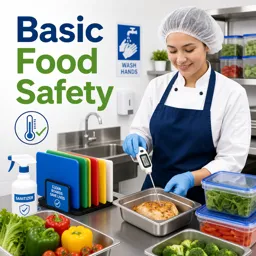
Cooking at home is a rewarding skill, but it also comes with a responsibility that’s easy to overlook: keeping food safe to eat. Foodborne illness is far more common than most people realize, and the vast majority of cases can be traced back to simple mistakes in the kitchen. This guide covers the fundamentals of food safety that every home cook should know, from shopping and storage to cooking and cleanup.
Why food safety matters
Bacteria, viruses, and parasites can contaminate food at any point, from the farm to your plate. Under the right conditions, harmful microorganisms multiply quickly, and eating contaminated food can lead to symptoms ranging from mild stomach upset to serious illness, especially in children, older adults, pregnant people, and those with weakened immune systems. Fortunately, most risks can be minimized with a few consistent habits.
The four core principles of food safety
Food safety experts often summarize best practices into four core principles: clean, separate, cook, and chill. Keeping these in mind while shopping, prepping, and storing food covers most of the risk.
| Principle | What It Means |
|---|---|
| Clean | Wash hands, surfaces, and produce often |
| Separate | Keep raw meat away from ready-to-eat foods |
| Cook | Heat food to a safe internal temperature |
| Chill | Refrigerate perishable food promptly |
Cleaning: the first line of defense
Wash your hands with soap and water for at least 20 seconds before handling food, and again after touching raw meat, using the bathroom, or handling garbage. Cutting boards, countertops, and utensils should be washed with hot, soapy water after each use, especially after contact with raw meat, poultry, seafood, or eggs. Fresh produce should be rinsed under running water, even if you plan to peel it, since bacteria on the skin can transfer to the flesh when cutting.
Separate: avoiding cross-contamination
Cross-contamination happens when harmful bacteria spread from one food to another, often through hands, utensils, or cutting boards. Use separate cutting boards for raw meat and for produce, or wash boards thoroughly between uses. When shopping and storing groceries, keep raw meat, poultry, and seafood separate from other foods, ideally in sealed containers or bags on the bottom shelf of the refrigerator to prevent juices from dripping onto other items.
Cook: reaching safe temperatures
Color and texture aren’t reliable indicators that food is fully cooked. A food thermometer is the only accurate way to confirm that meat, poultry, and seafood have reached a safe internal temperature. Ground meats generally need to reach at least 71°C (160°F), poultry needs to reach 74°C (165°F), and whole cuts of beef, pork, veal, and lamb should reach at least 63°C (145°F), followed by a short rest time.
Chill: the danger zone
Bacteria multiply fastest between 4°C and 60°C (40°F and 140°F), a range often referred to as the “danger zone.” Perishable food should never sit at room temperature for more than two hours, or one hour if the environment is above 32°C (90°F). Refrigerators should be kept at or below 4°C (40°F), and leftovers should be stored in shallow containers to help them cool down quickly and evenly.
Practical tips for everyday cooking
- Never thaw frozen meat on the counter — use the refrigerator, cold water, or the microwave instead.
- Marinate food in the refrigerator, not on the counter.
- When in doubt about whether food has gone bad, throw it out rather than risk it.
- Label leftovers with the date they were made and aim to eat them within three to four days.
- Avoid tasting food that looks or smells off, even briefly.
Reading expiration labels correctly
Food labels can be confusing, since terms like “sell by,” “best by,” and “use by” don’t all mean the same thing. A “sell by” date is mainly for store inventory and doesn’t necessarily mean the food is unsafe shortly after. A “best by” date refers to peak quality rather than safety. The “use by” date is the most safety-relevant label, indicating the last date the manufacturer recommends consuming the product for best quality and safety. Regardless of the label, always rely on your senses and proper storage practices as the final check before eating something.
Common mistakes even experienced cooks make
Even confident home cooks can develop habits that quietly increase risk over time. Rinsing raw chicken under the tap, for example, doesn’t kill bacteria and instead splashes contaminated water onto nearby surfaces — cooking to a safe temperature is what actually eliminates the risk. Another common mistake is leaving the same spoon used to taste a simmering sauce in the pot afterward, or reusing a plate that held raw meat to serve the cooked dish without washing it first. Small habits like these are easy to overlook, but correcting them is one of the simplest ways to make a kitchen meaningfully safer.
Conclusion
Good food safety habits don’t require special equipment or advanced knowledge — just consistency and attention to a few key principles. Building these habits into your everyday cooking routine protects both you and the people you cook for. For those who want to take their culinary skills further, Cursa offers free courses covering cooking fundamentals and professional kitchen practices.