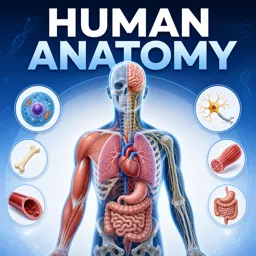
“Knowing anatomy” isn’t just memorizing labels—it’s building body literacy: the ability to visualize structures in 3D, predict what sits next to what, and explain how form supports function. A smart learning path helps you move from simple landmarks (bones and surface anatomy) to complex regions (neuroanatomy and head/neck) without getting overwhelmed.
This guide lays out a practical sequence for studying human anatomy, plus study methods that make knowledge stick—ideal whether you’re starting from zero or returning to refresh core concepts. You can also explore:
https://cursa.app/free-courses-health-online
https://cursa.app/free-online-health-courses
1) Start with orientation: the “grammar” of anatomy
Before systems, master the language that makes every diagram readable. Focus on:
- Anatomical position
- Planes (sagittal, coronal, transverse)
- Directional terms (anterior/posterior, medial/lateral, proximal/distal, superficial/deep)
- Basic regions (thorax, abdomen, pelvis, limbs)
This foundation makes every future topic easier to understand.
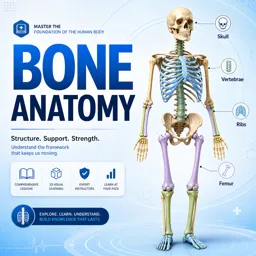
2) Build the scaffold: skeletal anatomy and landmarks
The skeleton is your roadmap. Prioritize:
- Axial skeleton: skull, vertebral column, rib cage
- Appendicular skeleton: limbs and girdles
- Landmarks: tubercles, crests, fossae
Study tip: combine images with palpation (touching your own landmarks) to reinforce memory.
3) Add motion: joints and functional anatomy
Study joints as systems of movement:
- What bones articulate?
- What movements are allowed?
- Which ligaments stabilize them?
- Which muscles produce or control motion?
This functional approach connects anatomy to real-world movement and injuries.

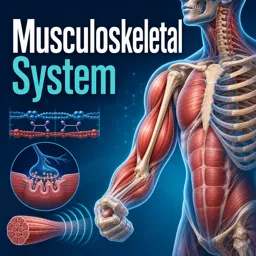
4) Layer in muscles strategically
Avoid isolated memorization. Instead:
- Learn muscle compartments
- Group by function (flexors, extensors, rotators)
- Use origin and insertion to predict action
Goal: understand movement, not just memorize names.
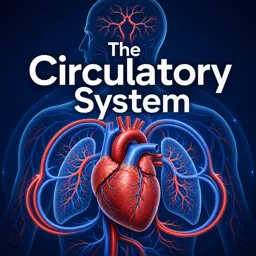
5) Make it real: neurovascular “routes”
Instead of lists, think in pathways:
- Start at the source
- Follow the route using landmarks
- Learn branches afterward
- Connect to function (motor/sensory)
If you can mentally trace a pathway, you’ve truly learned it.
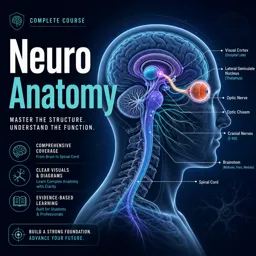
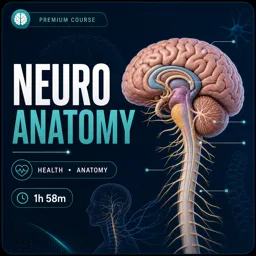
6) Approach neuroanatomy as a hierarchy
Build from big → small:
- CNS vs PNS
- Brain regions (cerebrum, cerebellum, brainstem)
- Spinal cord organization
- Cranial nerves (grouped by function)
Focus on relationships and positioning before details.
7) Study regionally to integrate everything
Once foundations are solid, switch to regional anatomy:
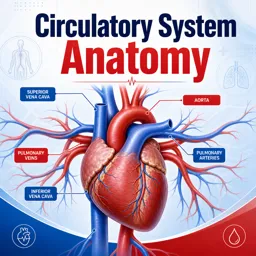
- Thorax: heart, lungs
- Abdomen: organs, vessels
- Pelvis: floor and structures
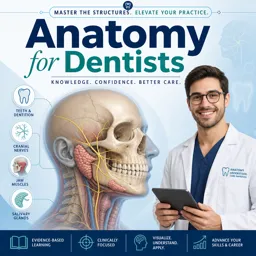
- Head & neck: most complex (leave for later)
This transforms isolated facts into spatial understanding.
Study techniques that consistently work
- Active recall: test yourself without notes
- Spaced repetition: review over time
- Dual coding: combine text + drawings
- 3D visualization: rotate and redraw structures
- Teach-back: explain concepts out loud
For structured learning:
https://cursa.app/free-courses-health-online
https://cursa.app/free-online-health-courses
Common pitfalls (and how to avoid them)
- Memorizing without context → always link structure, location, and function
- Trying to learn everything at once → follow a sequence
- Skipping review → prioritize frequent recall
- Starting with too much detail → build the “big map” first

Conclusion
With the right sequence and study strategies, anatomy becomes a connected system rather than a collection of facts. By building from orientation to regions—and reinforcing with active techniques—you develop true body literacy that lasts.