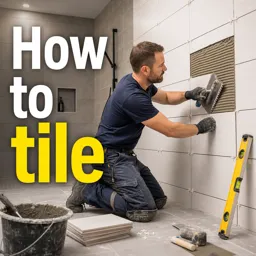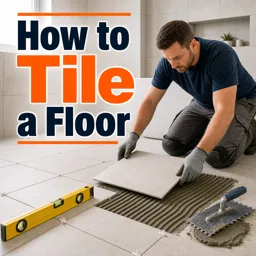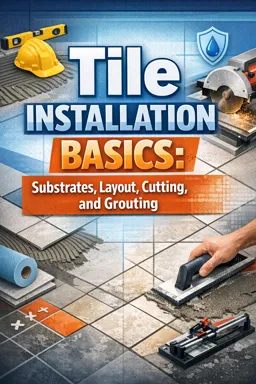


Free ebook covering tile substrates, waterproofing, layout, cutting, setting, grouting, and troubleshooting for durable installations.
Free ebook content
-

Tile Installation Basics: Safety, Tools, and Materials
+ Exercise: When cutting or grinding tile creates fine dust, which approach best reduces hazardous silica exposure?
-
Evaluating Substrates for Tile: Floors and Walls
+ Exercise: A floor feels flat and looks clean, but when you walk on it you notice bounce and hear squeaks. Based on substrate evaluation, what is the best classification and next step?
-
Underlayment and Backer Boards: Selection and Installation
+ Exercise: When installing cement backer board or fiber-cement board on a floor, what is the main purpose of the thinset applied beneath the panels?
-
Waterproofing and Wet-Area Detailing for Tile
+ Exercise: When waterproofing a shower, what is the most beginner-safe approach to prevent leaks at corners and penetrations?


-
Layout and Planning: Grout Joints, Movement Joints, and Transitions
+ Exercise: When planning movement (soft) joints during the layout stage, which approach best helps prevent cracking or tenting while keeping the installation looking intentional?
-
Thinset, Mortar, and Trowels: Mixing and Selection for Proper Bond
+ Exercise: When installing large-format tile and a coverage check shows the corners and edges are not fully supported, what is the best next adjustment?
-
Cutting Tile: Scoring, Sawing, Grinding, and Hole Drilling
+ Exercise: When using a diamond hole saw to drill a hole in porcelain tile, which approach best prevents the bit from skating and reduces blowout at breakthrough?
-
Setting Tile with Proper Coverage: Spacers, Levels, and Lippage Control
+ Exercise: Which action best confirms adequate mortar coverage and helps you correct low coverage before the mortar cures?
-
Grout Selection: Sanded, Unsanded, Polymer-Modified, and Epoxy
+ Exercise: Why is sanded cement grout generally recommended for wider joints, while unsanded cement grout is preferred for narrow joints or scratch-sensitive tile?
-
Grouting Technique: Mixing, Application, Cleanup, and Curing
+ Exercise: During cement-grout cleanup, which approach best helps prevent low joints, pinholes, and blotchy color?
-
Sealing, Caulking, and Finishing Details for Tile Projects
+ Exercise: In a shower installation, what is the correct understanding of what a penetrating sealer on cement-based grout does?
-
Troubleshooting Tile Installation: Lippage, Hollow Spots, and Cracked Grout
+ Exercise: You find grout cracking mainly at a room perimeter and at an inside corner where a wall meets the floor. What is the most appropriate repair approach?
About the free ebook
Tile Installation Basics: Substrates, Layout, Cutting, and Grouting
Build practical tile-setting skills for floors, walls, showers, and other finish surfaces with this free online ebook for construction professionals and hands-on renovators.
Prepare for a durable installation
Successful tilework starts below the tile. Learn how to inspect floors and walls, select suitable underlayment or backer boards, and address wet-area waterproofing details. The ebook explains how surface condition, flatness, movement, and moisture management affect the finished installation.
Plan, set, and cut tile accurately
Develop a reliable approach to measuring and laying out tile before mixing mortar. Explore grout-joint planning, movement joints, transitions, thinset selection, trowel use, and coverage. Clear guidance on scoring, wet-saw cutting, grinding, and drilling holes helps you make clean cuts while working safely.
Finish work with confidence
Learn how spacers, leveling methods, and proper setting technique help control lippage and support consistent bond coverage. Review grout types, mixing and cleanup practices, curing, sealing, caulking, and finish details.
Skills covered
- Substrate evaluation and backer-board installation
- Waterproofing and wet-area detailing
- Tile layout, mortar application, cutting, and setting
- Grout selection, application, curing, and repairs
- Diagnosing hollow spots, lippage, and cracked grout
Use this ebook as a practical reference to make informed material choices, avoid common installation errors, and produce cleaner, longer-lasting tile projects.
How do I choose the right backer board for a tile installation?
Choose a board rated for the location and tile load; use moisture-resistant systems and required waterproofing in wet areas.
What causes lippage in tile floors and walls?
Lippage often results from an uneven substrate, inconsistent mortar coverage, warped tile, or poor spacing and leveling.
When should caulk be used instead of grout in tile work?
Use flexible sealant at changes of plane, perimeter gaps, and movement joints; grout is for the tile joints between field tiles.
This ebook includes:

12 content chapters

Digital certificate of course completion (Free)

Exercises to train your knowledge

100% free, from content to certificate
Ready to get started?

 recommended
In the app you will also find...

Over 5,000 free courses
Programming, English, Digital Marketing and much more! Learn whatever you want, for free.

Study plan with AI
Our app's Artificial Intelligence can create a study schedule for the course you choose.

From zero to professional success
Improve your resume with our free Certificate and then use our Artificial Intelligence to find your dream job.
You can also use the QR Code or the links below.