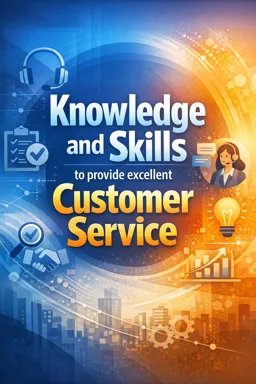


Free ebook on customer service skills for handling requests, complaints, difficult conversations, and professional follow-through.
Free ebook content
-

Customer Service Skills for Any Role: Customer-Focused Mindset and Service Standards
+ Exercise: Which response best demonstrates a customer-focused mindset when you are not the right owner for a request?
-
Customer Service Skills for Any Role: Listening, Empathy, and Clarifying Requests
+ Exercise: When you receive a vague or time-pressured request, which approach best helps you avoid assumptions while staying efficient?
-
Customer Service Skills for Any Role: Setting Expectations and Communicating Boundaries
+ Exercise: Which response best sets a clear boundary without sounding defensive and keeps the conversation solution-focused?
-
Customer Service Skills for Any Role: Professional Communication Essentials (Tone, Clarity, Consistency)
+ Exercise: Which message best follows the recommended Purpose → Context → Action → Next step structure while staying clear and specific?


-
Customer Service Skills for Any Role: Handling Complaints and Dissatisfaction with Ownership
+ Exercise: When a customer complains about unexpected charges and you have not yet verified whether the organization caused the issue, which response best matches the recommended approach?
-
Customer Service Skills for Any Role: De-escalation Skills for Difficult Situations
+ Exercise: Which response best follows de-escalation principles when a customer is upset and says, “You charged me twice. This is a scam.”?
-
Customer Service Skills for Any Role: Delivering Solutions and Making Service Recovery Right
+ Exercise: After a customer selects a solution option, which confirmation approach best prevents misunderstandings and repeat contacts?
-
Customer Service Skills for Any Role: Writing Helpful Responses in Email and Chat
+ Exercise: Which closing line best reduces back-and-forth by clearly stating status, next steps, and whether the customer needs to reply?
-
Customer Service Skills for Any Role: Escalations, Handoffs, and Internal Collaboration
+ Exercise: Which set of elements best defines a warm handoff that prevents the customer from repeating information and clarifies next steps?
-
Customer Service Skills for Any Role: Documentation, Follow-Through, and Continuous Improvement
+ Exercise: Which action best demonstrates “closing the loop” after resolving a customer issue?
About the free ebook
Customer Service Skills for Any Role: Handle Requests and Difficult Situations
This free ebook develops practical customer service skills that apply to customer-facing, operational, technical, and internal support roles. Learn how to approach every interaction with a customer-focused mindset while maintaining clear service standards.
Communicate with confidence and care
Effective service begins with listening closely, recognizing concerns, and asking focused questions before responding. The ebook shows how empathy, clear language, and a professional tone can help customers feel heard while keeping conversations productive.
You will also learn to set realistic expectations, explain boundaries respectfully, and write useful responses for email and chat. These skills help prevent misunderstandings and make next steps easy to understand.
Respond constructively when situations are difficult
Complaints and tense conversations require calm judgment, ownership, and consistent follow-through. Discover practical ways to de-escalate frustration, acknowledge dissatisfaction without overpromising, and move conversations toward workable solutions.
Build reliable service habits
- Use active listening to clarify requests accurately.
- Communicate timelines, options, and limitations clearly.
- Handle handoffs and escalations without losing context.
- Document actions and commitments for dependable follow-through.
- Use feedback and recurring issues to improve service processes.
Whether you support external customers or colleagues, this ebook helps you deliver responsive, respectful service and contribute to better outcomes in every interaction.
How can I de-escalate an angry customer conversation?
Stay calm, acknowledge the concern, clarify the issue, set realistic next steps, and follow through on commitments.
What should a helpful customer service email include?
Use a clear subject, acknowledge the request, provide accurate details, explain next steps, and state any relevant timeline.
When should a customer issue be escalated?
Escalate when the issue exceeds your authority, requires specialist knowledge, involves risk, or cannot be resolved within agreed expectations.
This ebook includes:

10 content chapters

Digital certificate of course completion (Free)

Exercises to train your knowledge

100% free, from content to certificate
Ready to get started?

 recommended
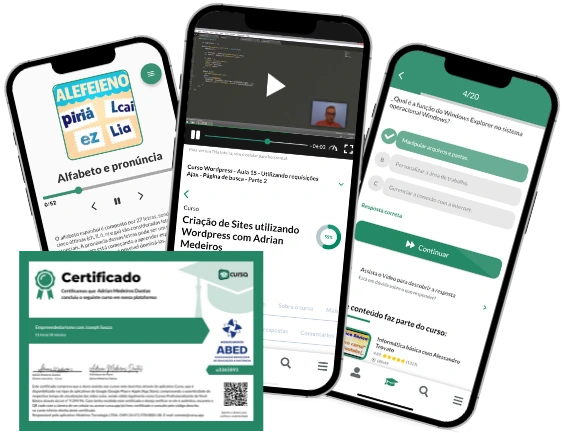
In the app you will also find...

Over 5,000 free courses
Programming, English, Digital Marketing and much more! Learn whatever you want, for free.

Study plan with AI
Our app's Artificial Intelligence can create a study schedule for the course you choose.

From zero to professional success
Improve your resume with our free Certificate and then use our Artificial Intelligence to find your dream job.
You can also use the QR Code or the links below.