
LEO is up to about 2,000 km above Earth, MEO spans roughly 2,000–30,000 km and includes GPS satellites, and GEO is about 35,786 km high, where satellites can appear fixed over one location.

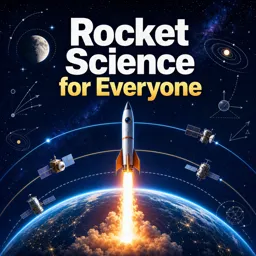
Duration of the online course: 3 hours and 31 minutes
5

(1)
Build real spaceflight intuition in this free online course—learn orbits, satellites, and rockets, then test your knowledge with quick exercises and a certificate option.
Rocket science is not just for engineers. It shows up every time you use GPS, watch a live broadcast, check the weather, or capture a photo that depends on space-based technology. This free online course turns the big ideas behind modern spaceflight into concepts you can actually picture, helping you understand what satellites do, how rockets reach orbit, and why the rules of motion in space feel so different from what we experience on Earth.
You will build a clear mental model of orbits by exploring what it really means for something to be in orbit, where space begins, and how different orbital neighborhoods work. Instead of treating acronyms like LEO, MEO, and GEO as trivia, you will connect each region to practical missions—like why GPS satellites sit where they do, how a spacecraft can seem to hover in the sky, and why certain orbits are ideal for mapping every part of Earth in detail. Along the way, Kepler’s and Newton’s laws become tools you can use to reason about speed, altitude, and orbital periods without needing advanced math.
The course then connects those orbital fundamentals to the physics of launch. You will see why airplanes cannot simply fly to space, why rockets behave the way they do, and what tradeoffs separate solid motors, liquid engines, and advanced propulsion approaches. The logic behind multistage rockets and the rocket equation is explained in an intuitive way, so you can understand why reaching orbital speed is such a demanding challenge and how engineers squeeze the most performance out of a launch. You will also learn why Earth’s rotation matters and how launch direction can influence the energy needed to reach orbit.
Finally, you will step inside a satellite and learn how key subsystems work together: structure, power, communication, imaging, and the harsh testing needed to survive launch and space. Short questions and exercises throughout help you check your understanding and turn interesting facts into durable knowledge. Whether you are exploring astronomy as a hobby or looking to strengthen your science foundation, this course offers a practical, confidence-building path into the world above our atmosphere.

3 hours and 31 minutes of online video course

Digital certificate of course completion (Free)

Exercises to train your knowledge

100% free, from content to certificate
What is the difference between low Earth orbit, medium Earth orbit, and geostationary orbit?
LEO is up to about 2,000 km above Earth, MEO spans roughly 2,000–30,000 km and includes GPS satellites, and GEO is about 35,786 km high, where satellites can appear fixed over one location.
Why do rockets launch eastward near the equator?
Launching eastward near the equator gains the most boost from Earth’s rotation, reducing the rocket fuel needed to reach orbit.
Why can satellites stay in orbit after their engines turn off?
A satellite’s sideways speed continually carries it around Earth while gravity pulls it inward, creating a continuous free-fall path called an orbit.
Ready to get started?Download the app and get started today.
Install the app now
to access the course
Over 5,000 free courses
Programming, English, Digital Marketing and much more! Learn whatever you want, for free.

Study plan with AI
Our app's Artificial Intelligence can create a study schedule for the course you choose.

From zero to professional success
Improve your resume with our free Certificate and then use our Artificial Intelligence to find your dream job.
You can also use the QR Code or the links below.



Free CourseAstronomy 101 complete lessons
5
(4)

9h07m

12 exercises
Free CourseCosmology
5
(1)
5h18m
17 exercises
Free CourseExoplanets and the search for Life in the Universe
5
(1)
49m
6 exercises
Free CourseIntroduction to Astronomy - Solar System, Stars and Cosmology
5
(2)
25h55m
49 exercises
Free CourseAstronomy
4.7

(58)
2h56m
24 exercises
Free CourseHow the Universe works
4.7
(7)
43m
8 exercises
Free CourseGeneral Astronomy
New
15h56m
29 exercises
Free CourseCosmology Fundamentals: Hubble’s Law, FLRW Models, Inflationand Structure Formation
New
19h52m
1 exercises
Free CourseDescriptive Astronomy: From Orbits to the Big Bang
New
19h21m
23 exercises
Carry knowledge in your pocket.
Download the Cursa app.
There are hundreds of free courses available, with a free certificate of completion that is saved in your mobile image gallery.
Download the app to access the Course Completion Certificate for Free.


+ 10 million
students

Free and Valid
Certificate

60 thousand free
exercises

4.8/5 rating in
app stores

Free courses in
video and ebooks
Course comments: Rocket Science for Everyone
Galal Abdullrahman
simply the best