

Rocket propulsion is the process of generating thrust by expelling high-speed exhaust gases or other reaction mass in the opposite direction.

1


Explore free online Rocket Propulsion courses designed for students, engineering enthusiasts, educators, and professionals who want to understand how rockets generate thrust and operate in demanding aerospace environments. These educational courses provide an accessible way to study propulsion science, from fundamental physics to the principles used in modern launch vehicles and spacecraft.
Develop your knowledge through structured lessons covering Newton's laws of motion, momentum, thrust, specific impulse, combustion, nozzle flow, propellant performance, and rocket engine efficiency. The courses are completely free, include exercises that help reinforce each topic, and offer free certification after completion. This makes the page a valuable learning resource for anyone seeking free aerospace engineering education and evidence of their studies.
Rocket propulsion education combines physics, chemistry, thermodynamics, fluid mechanics, and engineering design. Depending on the selected course, learners may examine solid, liquid, and hybrid rocket engines, combustion chambers, injectors, turbopumps, exhaust nozzles, cooling systems, ignition methods, and propellant selection. More advanced lessons may introduce staging, engine cycles, performance calculations, mission requirements, and propulsion system testing.
These free Rocket Propulsion courses are suitable for beginners, university students, aerospace and mechanical engineering learners, teachers, science enthusiasts, and professionals interested in space technology. They can support independent study, academic revision, career development, or preparation for more advanced aerospace engineering subjects. Learners can study online at their own pace and revisit lessons whenever necessary.
To access the lessons, exercises, and free certification, you must install the Cursa application. Android users can install it through Google Play using Download for Android. iPhone users can install it through the App Store using Download for iOS / iPhone.
Begin your free online education in Rocket Propulsion today, strengthen your understanding of rocket engines and spacecraft systems, complete the included exercises, and earn free certification to demonstrate your commitment to aerospace learning.
What is rocket propulsion?
Rocket propulsion is the process of generating thrust by expelling high-speed exhaust gases or other reaction mass in the opposite direction.
How do rockets work in space without air?
Rockets carry both fuel and an oxidizer, so they can create thrust without atmospheric oxygen or air to push against.
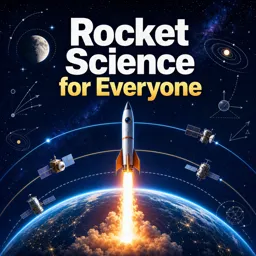
What types of rocket engines are covered in Rocket Science for Everyone?
An introductory rocket propulsion course may explain chemical rockets, solid and liquid engines, hybrid systems, and basic electric propulsion concepts.
What is the difference between solid and liquid rocket propulsion?
Solid motors contain premixed propellant and are simpler, while liquid engines store fuel and oxidizer separately and offer greater control.
What is specific impulse in rocket propulsion?
Specific impulse measures how efficiently a rocket uses propellant. A higher specific impulse generally means more thrust duration per unit of propellant.
Why do rockets use multiple stages?
Multistage rockets discard empty tanks and engines during flight, reducing mass and improving the ability to reach high speeds or orbit.
Can beginners learn rocket propulsion online?
Yes. Courses such as Rocket Science for Everyone can introduce thrust, propellants, engine types, staging, and the fundamentals of spaceflight.

Complete any course and issue your certificate via the app — at no cost.

Download the app! to have access to more than 4,000 Online Courses + Certificate, all free!
Download the app! 100% free courses.


Carry knowledge in your pocket.
Download the Cursa app.
There are hundreds of free courses available, with a free certificate of completion that is saved in your mobile image gallery.
Download the app to access the Course Completion Certificate for Free.


+ 10 million
students

Free and Valid
Certificate

60 thousand free
exercises

4.8/5 rating in
app stores

Free courses in
video and ebooks