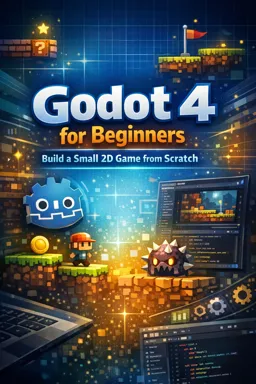
The first three quarters primarily use the LÖVE 2D framework with the Lua programming language to build 2D games.


Duration of the online course: 21 hours and 45 minutes
New
Build real games from scratch and level up your programming skills in this free online course—learn core mechanics, physics, and prototyping with hands-on practice.
Turn game ideas into playable prototypes while building a solid foundation in programming and interactive design. This free online course introduces game development through practical, classic projects, guiding you from the first steps of creating a game loop to polishing the feel of movement, timing, and feedback. Instead of staying theoretical, you will learn by implementing the same kinds of mechanics that power well-known genres, helping you connect code to what players actually experience on screen.
You will work with essential concepts like sprites, animation, input handling, collision detection, and state management, gaining the confidence to organize game code cleanly as complexity grows. Along the way, you will practice making responsive controls, balancing challenge and reward, and solving common development problems such as keeping systems consistent when the screen fills with entities or when the game speed changes. These skills translate beyond a single project, preparing you to build your own mechanics and iterate faster.
As the course progresses, you will also explore more advanced tools and workflows used in modern development, including physics-based interactions and 3D environments. You will encounter engine features that speed up production, such as reusable building blocks and scene-based organization, and learn how visual effects can improve depth and readability. By comparing approaches across different frameworks, you will better understand when to rely on an engine and when to implement systems yourself.
Designed for anyone curious about games and software creation, this course is a strong starting point for a portfolio, a transition into programming, or a deeper understanding of how games are built. By the end, you will have hands-on experience designing and implementing complete gameplay systems, and you will be ready to take on new projects with a clearer process, sharper debugging skills, and a practical game developer mindset.

21 hours and 45 minutes of online video course

Digital certificate of course completion (Free)

Exercises to train your knowledge

100% free, from content to certificate
What programming framework does CS50's Introduction to Game Development use for its early projects?
The first three quarters primarily use the LÖVE 2D framework with the Lua programming language to build 2D games.
What game development skills are taught through projects like Pong, Flappy Bird, Breakout, and Match 3?
Projects cover game loops, input handling, animation, collision detection, sprite sheets, scoring, and tile gravity mechanics.
Does the course cover Unity and 3D game development?
Yes. Later lessons introduce Unity concepts such as prefabs, physics, fog, camera textures, portals, and 3D game design.
Ready to get started?Download the app and get started today.
Install the app now
to access the course
Over 5,000 free courses
Programming, English, Digital Marketing and much more! Learn whatever you want, for free.

Study plan with AI
Our app's Artificial Intelligence can create a study schedule for the course you choose.

From zero to professional success
Improve your resume with our free Certificate and then use our Artificial Intelligence to find your dream job.
You can also use the QR Code or the links below.



Free CourseUnreal Engine 5 Complete Tutorials
5

(1)

105h07m

53 exercises
Free CourseUnity - survival game
5
(13)
11h23m
38 exercises
Free CourseGame Environment Art
5
(3)
2h37m
7 exercises
Free CourseGame Design course
5
(1)
10h16m
38 exercises

Free CourseAndroid - LibGDX - Super Mario Bros
4.8
(18)
5h08m
22 exercises
Free CourseUnity game development for beginners
4.8

(4)
7h24m
Free CourseUnity 3D Game Development Course
4.8
(4)
11h44m
45 exercises
Free CourseRPG in Unity
4.7
(10)
2h27m
11 exercises
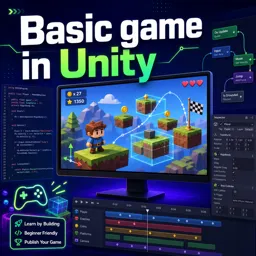
Free CourseBasic game in Unity
4.7
(53)
1h39m
11 exercises
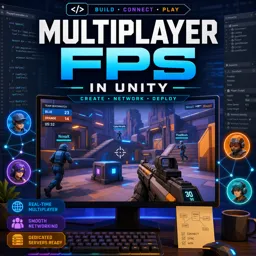
Free CourseMultiplayer FPS in Unity
4.7
(15)
14h06m
24 exercises
Carry knowledge in your pocket.
Download the Cursa app.
There are hundreds of free courses available, with a free certificate of completion that is saved in your mobile image gallery.
Download the app to access the Course Completion Certificate for Free.


+ 10 million
students

Free and Valid
Certificate

60 thousand free
exercises

4.8/5 rating in
app stores

Free courses in
video and ebooks