
Exercises
Explore the practical principles behind physically based rendering textures for real-time 3D assets. This quiz covers base color, metalness, roughness, ambient occlusion, tangent-space normal maps, color-space settings, channel packing, texel density, and high-to-low-poly baking. The questions combine technical concepts with visual interpretation to assess skills used in game art, visualization, and other real-time 3D workflows.
Answer the questions below and check the explanation for each answer.
0/11 answered
Auto audio on: the next questions will be read aloud when you click Continue.
A base-color map describes the intrinsic color of the material. Lighting, shadows, and reflections should normally be calculated by the renderer rather than painted into this map.
In the metalness workflow, pure dielectrics use a metalness value of 0, while pure metals use 1. Intermediate values are generally reserved for blended boundary pixels or unusual layered materials.
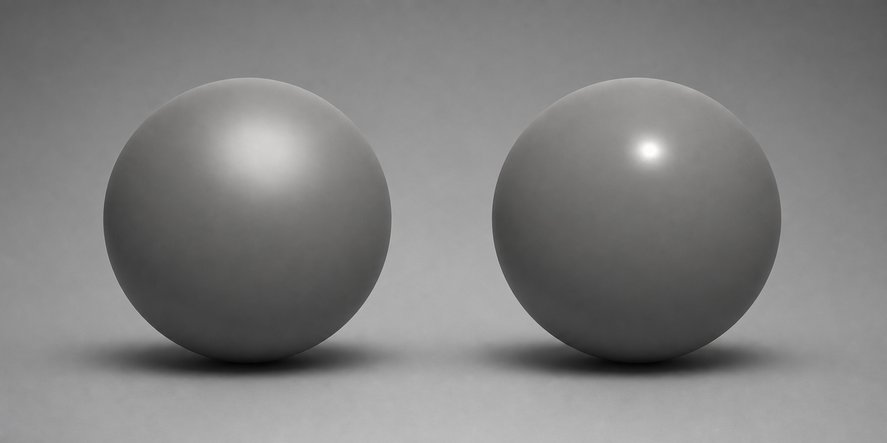
The left sphere has the broader, dimmer highlight, indicating higher roughness. Rough surfaces scatter reflections over a wider area, while smooth surfaces produce sharper highlights.
A tangent-space normal map perturbs the normals used in lighting calculations. It creates the appearance of small geometric detail without changing the mesh silhouette or moving its vertices.
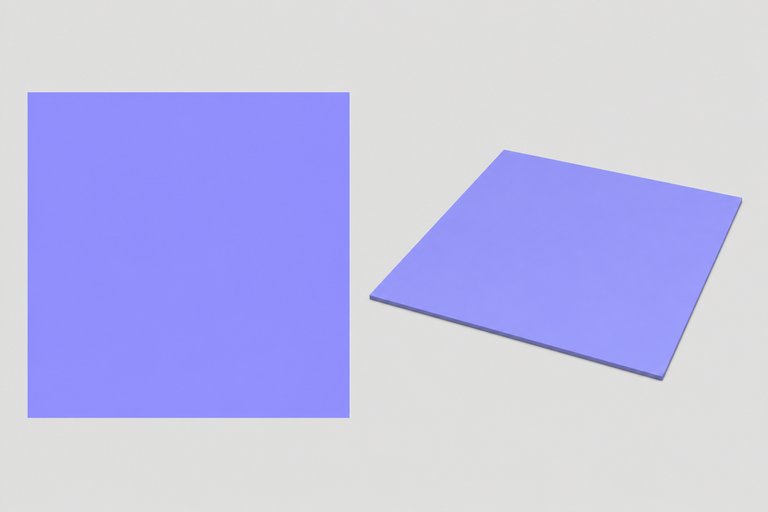
A flat tangent-space normal points mostly along positive Z, encoded approximately as RGB 128, 128, 255. This produces the characteristic blue-purple appearance of normal maps.
Roughness and metalness contain numeric data rather than display colors. Applying sRGB gamma conversion changes those values and can produce incorrect material responses.
Ambient occlusion approximates how exposed a point is to indirect environmental light. Crevices and tightly enclosed regions receive darker values because less ambient light can reach them.
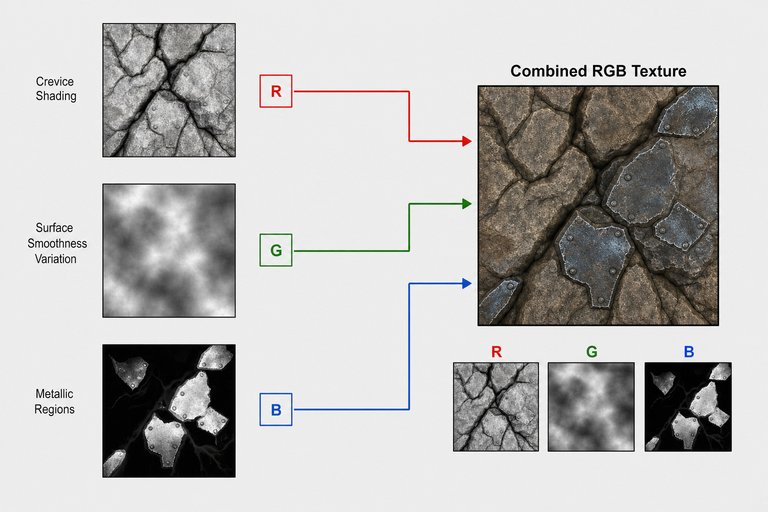
Channel packing stores multiple grayscale maps in one RGB texture. This can reduce texture bindings, file overhead, and sampling costs, depending on the engine and platform.
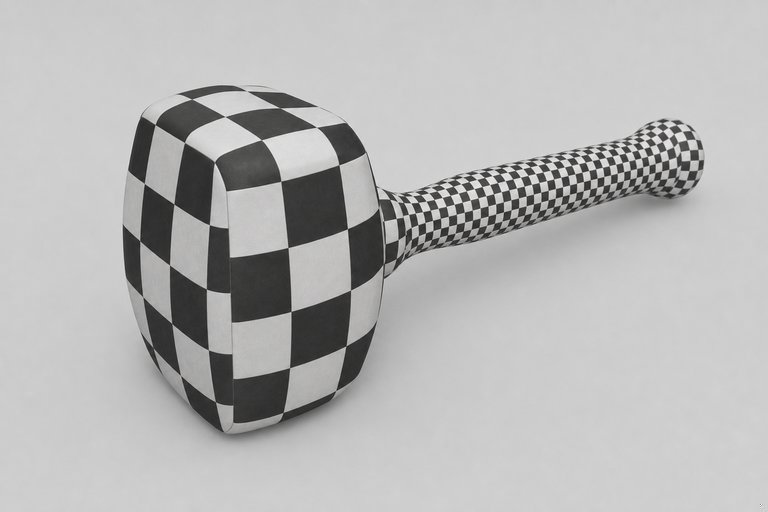
Different checker sizes indicate that equal areas of the model receive different amounts of UV space. This creates inconsistent texel density and uneven texture detail.
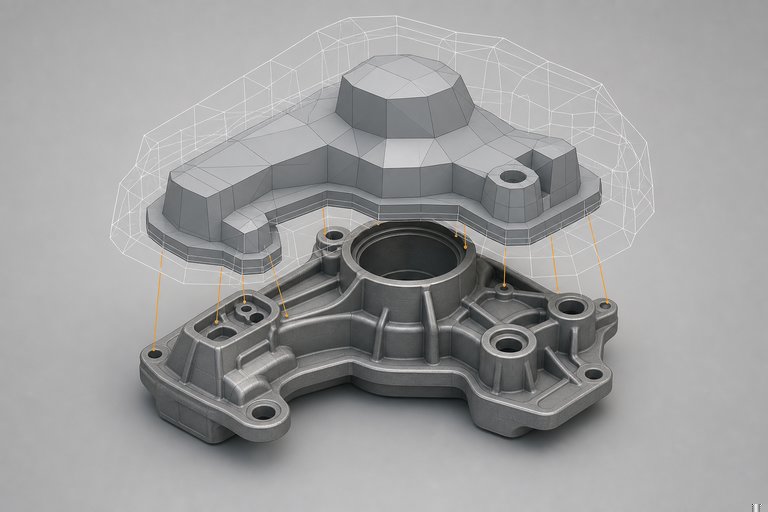
A bake cage is an expanded version of the low-poly mesh that controls the projection envelope. A well-adjusted cage helps rays capture the intended high-poly details while avoiding nearby or unrelated surfaces.
OpenGL and DirectX tangent-space conventions commonly differ in the direction of the Y component. Inverting the normal map's green channel usually corrects the reversed bump and dent appearance.
Free CourseBlender 3.0 basics course
5

(10)

4h48m

23 exercises
Free CourseBlender Tutorials
5
(1)
9h21m
27 exercises
Free CourseBlender 3D Animation for Beginners: Complete Tutorial Series
5
(1)
3h27m
14 exercises
Free Course3D modeling
4.8
(69)
27h29m
23 exercises
Free CourseBlender for Complete Beginners: Learn 3D Modeling, Materials, UVs and Rendering
4
(1)
5h55m
14 exercises

Free CourseCharacter Animation in Cinema 4D
New
3h22m
5 exercises

Free CourseMoho 14 Animation Masterclass: Beginner to Expert
New
6h08m
36 exercises
Free CourseMaya 3D Animation Course: Basics to Advanced Acting and Body Mechanics
New
8h32m
18 exercises
Thousands of online courses in video, ebooks and audiobooks.
To test your knowledge during online courses
Generated directly from your cell phone's photo gallery and sent to your email

Download our app via QR Code or the links below:.



Carry knowledge in your pocket.
Download the Cursa app.
There are hundreds of free courses available, with a free certificate of completion that is saved in your mobile image gallery.
Download the app to access the Course Completion Certificate for Free.


+ 10 million
students

Free and Valid
Certificate

60 thousand free
exercises

4.8/5 rating in
app stores

Free courses in
video and ebooks