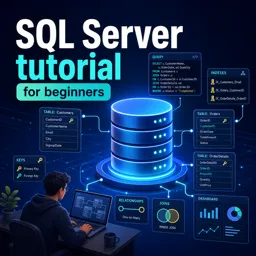


SQL Server is Microsoft’s relational database platform for storing, managing, securing, and querying data with SQL.

1

5



SQL vs NoSQL: Choosing the Right Database (and Learning Paths for MySQL, SQL Server, PostgreSQL, Oracle, and MongoDB)
Understand SQL vs NoSQL, compare databases, and learn how to choose the right solution for scalability, consistency, and performance.

Database Transactions Explained: ACID, Isolation Levels, and Concurrency Control Across SQL and NoSQL
Learn database transactions, ACID, isolation levels, locks, MVCC, and concurrency control across SQL and NoSQL systems.

Database Schema Design for Real Projects: From Requirements to Reliable Models
Practical guide to database schema design: requirements, keys, relationships, constraints, migrations, and reliable models for real projects.

Getting Started with MySQL: A Guide for Beginners
Learn MySQL basics with this beginner-friendly guide. Explore key concepts, installation, essential operations, and best practices for secure and scalable databases.

Understanding MySQL Replication: Building Reliable and Scalable Database Architectures
Learn MySQL replication to build scalable, reliable databases. Explore types, benefits, setup steps, and best practices for high availability and performance.

Getting Started with SQL Server: Essential Concepts and Tools
Learn SQL Server essentials: setup, tools, core components, and best practices to build and manage databases efficiently from the ground up.

Understanding SQL Server Security: Best Practices for Protecting Your Data
Protect your data with key SQL Server security practices: encryption, auditing, strong authentication, and avoiding common misconfigurations.

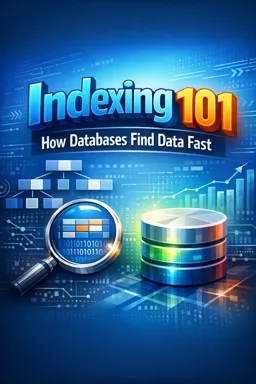
SQL Server Indexing Strategies: How to Optimize Query Performance
SQL Server indexing strategies optimize query performance by utilizing various index types. Effective indexing reduces retrieval times while balancing read and write operations.
Learn SQL Server online with a carefully selected collection of free courses designed for students, aspiring database professionals, software developers, data analysts, and anyone interested in database education. These educational courses cover essential Microsoft SQL Server concepts, practical database skills, and structured learning paths. Every course can be studied at no cost, includes exercises for practice, and offers free certification after completion.
SQL Server is a widely used relational database management system for storing, organizing, querying, and protecting business data. Through these free online SQL Server courses, learners can develop valuable technical knowledge at their own pace. Lessons may introduce database fundamentals, SQL syntax, data types, tables, relationships, queries, stored procedures, views, functions, indexes, transactions, security, backup, recovery, and database administration.
These SQL Server classes support active learning through clear lessons and educational exercises. Practice activities help reinforce database theory, query writing, problem-solving, and real-world data management techniques. The courses are free and include free certification, allowing learners to document their studies and add a new credential to a resume, professional profile, or academic portfolio.
This learning collection is suitable for beginners studying their first database as well as professionals seeking to review or expand their SQL Server knowledge. It can support career preparation for roles such as SQL developer, database administrator, backend developer, business intelligence professional, data analyst, and software engineer. Learners can choose relevant lessons and progress according to their educational goals.
To access the courses, exercises, and free certification, it is necessary to install the Cursa application. Android learners can use Download for Android on Google Play. iPhone learners can use Download for iOS / iPhone on the App Store. Install the application, select a free SQL Server course, and begin developing practical database skills today.
What is SQL Server?
SQL Server is Microsoft’s relational database platform for storing, managing, securing, and querying data with SQL.
Is SQL Server suitable for beginners?
Yes. Beginners can start with databases, tables, SELECT queries, filters, and basic data modifications before moving to advanced topics.
What are tables, data types, and constraints in SQL Server?
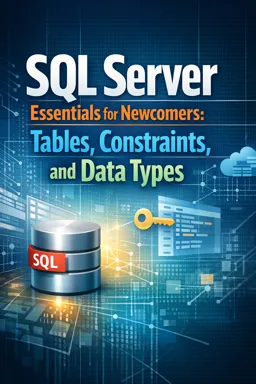
Tables organize data into rows and columns, data types define the kind of value a column stores, and constraints enforce rules such as unique or required values.
How do SQL Server joins work?
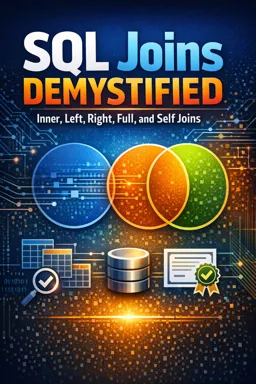
Joins combine rows from related tables. INNER JOIN returns matches, LEFT and RIGHT JOIN retain unmatched rows from one side, FULL JOIN retains all rows, and SELF JOIN compares a table to itself.
Why are indexes important in SQL Server?
Indexes help SQL Server locate data faster, improving many query operations. However, too many indexes can slow INSERT, UPDATE, and DELETE operations.
What is the difference between SQL and SQL Server?
SQL is the language used to query and manage relational data. SQL Server is Microsoft’s database management system that uses SQL, including the T-SQL dialect.
Can SQL Server be used for business intelligence reporting?
Yes. SQL Server can prepare, aggregate, and query business data for reports, dashboards, analytics, and BI tools.

Complete any course and issue your certificate via the app — at no cost.

Download the app! to have access to more than 4,000 Online Courses + Certificate, all free!
Download the app! 100% free courses.


Carry knowledge in your pocket.
Download the Cursa app.
There are hundreds of free courses available, with a free certificate of completion that is saved in your mobile image gallery.
Download the app to access the Course Completion Certificate for Free.


+ 10 million
students

Free and Valid
Certificate

60 thousand free
exercises

4.8/5 rating in
app stores

Free courses in
video and ebooks