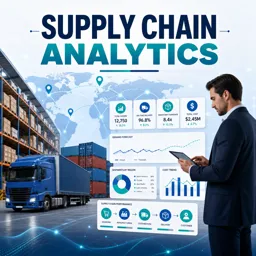

Free ebook on digital transformation in logistics, covering WMS, TMS, data, IoT, analytics, use cases, roadmaps, and change management.
Free ebook content
-

Digital Transformation in Logistics: Business Outcomes and Scope
+ Exercise: Which initiative best reflects a practical digital transformation approach in logistics?
-
Core Logistics Systems: WMS, TMS, and ERP in a Digital Roadmap
+ Exercise: In a logistics digital roadmap, which system should own high-frequency, real-time execution decisions like scan-by-scan inventory moves and directed warehouse tasks?
-
Logistics Data Basics: Master Data, Transactions, and Data Quality
+ Exercise: When creating a KPI for warehouse traceability (e.g., answering which carton or pallet contained a specific lot), which data granularity is most appropriate?
-
Integration Concepts for Logistics Teams: Interfaces, APIs, and EDI
+ Exercise: A logistics team needs near real-time visibility to detect and resolve failed messages and wants to onboard new partners quickly using prebuilt connectors and monitoring dashboards. Which integration pattern best fits these needs?


-
Automatic Identification: Barcode, QR, and RFID for Execution Accuracy
+ Exercise: When deciding where to add scan confirmations in a warehouse process, which approach best supports execution accuracy?
-
IoT and Tracking in Logistics: Asset, Shipment, and Condition Visibility
+ Exercise: Which requirement statement best reflects “actionable visibility” for IoT tracking in logistics?
-
Analytics Dashboards for Logistics: KPIs, Visual Design, and Decision Cadences
+ Exercise: Which combination best makes a logistics analytics dashboard decision-grade rather than passive reporting?
-
Selecting Digital Use Cases: Value, Feasibility, and Risk in Logistics
+ Exercise: Why does the prioritization method include both a Value score and a Feasibility score when selecting digital logistics use cases?
-
Building a Digital Transformation Roadmap for Logistics Operations
+ Exercise: When planning a visibility dashboard that promises near real-time order status across systems and partners, what prerequisite should be in place to avoid roadmap rework?
-
Vendor and Solution Evaluation: Requirements, Demos, and Total Cost of Ownership
+ Exercise: Which approach best reduces the risk of vendors showing only polished “happy path” capabilities during a WMS/TMS evaluation demo?
-
Change Management for Logistics Teams: Adoption, Training, and Continuous Improvement
+ Exercise: In warehouse change management, what is the main purpose of adoption measurement after go-live?
About the free ebook
Digital Transformation in Logistics: A Beginner’s Guide to Tools and Roadmaps
This free ebook introduces the practical foundations of digital transformation for logistics and supply chain operations. It explains how organizations can improve visibility, execution accuracy, decision-making, and service performance by connecting processes, data, systems, and people.
Build a practical digital foundation
Learn the roles of core platforms such as warehouse management systems (WMS), transportation management systems (TMS), and enterprise resource planning (ERP) systems. The ebook clarifies how master data, transaction data, data quality, interfaces, APIs, and EDI support reliable logistics operations.
Use technology to improve operational visibility
Explore barcode, QR code, RFID, IoT, and tracking technologies for more accurate identification, asset monitoring, shipment visibility, and condition control. Discover how dashboards translate operational data into useful KPIs and recurring decision routines.
Turn opportunities into an actionable roadmap
The guide helps logistics teams select use cases based on value, feasibility, and risk. It also covers vendor evaluation, requirements, demonstrations, total cost of ownership, training, adoption, and continuous improvement.
What you will gain
- A clear view of the logistics systems and data needed for transformation.
- Practical criteria for prioritizing digital initiatives.
- A structured approach to roadmap planning and solution evaluation.
- Guidance for supporting change across logistics teams.
Use this ebook as a starting point for planning a realistic, business-focused digital transformation in logistics.
What is the role of WMS, TMS, and ERP in logistics digital transformation?
WMS manages warehouse work, TMS supports transportation planning and execution, and ERP connects logistics with wider business processes and financial data.
How do APIs and EDI support logistics operations?
They exchange data between systems and partners, helping automate orders, shipment updates, inventory information, and status messages.
How should a logistics team prioritize digital use cases?
Assess each use case by expected business value, implementation feasibility, data readiness, cost, operational risk, and adoption needs.
This ebook includes:

11 content chapters

Digital certificate of course completion (Free)

Exercises to train your knowledge

100% free, from content to certificate
Ready to get started?

 recommended
In the app you will also find...

Over 5,000 free courses
Programming, English, Digital Marketing and much more! Learn whatever you want, for free.

Study plan with AI
Our app's Artificial Intelligence can create a study schedule for the course you choose.

From zero to professional success
Improve your resume with our free Certificate and then use our Artificial Intelligence to find your dream job.
You can also use the QR Code or the links below.