
It covers sourcing, manufacturing operations, transportation, retail fulfillment, supply chain integration, global strategy, sustainability, performance measurement, quality, and supply chain technology.

Duration of the online course: 53 minutes
4.8

(5)
Boost your career with a free supply chain management course covering logistics, operations, transportation, and global strategy—learn practical skills and earn a certificate.
Efficient supply chains keep businesses competitive, customers satisfied, and costs under control. This free online course in Supply Chain Management and Logistics helps you understand how products and services move from raw materials to the end customer, and how decisions in one area ripple across purchasing, operations, transportation, retail, and global networks. Whether you are aiming for a role in logistics, procurement, operations, or general management, you will build a clear, end-to-end view of how modern supply chains actually work.
You will explore the central responsibility of supply chain management: coordinating interconnected activities so the whole system performs better than isolated parts. From managing supply and purchasing decisions beyond price, to balancing operational trade-offs in production environments, the course emphasizes practical decision-making. You will also learn why logistics extends beyond transportation, touching inventory, service levels, and reliability, and why the customer experience ultimately sets the standard for retail performance.
As the course progresses, you will focus on integration: aligning functions, partners, and information so planning and execution support a shared objective rather than siloed goals. You will examine global supply chain strategy, including the guiding logic behind location and sourcing choices, and how risk, resilience, and long-term value shape network decisions. Social responsibility and sustainability are treated as core management concerns, showing how supply chain leaders can influence labor practices, environmental impact, and ethical sourcing across international partners.
You will also connect supply chains to business processes that begin the moment demand is triggered, then follow how organizations measure performance to make better decisions at scale. Quality management is addressed through a systems lens, highlighting how weaknesses anywhere in the chain can define outcomes for customers. Finally, you will see how information technology enables visibility, coordination, and faster, smarter decisions across complex global operations. By the end, you will have a stronger grasp of the language, logic, and strategic mindset needed to contribute confidently to supply chain and logistics initiatives.

53 minutes of online video course

Digital certificate of course completion (Free)

Exercises to train your knowledge

100% free, from content to certificate
What does the Supply Chain Management and Logistics course cover?
It covers sourcing, manufacturing operations, transportation, retail fulfillment, supply chain integration, global strategy, sustainability, performance measurement, quality, and supply chain technology.
How does the course explain the difference between logistics and transportation?
Transportation is the movement of goods, while logistics is broader: it coordinates transportation, storage, inventory, order fulfillment, and information flows.
Does the course address sustainable and global supply chain decisions?
Yes. It examines global facility and sourcing decisions, supply-chain risk and integration, and the role of managers in social responsibility and sustainability.
Ready to get started?Download the app and get started today.
Install the app now
to access the course
Over 5,000 free courses
Programming, English, Digital Marketing and much more! Learn whatever you want, for free.

Study plan with AI
Our app's Artificial Intelligence can create a study schedule for the course you choose.

From zero to professional success
Improve your resume with our free Certificate and then use our Artificial Intelligence to find your dream job.
You can also use the QR Code or the links below.



Free CourseOperations Management
5
(16)

4h47m

30 exercises
Free CourseSupply Chain Analytics
5
(24)
30m
4 exercises
Free CourseSupply Chain Digitization
4.8
(9)
31h55m
31 exercises
Free CourseLogistics Management
4.6

(19)
1h29m
11 exercises
Free CourseFundamentals of Supply Chain
4.6
(5)
2h42m
8 exercises
Free CourseSupply chain management
4.3
(49)
12h07m
16 exercises
Free CourseAPICS CLTD 3.0 Certification Prep: Logistics, Transportation and Distribution
4
(2)
17h55m
13 exercises
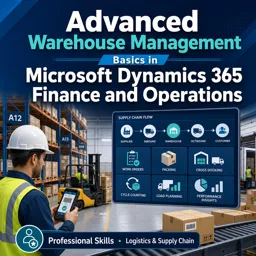
Free CourseAdvanced Warehouse Management Basics in Microsoft Dynamics 365 Finance and Operations
New
7h35m
20 exercises
Carry knowledge in your pocket.
Download the Cursa app.
There are hundreds of free courses available, with a free certificate of completion that is saved in your mobile image gallery.
Download the app to access the Course Completion Certificate for Free.


+ 10 million
students

Free and Valid
Certificate

60 thousand free
exercises

4.8/5 rating in
app stores

Free courses in
video and ebooks
Course comments: Supply Chain Management and Logistics: Operations, Transportation, and Global Strategy
Sipelele
Very informative and helpful
MD Mehedi Hasan
very effective course