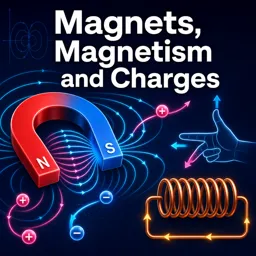
Point your right thumb in the direction of conventional current; your curled fingers show the direction of the magnetic field around the wire.

Duration of the online course: 3 hours and 21 minutes
New
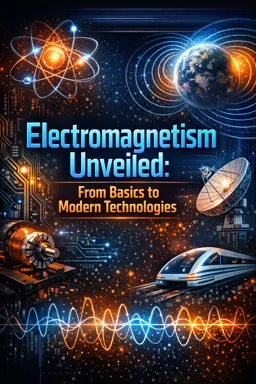
Master magnetism and charges with a free online physics course—build problem-solving skills, tackle Lorentz force, motors, and earn a certificate.
Build a clear, practical understanding of magnetism and electric charge with this free online physics course designed for school-level learners who want more than memorizing formulas. You will connect the everyday behavior of magnets to the invisible fields that explain why they attract, repel, and interact with materials. Step by step, the course helps you translate core ideas into confident problem solving, so you can approach physics questions with a method instead of guesswork.
As you progress, you will learn how electric current creates magnetic fields, how to predict field direction using right-hand rules, and how to calculate field strength at specific distances. These ideas form the foundation for understanding coils and electromagnets, where geometry and current combine to produce stronger, more useful magnetic effects. Along the way, targeted exercises reinforce the reasoning behind each result, helping you spot common traps and develop accuracy with units, powers of ten, and scientific notation.
The course then deepens into magnetic forces, where charged particles and current-carrying wires experience forces in a magnetic field. You will practice determining force direction and magnitude, including the key cases where motion is parallel, perpendicular, or at an angle to the field. This is the physics behind particle paths, the behavior of beams in fields, and many exam problems that hinge on sign conventions and vector thinking.
Finally, you will see how these principles power real devices and measurements, linking magnetism to motors, simple electromagnetic demonstrations, velocity selectors, and mass spectrometers. By the end, you will not only recognize the concepts but also understand how they work together as a coherent system—ideal preparation for tests, homework, or building a stronger foundation for advanced physics.

3 hours and 21 minutes of online video course

Digital certificate of course completion (Free)

Exercises to train your knowledge

100% free, from content to certificate
How do you use the right-hand rule to find the magnetic field around a current-carrying wire?
Point your right thumb in the direction of conventional current; your curled fingers show the direction of the magnetic field around the wire.
What formula calculates the magnetic field inside a coil or solenoid?
For an ideal solenoid, use B = μ₀nI, where n is the number of turns per metre and I is the current.
What happens when a charged particle enters a magnetic field?
A moving charged particle experiences the Lorentz force, which bends its path; a particle at rest experiences no magnetic force.
Ready to get started?Download the app and get started today.
Install the app now
to access the course
Over 5,000 free courses
Programming, English, Digital Marketing and much more! Learn whatever you want, for free.

Study plan with AI
Our app's Artificial Intelligence can create a study schedule for the course you choose.

From zero to professional success
Improve your resume with our free Certificate and then use our Artificial Intelligence to find your dream job.
You can also use the QR Code or the links below.



Free CourseRelativity Course: Special and General Relativity, Tensors, Black Holes, Gravitational Waves and Cosmology
5

(3)

19h01m

39 exercises
Free CourseIntroduction to Thermodynamics
5
(1)
1h48m
9 exercises
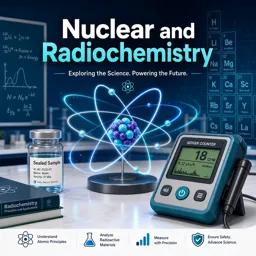
Free CourseNuclear and Radiochemistry
5
(1)
31h56m
31 exercises
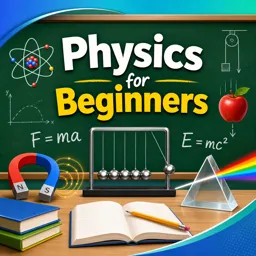
Free CoursePhysics for beginners
5
(1)
1h57m
2 exercises
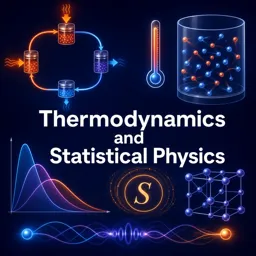
Free CourseThermodynamics and Statistical Physics
5
(1)
14h53m
23 exercises
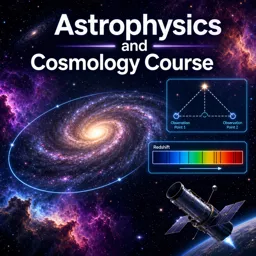
Free CourseAstrophysics and Cosmology Course
5
(1)
1h24m
5 exercises
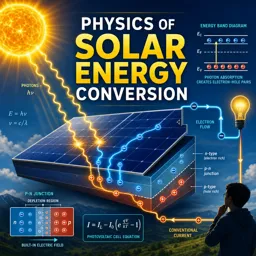
Free CoursePhysics of Solar Energy Conversion
5
(4)
4h59m
16 exercises
Free CourseQuantum Physics
5
(1)
24m
4 exercises
Free CourseFundamentals of Physics
5
(45)
28h44m
23 exercises
Free CoursePhysics 1 course
4.8
(6)
4h10m
19 exercises
Carry knowledge in your pocket.
Download the Cursa app.
There are hundreds of free courses available, with a free certificate of completion that is saved in your mobile image gallery.
Download the app to access the Course Completion Certificate for Free.


+ 10 million
students

Free and Valid
Certificate

60 thousand free
exercises

4.8/5 rating in
app stores

Free courses in
video and ebooks