The course examines Abstract Expressionism, Minimalism, Pop Art, Conceptual Art, Postmodernism, performance art, and site-specific or expanded-field practices.

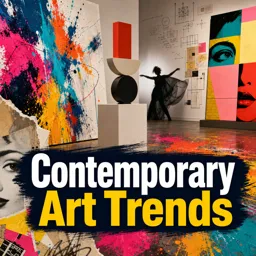
Duration of the online course: 24 hours and 51 minutes
4.9

(10)
Boost your visual literacy with a free online course on contemporary art—decode avant-garde to postmodern ideas, build critique skills, and earn a certificate.
Understanding contemporary art can feel like learning a new language: familiar materials, unfamiliar intentions, and debates that reshape what counts as a work of art. This free online course in Design and Creative Arts, within Drawing and Painting, helps you build that language through a guided journey across the major ideas and turning points that define modern and contemporary practice. You will develop the ability to look longer, ask sharper questions, and explain what you see with clarity rather than guesswork.
Starting from the avant-garde and its drive to reinvent art’s purpose, you will explore how critics and artists reframed painting as something more than representation. You will examine how formal decisions such as color fields, gesture, and scale become arguments in themselves, and how the viewer’s experience can be deliberately shaped through attention, emotion, and presence. Along the way, you will encounter influential approaches to interpretation and self-criticism that still inform how galleries, museums, and studios talk about quality, innovation, and meaning.
As the course progresses, the frame widens from painting to the broader field of contemporary practice. You will consider how postmodern strategies challenge single, stable messages and why ambiguity can be a deliberate tool rather than a flaw. You will also trace how mass media, repetition, appropriation, and new definitions of authorship transform what artworks do in public culture. These shifts reveal why contemporary art so often feels like a conversation with advertising, entertainment, politics, and everyday life.
You will then move into expanded notions of sculpture and site, where place, structure, and context become inseparable from the work itself. Performance and social space introduce art as an event, a ritual, or a public encounter, inviting questions about embodiment, belief, community, and responsibility. Throughout, reflective exercises help you practice analysis and build confidence in articulating interpretations grounded in observation, context, and concepts.
By the end, you will be better prepared to navigate exhibitions, read visual cues, and engage thoughtfully with art that resists easy answers. Whether you are an emerging artist, a designer seeking stronger references, an educator, or simply curious, this course offers a clear pathway into contemporary art trends and the critical tools to make them meaningful.

24 hours and 51 minutes of online video course

Digital certificate of course completion (Free)

Exercises to train your knowledge

100% free, from content to certificate
What contemporary art movements are covered in this course?
The course examines Abstract Expressionism, Minimalism, Pop Art, Conceptual Art, Postmodernism, performance art, and site-specific or expanded-field practices.
How does the course explain Clement Greenberg's influence on modern painting?
It explores Greenberg's formalist criticism, including his view that painting should emphasize its unique material qualities, such as flatness and color.
What does “sculpture in the expanded field” mean in contemporary art?
It describes practices that move beyond traditional freestanding sculpture into areas such as site construction, marked sites, landscape, and architecture.
Ready to get started?Download the app and get started today.
Install the app now
to access the course
Over 5,000 free courses
Programming, English, Digital Marketing and much more! Learn whatever you want, for free.

Study plan with AI
Our app's Artificial Intelligence can create a study schedule for the course you choose.

From zero to professional success
Improve your resume with our free Certificate and then use our Artificial Intelligence to find your dream job.
You can also use the QR Code or the links below.



Free CourseHow to Draw on iPad
5
(3)

35m

6 exercises
Free CourseOil Painting techniques
5
(1)
23m
4 exercises
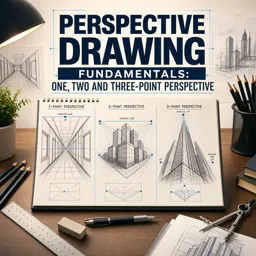
Free CoursePerspective Drawing Fundamentals: One, Two and Three-Point Perspective
5
(2)
2h57m
22 exercises
Free CourseArt Fundamentals
5
(3)
13h16m
29 exercises
Free CourseAcrylic Painting Course
5
(5)
135h55m
51 exercises
Free CoursePainting tutorials and lessons
4.9
(47)
5h26m
19 exercises
Free CourseBeginners Drawing course
4.9
(7)
72h50m
24 exercises
Free CourseDrawing tutorials and lessons
4.8
(124)
4h08m
18 exercises
Free CourseDraw class
4.7

(32)
11h14m
24 exercises
Free CourseDrawing Lessons for Beginners
4.7
(95)
6h22m
23 exercises
Carry knowledge in your pocket.
Download the Cursa app.
There are hundreds of free courses available, with a free certificate of completion that is saved in your mobile image gallery.
Download the app to access the Course Completion Certificate for Free.


+ 10 million
students

Free and Valid
Certificate

60 thousand free
exercises

4.8/5 rating in
app stores

Free courses in
video and ebooks